
Record ₹1.14 Lakh Crore Outflow by Foreign Portfolio Investors from Indian Equities Amid Middle East Tensions
Here's what it means for you.
If you’re invested in Indian markets or rely on remittances from India, brace for potential volatility and economic shifts.
Why it matters
This unprecedented outflow signals a significant loss of confidence in Indian equities, which could have broader implications for economic stability and investment strategies.
What happened (in 30 seconds)
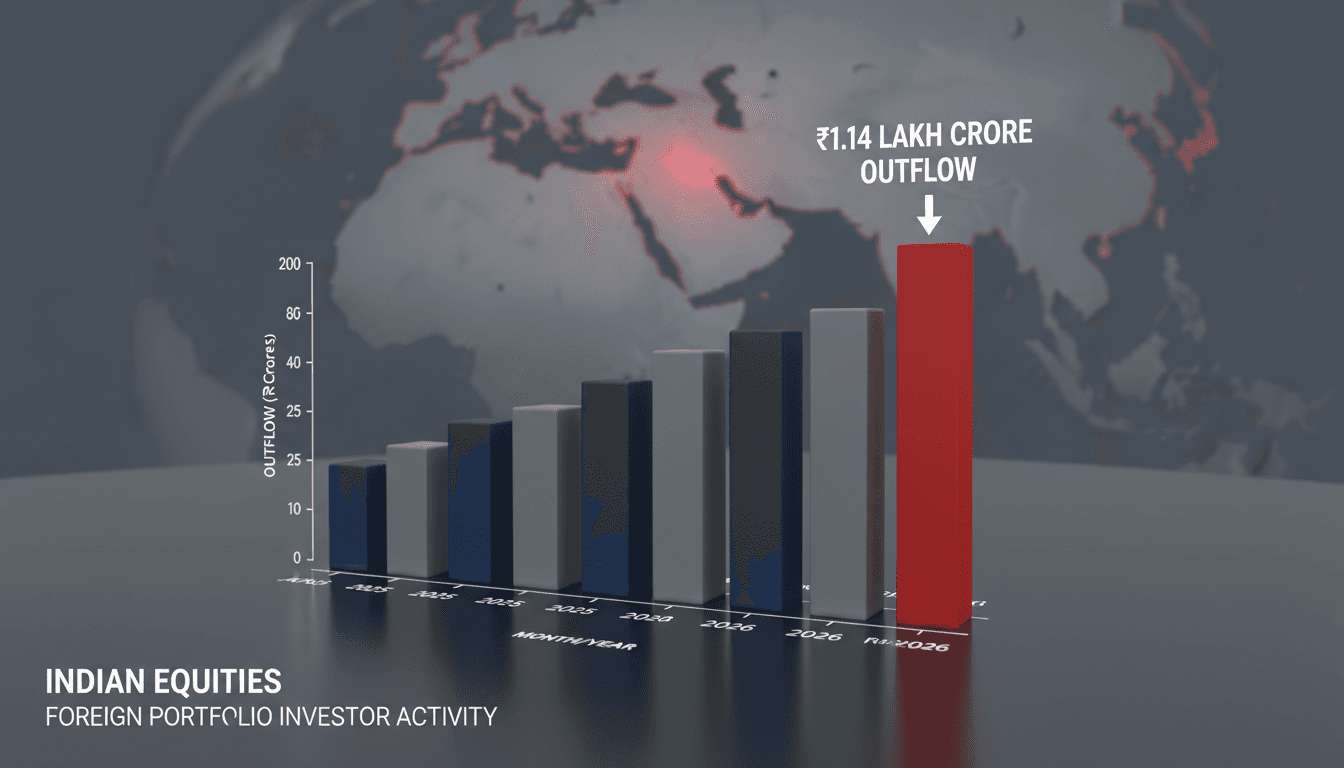
- Record outflow: Foreign portfolio investors (FPIs) withdrew ₹1.14 lakh crore (approximately $12.3 billion) from Indian equities in March 2026.
- Geopolitical tensions: The outflow was primarily driven by escalating tensions in the Middle East, particularly the US-Iran war, which began on February 28, 2026.
- Economic concerns: Rising oil prices and downgraded GDP forecasts contributed to fears of inflation and slowed growth in India.
The context you actually need
- Previous inflows: Prior to March, FPIs had recorded net inflows of ₹22,615 crore in February 2026, indicating a brief period of optimism.
- Oil dependency: India imports 85-90% of its crude oil, making it particularly vulnerable to fluctuations in oil prices, which surged amid geopolitical unrest.
- Market reactions: The Nifty 50 index dropped over 13% in March, reflecting investor anxiety and a shift in capital allocation towards developed markets.
What's really happening
In March 2026, the Indian equity market faced a historic outflow of ₹1.14 lakh crore from foreign portfolio investors, marking the highest monthly net selling on record. This dramatic shift was catalyzed by the onset of the US-Iran war, which heightened geopolitical tensions in the Middle East. As oil prices surged, inflation risks for oil-import-dependent India became a pressing concern, leading to a clouded economic outlook.
Goldman Sachs responded by slashing its GDP growth forecast for India in 2026 from 7% to 5.9%, reflecting a broader sentiment of caution among investors. The combination of elevated US bond yields, a depreciating rupee, and high valuations of Indian equities relative to global peers prompted FPIs to reallocate capital to perceived safer havens in developed markets.
The selling frenzy began in early March, with outflows reaching ₹52,704 crore by March 15 and escalating to ₹1.14 lakh crore by the end of the month. Concurrently, FPIs also sold ₹14,403 crore in government securities, indicating a widespread withdrawal from Indian assets. The Nifty 50 index, a benchmark for Indian equities, fell sharply, while the rupee depreciated by 4.2%, breaching the 94/USD mark.
Domestic institutional investors (DIIs) attempted to absorb some of the selling pressure, but the overall market sentiment remained bearish. The financial sector alone saw record monthly outflows of $606.55 million. As April began, the outflows continued, with reports indicating a further net equity outflow of ₹20,389 crore on April 2.
The broader implications of this outflow extend beyond immediate market volatility; they reflect a significant shift in investor sentiment towards emerging markets, particularly in light of global risk aversion. Investors are now more cautious, weighing geopolitical risks against potential returns, which could reshape investment strategies in the region for the foreseeable future.
Who feels it first (and how)
- Foreign investors: Immediate losses on investments and potential shifts in strategy towards developed markets.
- Indian equity market participants: Traders and investors face increased volatility and uncertainty in stock valuations.
- Indian expats in the Gulf: Potential decline in remittances as economic conditions worsen in India.
- Domestic consumers: Rising inflation due to increased oil prices may impact purchasing power and consumer spending.
What to watch next
- Oil prices: Monitor fluctuations in global oil prices, as they directly impact inflation and economic stability in India.
- FPI sentiment: Keep an eye on foreign investor sentiment, particularly any signs of recovery or further withdrawal from Indian markets.
- GDP forecasts: Watch for updates on GDP growth forecasts from major financial institutions, as these will influence market confidence and investment decisions.
FPIs executed a record outflow of ₹1.14 lakh crore in March 2026.
Continued volatility in Indian markets as geopolitical tensions persist and inflation concerns grow.
The long-term impact on Indian economic growth and investor confidence in emerging markets.
Frequently Asked Questions
- Why it matters?
- This unprecedented outflow signals a significant loss of confidence in Indian equities, which could have broader implications for economic stability and investment strategies.
- What happened (in 30 seconds)?
- Record outflow: Foreign portfolio investors (FPIs) withdrew ₹1.14 lakh crore (approximately $12.3 billion) from Indian equities in March 2026. Geopolitical tensions: The outflow was primarily driven by escalating tensions in the Middle East, particularly the US-Iran war, which began on February 28, 2026. Economic concerns: Rising oil prices and downgraded GDP forecasts contributed to fears of inflation and slowed growth in India.
- What's really happening?
- In March 2026, the Indian equity market faced a historic outflow of ₹1.14 lakh crore from foreign portfolio investors, marking the highest monthly net selling on record. This dramatic shift was catalyzed by the onset of the US-Iran war, which heightened geopolitical tensions in the Middle East. As oil prices surged, inflation risks for oil-import-dependent India became a pressing concern, leading to a clouded economic outlook. Goldman Sachs responded by slashing its GDP growth forecast for Ind
- Who feels it first (and how)?
- Foreign investors: Immediate losses on investments and potential shifts in strategy towards developed markets. Indian equity market participants: Traders and investors face increased volatility and uncertainty in stock valuations. Indian expats in the Gulf: Potential decline in remittances as economic conditions worsen in India. Domestic consumers: Rising inflation due to increased oil prices may impact purchasing power and consumer spending.
- What to watch next?
- Oil prices: Monitor fluctuations in global oil prices, as they directly impact inflation and economic stability in India. FPI sentiment: Keep an eye on foreign investor sentiment, particularly any signs of recovery or further withdrawal from Indian markets. GDP forecasts: Watch for updates on GDP growth forecasts from major financial institutions, as these will influence market confidence and investment decisions.
Arabic-language digital news outlet covering UAE, regional, and international developments with broad general-news coverage.
"Al Ain News coverage typically blends UAE-focused reporting with wider Arab regional and international news."
— A47 Editor
هروب قياسي لصناديق الاستثمار من الهند وسط مخاوف بشأن النمو
Indian financial markets are experiencing an unprecedented wave of foreign investment outflows amid rising concerns over economic slowdown due to the repercussions of the U.S.-Iran conflict, which has cast a heavy shadow over the global economy and e...
Global markets, investing, and macroeconomics from a premier financial newsroom.
"Bloomberg is respected for in-depth financial reporting and data-driven analysis."
— A47 Editor
Global Funds Flee Indian Stocks at Record Pace on Growth Fears
Global funds are exiting Indian equities at an unprecedented rate, driven by fears that the ongoing US-Iran conflict could disrupt the growth trajectory of India, the world's fastest-growing major economy. This trend has resulted in a significant dec...