
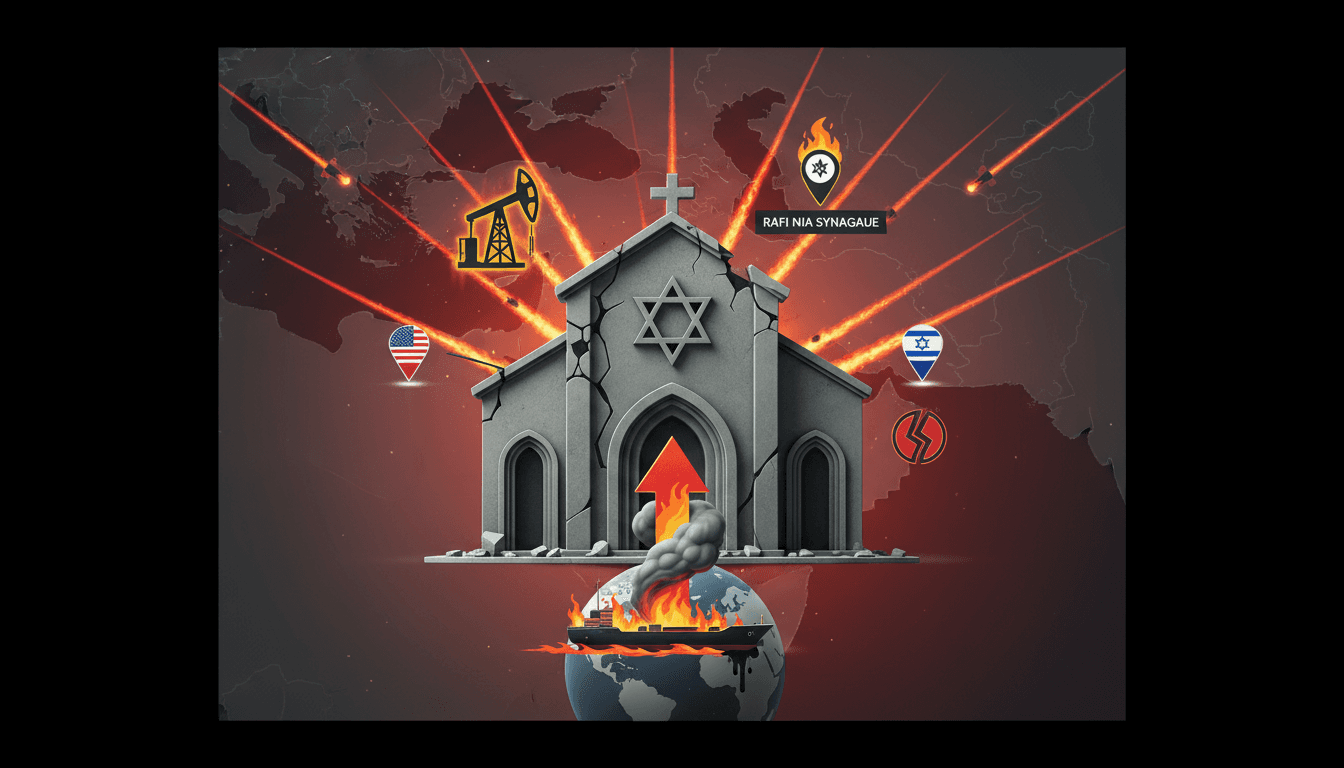
Destruction of Rafi Nia Synagogue in Tehran Reported Amid US-Israeli Airstrikes
Here's what it means for you.
If you’re involved in global markets or energy sectors, the fallout from this incident could impact your operations and investments.
Why it matters
The destruction of the Rafi Nia Synagogue signals escalating tensions in the Middle East, which could disrupt global oil supplies and financial markets.
What happened (in 30 seconds)
- On April 7, 2026, Iranian media reported the complete destruction of the Rafi Nia Synagogue in Tehran due to US-Israeli airstrikes.
- The strikes targeted multiple sites, including military and energy facilities, amid ongoing conflict between the US, Israel, and Iran.
- Iran's response included activating air defenses and rejecting a US ceasefire proposal, escalating regional tensions.
The context you actually need
- The 2026 US–Israel–Iran war began on February 28, 2026, following the assassination of Iran's Supreme Leader Ali Khamenei by US-Israeli forces.
- Iran's retaliation included closing the Strait of Hormuz, a critical chokepoint for global oil shipments, leading to significant disruptions in oil prices.
- US President Donald Trump issued a ceasefire proposal with stringent conditions, which Iran rejected, further intensifying military actions.
What's really happening
The reported destruction of the Rafi Nia Synagogue is part of a broader pattern of military aggression in the ongoing US-Israel-Iran conflict. This war, which escalated dramatically after the assassination of Iran's Supreme Leader, has seen a series of airstrikes targeting not only military installations but also civilian infrastructure. The airstrikes on April 7, 2026, were reportedly aimed at multiple strategic sites across Tehran, including the Sharif University of Technology and energy facilities, reflecting a shift towards more aggressive tactics by US and Israeli forces.
The targeting of the synagogue, if confirmed, raises significant ethical and legal questions regarding the conduct of war, particularly in relation to civilian structures and places of worship. Iranian officials have framed these actions as indiscriminate aggression, which could galvanize public sentiment against the US and Israel, potentially leading to increased recruitment for militant groups and further destabilization in the region.
Moreover, the geopolitical implications of this conflict extend beyond the immediate violence. The closure of the Strait of Hormuz, a vital artery for global oil transport, has already led to a spike in oil prices, reaching $110 per barrel as of the latest reports. This price surge is a direct consequence of fears surrounding supply disruptions, which can ripple through global markets, affecting everything from fuel costs to inflation rates.
The situation is further complicated by the lack of independent verification of the airstrike claims, which means that narratives can be manipulated by both sides for propaganda purposes. The absence of confirmed casualties at the synagogue also leaves room for speculation and misinformation, which can exacerbate tensions.
As the conflict continues, the potential for broader military engagement increases, especially if Iran chooses to retaliate against US interests or allies in the region. The stakes are high, and the international community is watching closely, as any escalation could lead to significant geopolitical shifts.
Who feels it first (and how)
- Energy sector professionals: Increased oil prices and supply chain disruptions could impact operations and profitability.
- Investors in global markets: Volatility in oil prices may lead to shifts in investment strategies and risk assessments.
- Residents of Dubai and surrounding regions: Flight suspensions and economic instability due to regional tensions could affect travel and business operations.
What to watch next
- Oil price fluctuations: Watch for changes in oil prices as the situation develops; sustained high prices could indicate ongoing conflict.
- US and Israeli military actions: Monitor for further airstrikes or military engagements that could escalate tensions and impact global markets.
- Iran's response strategies: Pay attention to Iran's military and diplomatic responses, particularly any retaliatory actions that could affect regional stability.
The Rafi Nia Synagogue was reported destroyed by Iranian sources during US-Israeli airstrikes.
Increased tensions in the Middle East will continue to affect global oil prices and market stability.
The full extent of the international community's response to the airstrikes and their implications for future conflicts remains uncertain.
Frequently Asked Questions
- Why it matters?
- The destruction of the Rafi Nia Synagogue signals escalating tensions in the Middle East, which could disrupt global oil supplies and financial markets.
- What happened (in 30 seconds)?
- On April 7, 2026, Iranian media reported the complete destruction of the Rafi Nia Synagogue in Tehran due to US-Israeli airstrikes. The strikes targeted multiple sites, including military and energy facilities, amid ongoing conflict between the US, Israel, and Iran. Iran's response included activating air defenses and rejecting a US ceasefire proposal, escalating regional tensions.
- What's really happening?
- The reported destruction of the Rafi Nia Synagogue is part of a broader pattern of military aggression in the ongoing US-Israel-Iran conflict. This war, which escalated dramatically after the assassination of Iran's Supreme Leader, has seen a series of airstrikes targeting not only military installations but also civilian infrastructure. The airstrikes on April 7, 2026, were reportedly aimed at multiple strategic sites across Tehran, including the Sharif University of Technology and energy facil
- Who feels it first (and how)?
- Energy sector professionals: Increased oil prices and supply chain disruptions could impact operations and profitability. Investors in global markets: Volatility in oil prices may lead to shifts in investment strategies and risk assessments. Residents of Dubai and surrounding regions: Flight suspensions and economic instability due to regional tensions could affect travel and business operations.
- What to watch next?
- Oil price fluctuations: Watch for changes in oil prices as the situation develops; sustained high prices could indicate ongoing conflict. US and Israeli military actions: Monitor for further airstrikes or military engagements that could escalate tensions and impact global markets. Iran's response strategies: Pay attention to Iran's military and diplomatic responses, particularly any retaliatory actions that could affect regional stability.
Pan-Arab news coverage spanning politics, business, sports, and regional affairs.
"Asharq Al-Awsat reflects a broad Arab editorial perspective with strong attention to regional geopolitics."
— A47 Editor
غارات على طهران دمّرت كنيساً يهودياً بالكامل
Iranian media reported that a Jewish synagogue in Tehran was completely destroyed in American-Israeli airstrikes on the city. This incident highlights the ongoing tensions and military actions in the region, particularly involving Iran and its advers...
Comprehensive coverage of Middle Eastern and global issues.
"Al Jazeera is a prominent voice from the Global South, especially the Middle East, with an emphasis on underreported stories."
— A47 Editor
Iran says US-Israeli projectile has struck a synagogue in Tehran
A US-Israeli missile strike has reportedly caused significant damage to a synagogue in Tehran, as evidenced by footage released by Mehr News. This incident is part of a series of military actions that have escalated tensions between Iran and the US-I...