
2026 IMF–World Bank Spring Meetings Address Economic Risks Amid Middle East Conflict
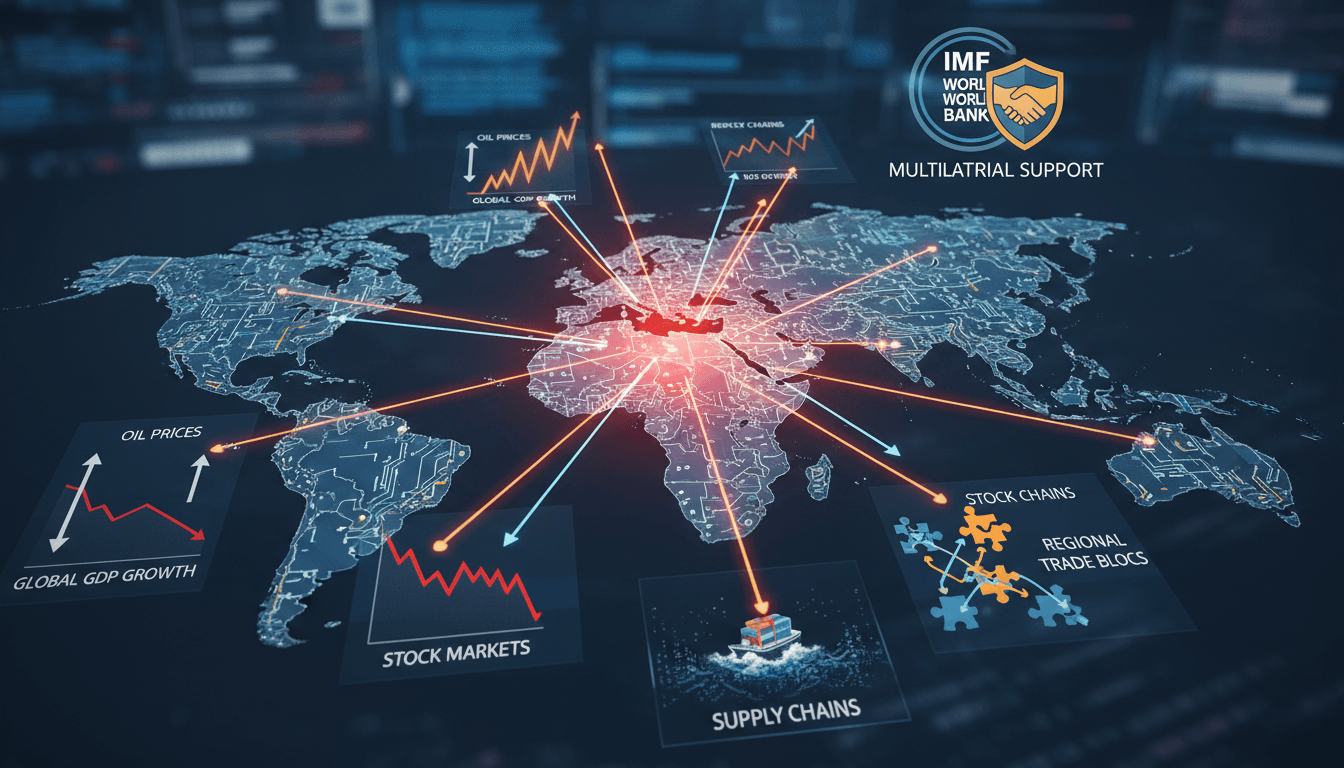
Here's what it means for you.
Your financial stability may be at risk as global economic conditions shift due to geopolitical tensions.
Why it matters
The ongoing conflict in the Middle East is poised to disrupt global supply chains and economic growth, impacting markets and consumers worldwide.
What happened (in 30 seconds)
- The 2026 IMF–World Bank Spring Meetings are taking place in Washington, D.C., amid escalating tensions in the Middle East.
- World Bank President Ajay Banga warned of potential global growth declines of up to one percentage point if conflicts escalate.
- Discussions highlighted the need for enhanced scenario planning and multilateral support to address asymmetric impacts on low-income nations.
The context you actually need
- Geopolitical tensions in the Middle East, particularly around the Strait of Hormuz, threaten global oil supplies and economic stability.
- Emerging markets and energy-dependent regions are particularly vulnerable to supply shocks and inflationary pressures.
- IMF and World Bank leaders have called for urgent measures to mitigate the risks posed by the ongoing conflict and its economic fallout.
What's really happening
The 2026 Spring Meetings of the IMF and World Bank are unfolding against a backdrop of heightened geopolitical tensions, particularly the conflict involving Iran and its implications for the Strait of Hormuz, a critical chokepoint for global oil supplies. As finance ministers, central bankers, and economic experts convene, the discussions are heavily influenced by the war's potential to disrupt supply chains and exacerbate inflationary pressures.
World Bank President Ajay Banga has projected that global growth could decline by 0.3 to 0.4 percentage points under contained scenarios, with the risk of a one percentage point drop if tensions escalate further. This stark warning underscores the fragility of the current economic landscape, which had shown signs of resilience entering 2026 but is now threatened by geopolitical instability.
The meetings have also highlighted the asymmetric impacts of these tensions, particularly on energy-importing and low-income nations. As energy prices surge and supply chains become increasingly unpredictable, countries that rely heavily on imports face heightened risks of inflation and economic stagnation. The International Energy Agency's Fatih Birol emphasized the need for countries to rethink their energy alliances, indicating a shift towards politically driven partnerships that could reshape global energy markets.
Moreover, the IMF has signaled the possibility of emergency funding up to $50 billion to address rising debt and food insecurity concerns, particularly for vulnerable populations. Initial reactions from the meetings indicate a growing recognition of the need for scenario-based policymaking to navigate the complexities of a fragmented global economy.
As the discussions progress, the presence of venture capitalists and CEOs at the meetings reflects a blending of economic and foreign policy agendas, suggesting that the implications of the conflict extend beyond traditional economic metrics. The focus on financial stability amid global shocks is paramount, particularly for regions like the UAE, which are directly impacted by fluctuations in energy prices and supply chain disruptions.
Who feels it first (and how)
- Energy-importing nations: Increased costs and inflation due to rising oil prices.
- Low-income populations: Heightened food insecurity and economic vulnerability.
- Logistics and supply chain sectors: Disruptions affecting operations and costs.
- Investors and businesses: Uncertainty in markets leading to cautious spending and investment decisions.
What to watch next
- Global growth forecasts: Monitor updates from the IMF and World Bank for revised projections that could signal broader economic trends.
- Energy prices: Watch for fluctuations in oil and gas prices as geopolitical tensions evolve, impacting inflation and consumer costs.
- Emergency funding requests: Keep an eye on the IMF's response to rising debt and food insecurity, which could indicate the severity of the economic fallout.
The ongoing conflict in the Middle East is affecting global economic stability.
Global growth will face downward pressure, particularly in energy-dependent regions.
The long-term implications of reconfigured energy partnerships and supply chains remain uncertain.
Frequently Asked Questions
- Why it matters?
- The ongoing conflict in the Middle East is poised to disrupt global supply chains and economic growth, impacting markets and consumers worldwide.
- What happened (in 30 seconds)?
- The 2026 IMF–World Bank Spring Meetings are taking place in Washington, D.C., amid escalating tensions in the Middle East. World Bank President Ajay Banga warned of potential global growth declines of up to one percentage point if conflicts escalate. Discussions highlighted the need for enhanced scenario planning and multilateral support to address asymmetric impacts on low-income nations.
- What's really happening?
- The 2026 Spring Meetings of the IMF and World Bank are unfolding against a backdrop of heightened geopolitical tensions, particularly the conflict involving Iran and its implications for the Strait of Hormuz, a critical chokepoint for global oil supplies. As finance ministers, central bankers, and economic experts convene, the discussions are heavily influenced by the war's potential to disrupt supply chains and exacerbate inflationary pressures. World Bank President Ajay Banga has projected th
- Who feels it first (and how)?
- Energy-importing nations: Increased costs and inflation due to rising oil prices. Low-income populations: Heightened food insecurity and economic vulnerability. Logistics and supply chain sectors: Disruptions affecting operations and costs. Investors and businesses: Uncertainty in markets leading to cautious spending and investment decisions.
- What to watch next?
- Global growth forecasts: Monitor updates from the IMF and World Bank for revised projections that could signal broader economic trends. Energy prices: Watch for fluctuations in oil and gas prices as geopolitical tensions evolve, impacting inflation and consumer costs. Emergency funding requests: Keep an eye on the IMF's response to rising debt and food insecurity, which could indicate the severity of the economic fallout.
UAE-based English-language newspaper covering regional politics, economics, and global affairs.
"The National reflects Emirati policy perspectives while maintaining international editorial standards."
— A47 Editor
IMF-World Bank meeting overshadowed by war, volatility and fragmentation
The upcoming meetings of the International Monetary Fund (IMF) and World Bank are overshadowed by the ongoing war in the Middle East, particularly the conflict in Iran, which is expected to significantly influence economic discussions and strategies.
Arabic-language UAE newspaper coverage focused on domestic affairs, public institutions, business, society, and regional developments.
"Al Khaleej coverage generally reflects a mainstream UAE editorial lens with strong attention to public affairs, institutions, and regional developments."
— A47 Editor
التعافي من تداعيات الحرب هدف اجتماع «الدوليين» الأسبوع الجاري
Senior financial officials from around the world are convening in Washington this week amid ongoing conflict in the Middle East, which has triggered a significant economic shock globally. The meeting aims to address the recovery from the war's reperc...
Regional and international reporting focused on Middle Eastern politics, diplomacy, and economics.
"Asharq Al-Awsat is a Saudi-owned international newspaper reflecting mainstream Gulf political perspectives."
— A47 Editor
Economic Shock of Mideast War to Cast Shadow over IMF, World Bank Meetings
The ongoing conflict in the Middle East, particularly the war in Iran, is casting a significant shadow over the upcoming meetings of the International Monetary Fund (IMF) and World Bank. The economic repercussions of this war are expected to dominate...
Macro commentary, policy analysis, growth/inflation themes, and global outlooks.
"Contextual macro coverage that complements day-to-day market headlines."
— A47 Editor
Economic shock of Middle East war to cast shadow over IMF, World Bank meetings
The ongoing conflict in the Middle East is expected to significantly impact the upcoming meetings of the International Monetary Fund (IMF) and the World Bank, as economic shocks from the war are anticipated to lead to rising prices and slower global ...