
Iran deploys sea mines in Strait of Hormuz amid US-Iran war
Here's what it means for you.
If you rely on global oil markets, the rising prices due to disruptions in the Strait of Hormuz could impact your energy costs.
Why it matters
The Strait of Hormuz is a critical chokepoint for global oil shipments, affecting energy prices worldwide.
What happened (in 30 seconds)
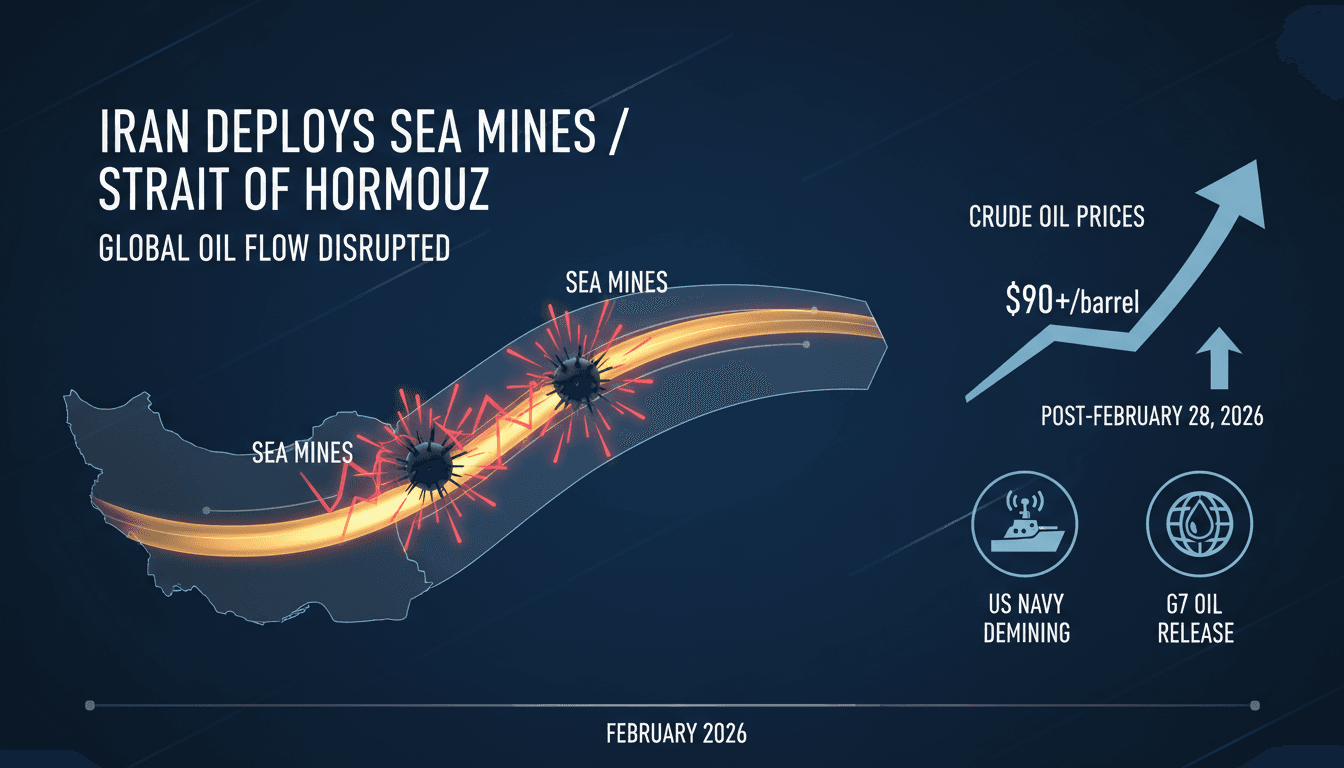
- Iran began laying naval mines in the Strait of Hormuz as part of its ongoing conflict with the United States and Israel.
- Shipping volumes have decreased due to heightened insurance risks, impacting the flow of oil from the Gulf.
- Crude oil prices have surged to nearly $100 per barrel amid fears of supply disruptions.
The context you actually need
- The 2026 Iran war started on February 28, 2026, with US and Israeli strikes on Iranian targets, escalating tensions in the region.
- Historically, Iran has used sea mines effectively, notably during the 1980s Iran-Iraq Tanker War, causing significant damage to vessels.
- Approximately 20% of global crude oil passes through the Strait of Hormuz, making it a vital artery for energy supplies.
What's really happening
Since early March 2026, Iran has strategically deployed a few dozen naval mines in the Strait of Hormuz, aiming to disrupt shipping lanes and exert economic pressure on the United States and its allies. The mines, which are relatively inexpensive and difficult to detect, have already had a significant impact on the global oil market. Insurers are wary of covering vessels operating in the region, leading to a reduction in shipping volumes. This is particularly concerning given that the Strait of Hormuz is responsible for facilitating around 20% of the world's crude oil consumption.
The current situation has resulted in a paradox: while the Strait remains open, the perceived risk of mines has effectively stranded Gulf oil production capacity of approximately 15 million barrels per day. This has caused crude oil prices to rise sharply, nearing $100 per barrel, with volatility expected as the situation develops. The economic implications are profound, as higher oil prices can lead to increased costs for consumers and businesses alike, potentially stalling economic recovery in various regions.
The United States has responded by targeting Iranian minelayers, with President Trump demanding immediate mine removal. However, experts like RAND's Scott Savitz note that the costs of demining operations are significantly higher—by one to three orders of magnitude—than the costs of laying the mines. This creates a challenging scenario for US forces, as they must weigh the risks and costs of engaging in demining versus the ongoing economic fallout from elevated oil prices.
As the situation unfolds, Asian nations, including Pakistan, India, and Thailand, have begun implementing energy conservation measures in response to the shortages and rising prices. This indicates a ripple effect that extends beyond the immediate conflict, affecting global energy consumption patterns and economic stability.
Who feels it first (and how)
- Oil producers: Countries reliant on oil exports may see revenue fluctuations.
- Shipping companies: Increased insurance costs and rerouting may impact profitability.
- Consumers: Higher fuel prices will affect transportation and goods costs.
- Asian economies: Nations dependent on oil imports may face energy shortages and economic strain.
What to watch next
- US military actions: Increased targeting of Iranian minelayers could alter the risk landscape for shipping in the region.
- Crude oil price trends: Continued volatility in oil prices will affect global markets and consumer costs.
- Energy conservation measures: The adoption of energy-saving policies in Asia could signal broader economic impacts.
Iran has laid mines in the Strait of Hormuz.
Crude oil prices will remain volatile as tensions escalate.
The duration and effectiveness of US military responses to Iranian actions.
Frequently Asked Questions
- Why it matters?
- The Strait of Hormuz is a critical chokepoint for global oil shipments, affecting energy prices worldwide.
- What happened (in 30 seconds)?
- Iran began laying naval mines in the Strait of Hormuz as part of its ongoing conflict with the United States and Israel. Shipping volumes have decreased due to heightened insurance risks, impacting the flow of oil from the Gulf. Crude oil prices have surged to nearly $100 per barrel amid fears of supply disruptions.
- What's really happening?
- Since early March 2026, Iran has strategically deployed a few dozen naval mines in the Strait of Hormuz, aiming to disrupt shipping lanes and exert economic pressure on the United States and its allies. The mines, which are relatively inexpensive and difficult to detect, have already had a significant impact on the global oil market. Insurers are wary of covering vessels operating in the region, leading to a reduction in shipping volumes. This is particularly concerning given that the Strait of
- Who feels it first (and how)?
- Oil producers: Countries reliant on oil exports may see revenue fluctuations. Shipping companies: Increased insurance costs and rerouting may impact profitability. Consumers: Higher fuel prices will affect transportation and goods costs. Asian economies: Nations dependent on oil imports may face energy shortages and economic strain.
- What to watch next?
- US military actions: Increased targeting of Iranian minelayers could alter the risk landscape for shipping in the region. Crude oil price trends: Continued volatility in oil prices will affect global markets and consumer costs. Energy conservation measures: The adoption of energy-saving policies in Asia could signal broader economic impacts.
Corporate leadership, finance, technology, and market trends.
"Fortune covers financial trends, leadership, and innovation with a pragmatic editorial approach."
— A47 Editor
Iran’s simplest weapon is now holding the global economy hostage
*# Iran's deployment of sea mines, a low-cost but highly destructive weapon, has raised global alarm by threatening shipping in the vital Strait of Hormuz, a chokepoint for much of the world's oil supply. *# This escalation puts Iran at the center of...
Global political, business, and cultural coverage from WSJ international desks.
"The Wall Street Journal offers extensive international reporting with a reputation for financial insight and a center-right editorial stance."
— A47 Editor
Iran’s Sea Mines Are One of Its Most Powerful Weapons
*# Iran's deployment of sea mines has emerged as a powerful tool, disrupting maritime traffic and threatening global energy supplies through the critical Strait of Hormuz, which handles about 20% of the world's oil shipments. *# The use of these simp...