
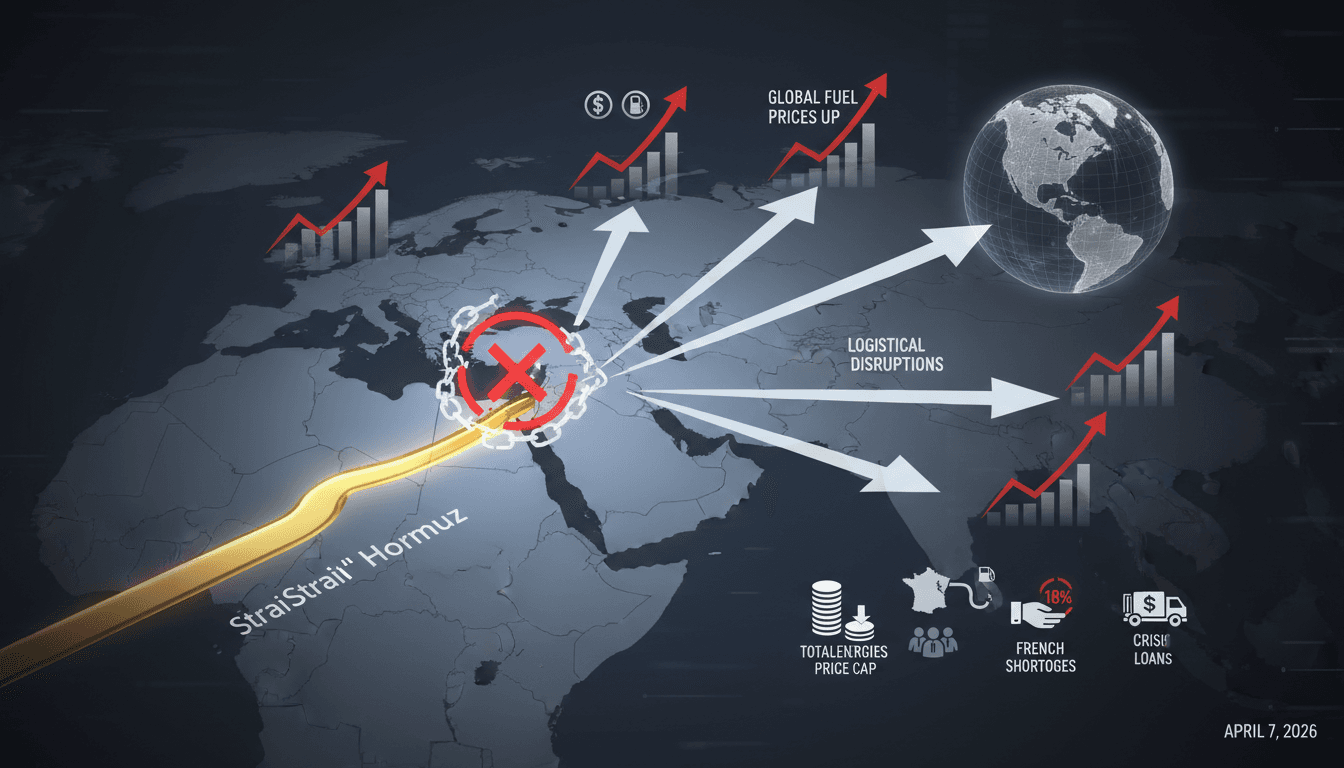
18% of French Fuel Stations Report Shortages Due to Logistical Disruptions
Here's what it means for you.
If you're in France or rely on its fuel imports, expect rising prices and potential supply disruptions.
Why it matters
This situation highlights vulnerabilities in global energy supply chains, affecting prices and availability across Europe.
What happened (in 30 seconds)
- On April 7, 2026, French Energy Minister Maud Bregeon reported that 18% of fuel stations in France are experiencing shortages of at least one fuel type.
- TotalEnergies, which controls 83% of affected stations, has imposed a price cap that has led to increased demand and distribution challenges.
- The shortages are linked to logistical disruptions exacerbated by the ongoing Iran War, which has significantly impacted global oil flows.
The context you actually need
- Iran's closure of the Strait of Hormuz in early March 2026 disrupted approximately 20% of global oil and gas flows, pushing Brent crude prices above $120 per barrel.
- TotalEnergies extended its price cap on petrol and diesel until April 7, leading to a rush at their stations and subsequent shortages.
- As of early April, shortages had escalated from less than 10% to 18%, with public discontent growing amid rising prices and protests from truckers.
What's really happening
The fuel shortages in France are primarily a result of logistical challenges stemming from a combination of factors, including the geopolitical landscape and corporate pricing strategies. The ongoing Iran War has created a significant disruption in global oil supply, particularly with the closure of the Strait of Hormuz, a critical chokepoint for oil transport. This closure has led to a surge in global oil prices, which have now exceeded $120 per barrel, creating a ripple effect across Europe.
In response to these rising costs, TotalEnergies implemented a price cap on fuel, which was lower than that of its competitors. This strategy was intended to attract more customers, but it inadvertently led to a rush at their stations, overwhelming their supply chains. As a result, 83% of the fuel stations experiencing shortages are affiliated with TotalEnergies. The company is now struggling to meet the heightened demand, which has been exacerbated by the logistical issues related to fuel distribution.
The French government has assured the public that there is no general supply shortage, emphasizing that the current issues are logistical rather than a failure in fuel supply. However, the reality on the ground is that many consumers are facing empty pumps, leading to frustration and protests, particularly among truckers who rely heavily on fuel for their operations. The government is preparing targeted aids and crisis loans for affected businesses, but the situation remains fluid.
As the crisis unfolds, the interconnectedness of global energy markets becomes increasingly evident. The price cap strategy may have been well-intentioned, but it has led to unintended consequences that are now affecting consumers and businesses alike. The ongoing geopolitical tensions and their impact on oil supply will likely continue to shape the landscape of fuel availability and pricing in France and beyond.
Who feels it first (and how)
- Consumers in France: Facing fuel shortages and rising prices at the pump.
- Truckers and logistics companies: Experiencing operational disruptions due to fuel availability issues.
- TotalEnergies: Struggling to manage supply and demand at its stations, facing potential reputational damage.
- European markets: Likely to see increased fuel prices and potential supply chain disruptions as a result of the situation.
What to watch next
- Fuel price trends: Monitor how fuel prices evolve in response to ongoing supply chain issues and geopolitical tensions.
- Government interventions: Watch for any new policies or support measures from the French government aimed at stabilizing the fuel market.
- Public response: Keep an eye on consumer sentiment and potential protests, which could impact logistics and supply chains further.
18% of fuel stations in France are experiencing shortages.
Continued logistical challenges will exacerbate fuel availability and pricing issues.
The long-term impact of the Iran War on global oil supply and how it will affect European markets.
Frequently Asked Questions
- Why it matters?
- This situation highlights vulnerabilities in global energy supply chains, affecting prices and availability across Europe.
- What happened (in 30 seconds)?
- On April 7, 2026, French Energy Minister Maud Bregeon reported that 18% of fuel stations in France are experiencing shortages of at least one fuel type. TotalEnergies, which controls 83% of affected stations, has imposed a price cap that has led to increased demand and distribution challenges. The shortages are linked to logistical disruptions exacerbated by the ongoing Iran War, which has significantly impacted global oil flows.
- What's really happening?
- The fuel shortages in France are primarily a result of logistical challenges stemming from a combination of factors, including the geopolitical landscape and corporate pricing strategies. The ongoing Iran War has created a significant disruption in global oil supply, particularly with the closure of the Strait of Hormuz, a critical chokepoint for oil transport. This closure has led to a surge in global oil prices, which have now exceeded $120 per barrel, creating a ripple effect across Europe.
- Who feels it first (and how)?
- Consumers in France: Facing fuel shortages and rising prices at the pump. Truckers and logistics companies: Experiencing operational disruptions due to fuel availability issues. TotalEnergies: Struggling to manage supply and demand at its stations, facing potential reputational damage. European markets: Likely to see increased fuel prices and potential supply chain disruptions as a result of the situation.
- What to watch next?
- Fuel price trends: Monitor how fuel prices evolve in response to ongoing supply chain issues and geopolitical tensions. Government interventions: Watch for any new policies or support measures from the French government aimed at stabilizing the fuel market. Public response: Keep an eye on consumer sentiment and potential protests, which could impact logistics and supply chains further.
Pan-Arab news coverage spanning politics, business, sports, and regional affairs.
"Asharq Al-Awsat reflects a broad Arab editorial perspective with strong attention to regional geopolitics."
— A47 Editor
وزيرة فرنسية: 18 % من محطات الوقود تعاني نقصاً في الإمدادات
French Minister of State for Energy, Mod Bréguion, announced on Tuesday that approximately 18% of fuel stations in France are experiencing shortages of various types of fuel. This situation highlights ongoing supply chain issues affecting the energy ...
Arabic-language digital news outlet covering UAE, regional, and international developments with broad general-news coverage.
"Al Ain News coverage typically blends UAE-focused reporting with wider Arab regional and international news."
— A47 Editor
وزيرة فرنسية: نحو 18% من محطات الوقود تعاني نقصا في الإمدادات
French Minister of State for Energy, Mod Brignon, announced that approximately 18% of fuel stations in France are currently experiencing shortages of various types of fuel as of Tuesday. This situation highlights ongoing supply chain issues affecting...
Arabic-language UAE newspaper coverage focused on domestic affairs, public institutions, business, society, and regional developments.
"Al Khaleej coverage generally reflects a mainstream UAE editorial lens with strong attention to public affairs, institutions, and regional developments."
— A47 Editor
وزيرة فرنسية: 18% من محطات الوقود تعاني نقصاً في الإمدادات
French Minister of State for Energy, Agnès Pannier-Runacher, reported that approximately 18% of fuel stations in France are experiencing supply shortages as of Tuesday morning. She noted in an interview with BFMTV that TotalEnergies has set a retail ...