
AI Automation Addresses Telecom Operators Broken Business Models
Here's what it means for you.
As telecom operators embrace AI, expect shifts in service quality and pricing that could impact your connectivity experience.
Why it matters
Telecom operators are under pressure to innovate and reduce costs amid stagnant revenues, making AI automation a critical solution.
What happened (in 30 seconds)
- Telecom operators are transitioning from pilot projects to live deployments of AI-driven automation in their networks.
- Industry leaders like AT&T and Orange are unveiling strategies to leverage AI for operational efficiencies and new revenue streams.
- Positive sentiment at MWC 2026 indicates a collective optimism about AI's potential to reshape telecom business models.
The context you actually need
- Revenue stagnation: Telecom operators have faced flat revenues despite increased network traffic, pushing them to seek new solutions.
- AI discussions: The telecom industry has been discussing AI and automation for over 10 years, but tangible operational cost reductions are only now becoming evident.
- Market pressure: The need for high-performance connectivity is driving operators to adopt AI technologies to remain competitive.
What's really happening
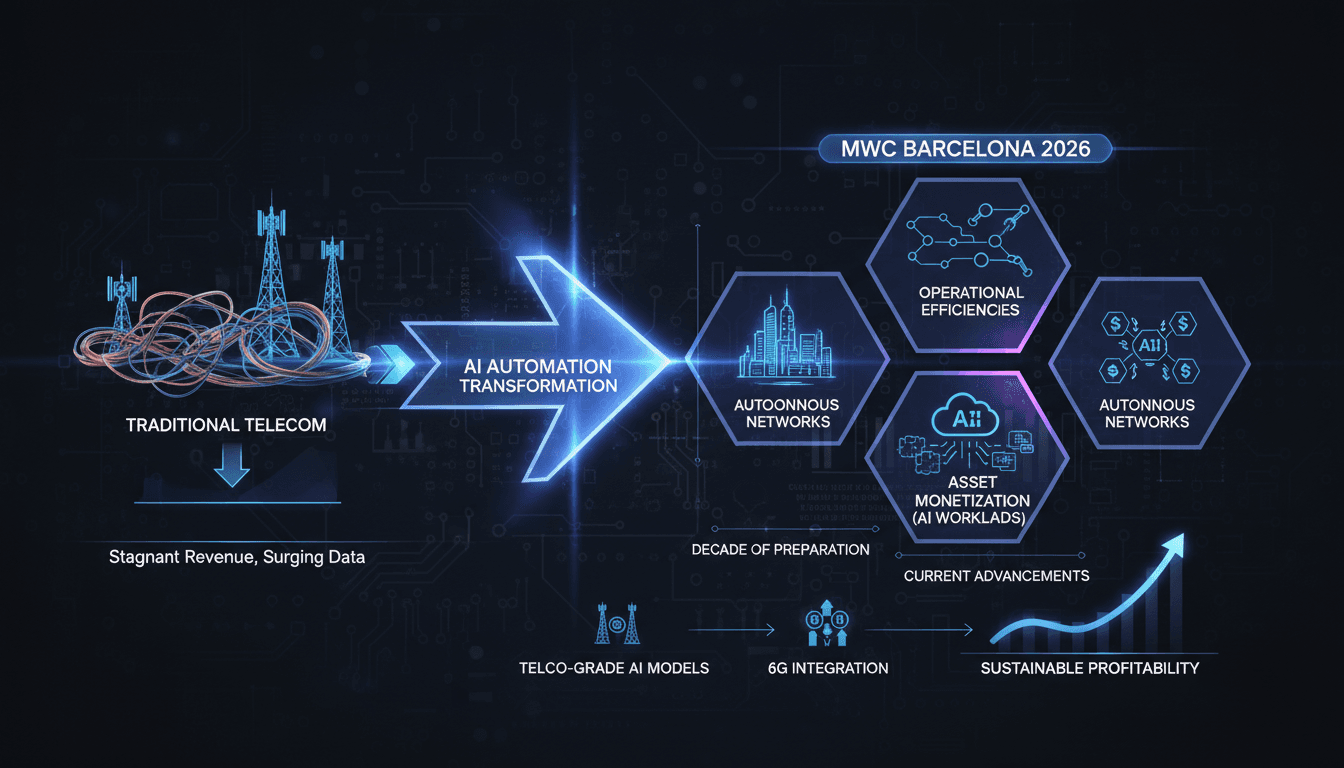
AI-driven automation in telecom infrastructure is fundamentally reshaping how networks operate and how telecom companies generate revenue. The core of this transformation lies in the development of intent-driven autonomous networks, which utilize embedded AI models to enhance efficiency across radio, core, and cloud infrastructures. This shift is not merely about adopting new technology; it represents a strategic pivot toward a more agile and responsive operational model.
Historically, telecom operators have struggled with commoditization, particularly as voice services transitioned into data payloads. This shift has led to a stagnation in revenue growth, even as demand for connectivity has surged. The introduction of AI into this landscape offers a potential remedy, enabling operators to automate routine tasks, optimize network performance, and reduce operational costs. By leveraging AI, companies can analyze vast amounts of data in real-time, allowing them to make informed decisions that enhance service delivery and customer satisfaction.
Moreover, the discussions at MWC 2026 highlighted a growing consensus among industry leaders about the necessity of adopting AI-driven models. Companies like AT&T and Orange are leading the charge, with initiatives designed to integrate AI into their operational frameworks. For instance, AT&T's Open Telco AI initiative aims to create a more interconnected and efficient telecom ecosystem, while Orange's strategy focuses on automating processes to improve service quality and reduce costs.
The implications of this shift extend beyond operational efficiency. AI-driven automation is expected to foster new revenue opportunities through innovative pricing models and enhanced service offerings. As operators become more adept at utilizing AI, they can offer granular pricing structures that reflect real-time demand and usage patterns, ultimately benefiting consumers with more tailored services.
However, the transition is not without challenges. Operators must navigate the complexities of integrating AI technologies into existing infrastructures while ensuring data security and compliance with regulatory standards. The journey from pilot programs to full-scale deployment requires significant investment and commitment, but the potential rewards—both in terms of cost savings and enhanced customer experiences—are driving this transformation forward.
Who feels it first (and how)
- Telecom operators: They will experience operational changes and cost reductions as AI automates routine tasks.
- Consumers: Improved service quality and potentially new pricing models will directly affect their connectivity experience.
- Tech vendors: Companies providing AI solutions will see increased demand for their products and services in the telecom sector.
- Investors: Those investing in telecom companies may witness shifts in profitability and market dynamics as operators adapt to AI-driven models.
What to watch next
- Deployment timelines: Monitor the pace at which telecom operators move from pilot projects to full-scale AI integration, as this will indicate the industry's readiness for transformation.
- Consumer adoption: Watch how consumers respond to new pricing models and service offerings, as their acceptance will be crucial for the success of AI initiatives.
- Regulatory developments: Keep an eye on regulations surrounding data privacy and AI usage in telecom, as these will impact how quickly and effectively operators can implement new technologies.
Telecom operators are actively pursuing AI-driven automation to improve operational efficiency.
New revenue models and pricing strategies will emerge as AI technologies are integrated into telecom infrastructures.
The long-term impact on consumer pricing and service quality remains to be fully understood as the industry transitions.
Frequently Asked Questions
- Why it matters?
- Telecom operators are under pressure to innovate and reduce costs amid stagnant revenues, making AI automation a critical solution.
- What happened (in 30 seconds)?
- Telecom operators are transitioning from pilot projects to live deployments of AI-driven automation in their networks. Industry leaders like AT&T and Orange are unveiling strategies to leverage AI for operational efficiencies and new revenue streams. Positive sentiment at MWC 2026 indicates a collective optimism about AI's potential to reshape telecom business models.
- What's really happening?
- AI-driven automation in telecom infrastructure is fundamentally reshaping how networks operate and how telecom companies generate revenue. The core of this transformation lies in the development of intent-driven autonomous networks, which utilize embedded AI models to enhance efficiency across radio, core, and cloud infrastructures. This shift is not merely about adopting new technology; it represents a strategic pivot toward a more agile and responsive operational model. Historically, telecom
- Who feels it first (and how)?
- Telecom operators: They will experience operational changes and cost reductions as AI automates routine tasks. Consumers: Improved service quality and potentially new pricing models will directly affect their connectivity experience. Tech vendors: Companies providing AI solutions will see increased demand for their products and services in the telecom sector. Investors: Those investing in telecom companies may witness shifts in profitability and market dynamics as operators adapt to AI-dri
- What to watch next?
- Deployment timelines: Monitor the pace at which telecom operators move from pilot projects to full-scale AI integration, as this will indicate the industry's readiness for transformation. Consumer adoption: Watch how consumers respond to new pricing models and service offerings, as their acceptance will be crucial for the success of AI initiatives. Regulatory developments: Keep an eye on regulations surrounding data privacy and AI usage in telecom, as these will impact how quickly and effect
Policy and strategy for digital leaders, including AI.
"Analyzes AI in the context of enterprise strategy."
— A47 Editor
AI driven automation of telcoms infrastructure is “turning the page” for operators’ broken business model
Telecom operators at MWC 2026 expressed optimism as AI-driven automation emerged as a key factor in revitalizing their business models, signaling a potential turnaround for the industry.
Electronics industry news including AI chips.
"Covers semiconductors and embedded AI trends."
— A47 Editor
MWC 2026 Concludes as Telcos Pivot to AI
MWC 2026 concluded with telecommunications companies shifting their focus toward artificial intelligence, as debates over GPUs versus CPUs and the future of 6G dominated discussions.