
US Oil Exports Projected to Reach Record Levels Amid Middle East Conflicts
Here's what it means for you.
Rising US oil exports could lead to higher domestic fuel prices, impacting your wallet directly.
Why it matters
The surge in US oil exports reflects a strategic pivot in global energy supply chains, driven by geopolitical instability.
What happened (in 30 seconds)
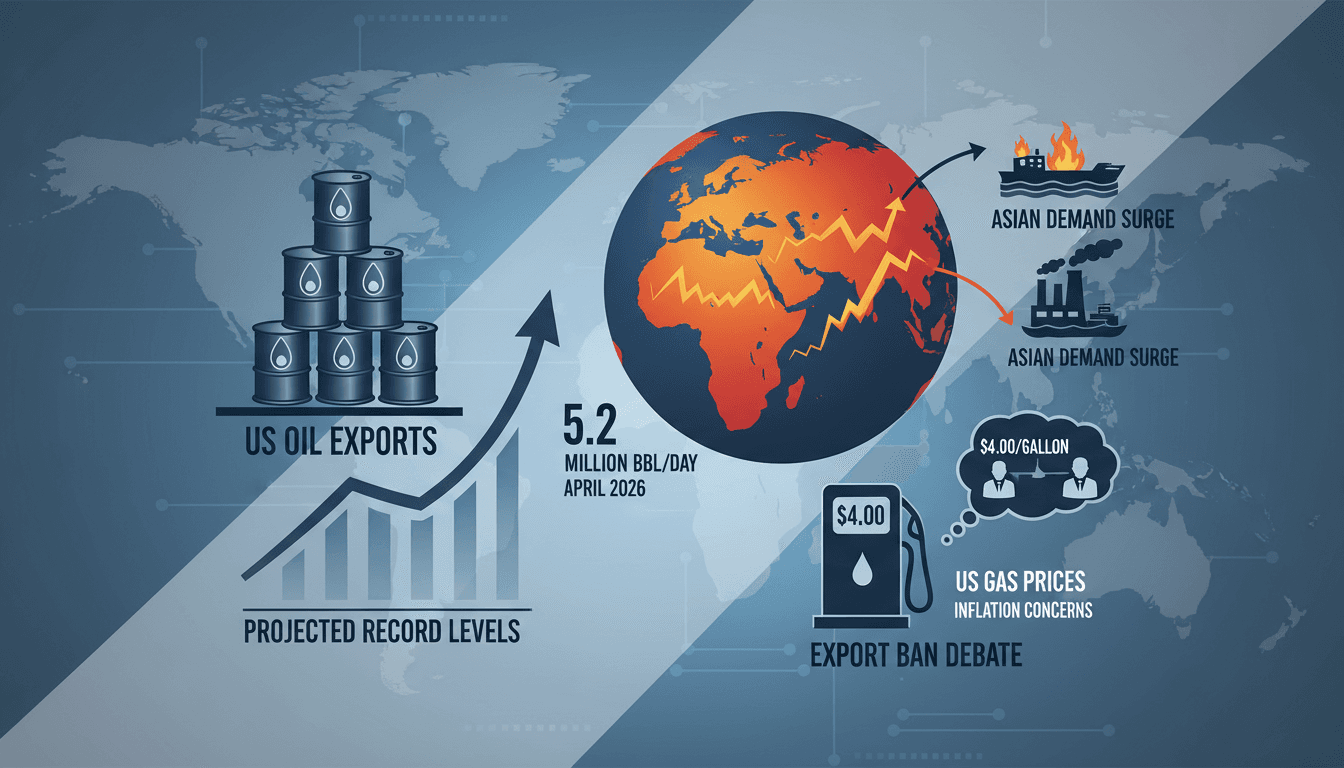
- US crude oil exports are projected to reach 5.2 million barrels per day by April 2026, a 33% increase from March.
- Asian demand for oil has surged by 82%, driven by disruptions in the Middle East, particularly the Iran conflict.
- Domestic gasoline prices have risen above $4 per gallon, prompting political debates over potential export bans.
The context you actually need
- Middle East conflicts are disrupting oil flows, particularly through the Strait of Hormuz, which is critical for global oil supply.
- Asian nations are diversifying their oil imports, increasingly turning to US crude as a reliable alternative.
- US domestic prices are rising, with gasoline and diesel costs nearing record highs, leading to public concern and political pressure.
What's really happening
The ongoing conflicts in the Middle East, particularly between Iran and Israel, have created significant disruptions in oil supply routes, especially through the Strait of Hormuz, a crucial passage for global oil transport. This geopolitical instability has led to a dramatic shift in energy sourcing, with Asian countries increasingly looking to the United States for crude oil. According to Kepler Energy Research, US crude oil exports are expected to reach a record 5.2 million barrels per day in April 2026, a substantial increase from the previous month’s 3.9 million barrels per day.
As Asian demand surges—up 82% to 2.5 million barrels per day—US suppliers are poised to capitalize on this shift. The current situation has resulted in a fleet of 68 tankers en route to US ports, compared to the 27-tanker average from the previous year. This influx of demand not only enhances the US's status as a global energy supplier but also creates a ripple effect on domestic fuel prices. Gasoline prices have climbed above $4 per gallon, while diesel prices are nearing $5.81, prompting widespread public concern, as highlighted by a Pew poll indicating that 70% of Americans are worried about rising costs.
In response to these pressures, the Trump administration has released 170 million barrels from the Strategic Petroleum Reserve to stabilize prices, although this move has faced criticism for potentially benefiting foreign buyers at the expense of domestic consumers. Meanwhile, Democratic lawmakers are advancing proposals for an export ban amid rising prices and midterm election pressures, reflecting the political stakes involved in energy policy.
The situation is further complicated by the US's ability to import heavy crude from Venezuela, which allows for increased exports of lighter shale oil. This dynamic positions the US uniquely within the global oil market, but it also raises questions about the sustainability of this export-driven growth, especially if domestic prices continue to rise.
Who feels it first (and how)
- Consumers: Higher gasoline and diesel prices directly affect household budgets, especially for lower-income families reliant on transportation.
- Energy Sector Workers: Increased exports may lead to job growth in oil production and logistics, but volatility in prices can create job insecurity.
- Political Leaders: Rising fuel prices may prompt legislative action and influence voter sentiment ahead of elections, particularly among Democrats facing pressure to address economic concerns.
What to watch next
- Domestic Fuel Prices: Monitor gasoline and diesel prices; if they approach $6 per gallon, expect intensified political action and potential policy shifts.
- Legislative Developments: Watch for progress on proposed export bans or other regulatory measures aimed at controlling domestic fuel prices.
- Geopolitical Events: Keep an eye on developments in the Middle East, particularly any escalations that could further disrupt oil supply chains.
US oil exports are rising significantly due to increased demand from Asia.
Domestic fuel prices will continue to rise, prompting political debates and potential legislative actions.
The long-term sustainability of US oil exports amid fluctuating global demand and geopolitical tensions remains uncertain.
Frequently Asked Questions
- Why it matters?
- The surge in US oil exports reflects a strategic pivot in global energy supply chains, driven by geopolitical instability.
- What happened (in 30 seconds)?
- US crude oil exports are projected to reach 5.2 million barrels per day by April 2026, a 33% increase from March. Asian demand for oil has surged by 82%, driven by disruptions in the Middle East, particularly the Iran conflict. Domestic gasoline prices have risen above $4 per gallon, prompting political debates over potential export bans.
- What's really happening?
- The ongoing conflicts in the Middle East, particularly between Iran and Israel, have created significant disruptions in oil supply routes, especially through the Strait of Hormuz, a crucial passage for global oil transport. This geopolitical instability has led to a dramatic shift in energy sourcing, with Asian countries increasingly looking to the United States for crude oil. According to Kepler Energy Research, US crude oil exports are expected to reach a record 5.2 million barrels per day in
- Who feels it first (and how)?
- Consumers: Higher gasoline and diesel prices directly affect household budgets, especially for lower-income families reliant on transportation. Energy Sector Workers: Increased exports may lead to job growth in oil production and logistics, but volatility in prices can create job insecurity. Political Leaders: Rising fuel prices may prompt legislative action and influence voter sentiment ahead of elections, particularly among Democrats facing pressure to address economic concerns.
- What to watch next?
- Domestic Fuel Prices: Monitor gasoline and diesel prices; if they approach $6 per gallon, expect intensified political action and potential policy shifts. Legislative Developments: Watch for progress on proposed export bans or other regulatory measures aimed at controlling domestic fuel prices. Geopolitical Events: Keep an eye on developments in the Middle East, particularly any escalations that could further disrupt oil supply chains.
Pan-Arab news coverage spanning politics, business, sports, and regional affairs.
"Asharq Al-Awsat reflects a broad Arab editorial perspective with strong attention to regional geopolitics."
— A47 Editor
سباق عالمي لتأمين الطاقة يدفع صادرات النفط الأميركية نحو أرقام غير مسبوقة
U.S. crude oil exports are projected to reach unprecedented levels in April, driven by a global race to secure energy supplies. This surge reflects the increasing demand for oil as countries seek to enhance their energy security amid fluctuating mark...
Editor-curated FT homepage stories spanning markets, business, world, and opinion.
"The Financial Times is a globally respected business publication with a centrist/center-left tone and strong markets focus."
— A47 Editor
US oil exports to hit record as Iran war triggers race for supplies
US oil exports are projected to reach record levels as an influx of Asian tankers heads to American ports, driven by energy shortages exacerbated by the ongoing conflict in Iran. This surge in exports highlights the increasing demand for US crude oil...