
Turkey Warns of Devastating Impact from US Withdrawal on European Security
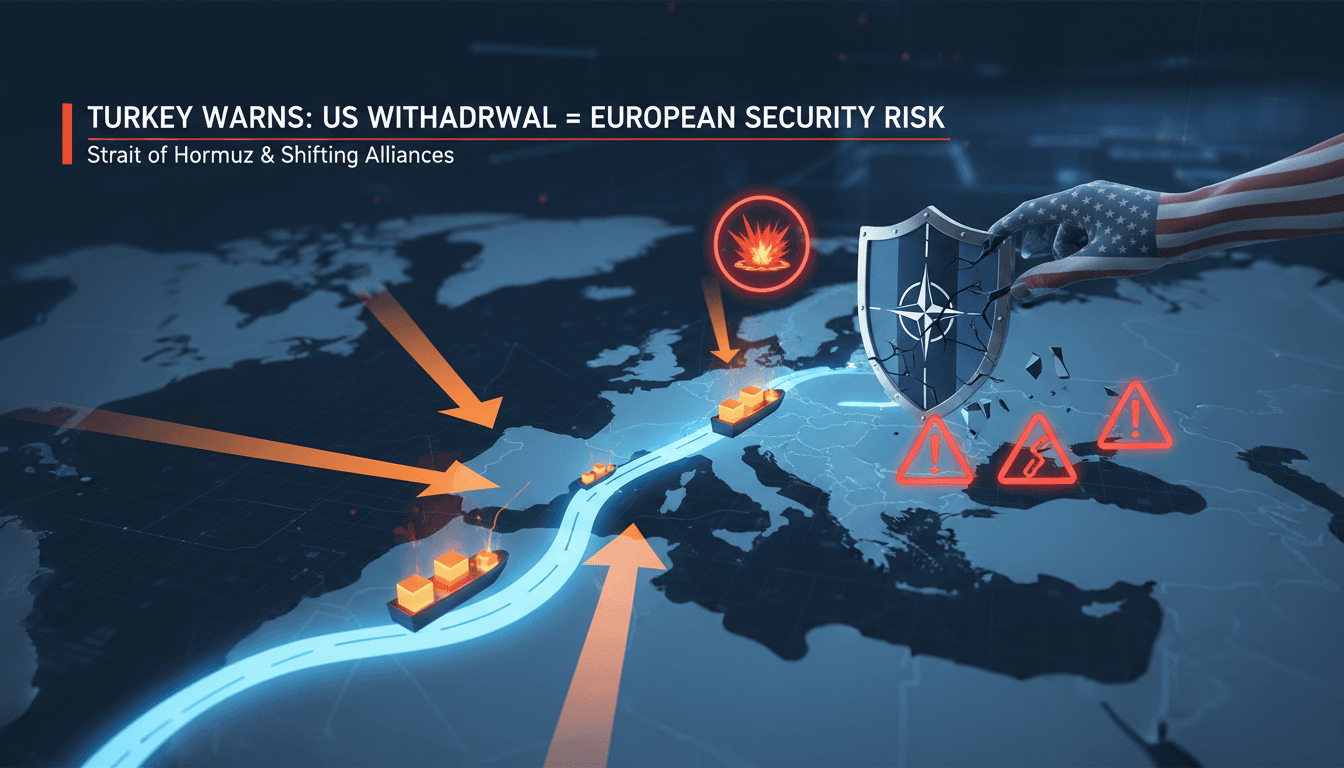
Here's what it means for you.
If you're in the energy sector or involved in international trade, the shifting dynamics of NATO could impact your operations and costs.
Why it matters
The potential U.S. withdrawal from European security structures could destabilize energy markets and defense alliances, affecting global supply chains.
What happened (in 30 seconds)
- On April 18, 2026, Turkish Foreign Minister Hakan Fidan warned that a partial U.S. withdrawal from NATO could be destructive for Europe.
- Fidan criticized European NATO members for unilateral decisions that conflict with alliance positions, urging a reset of ties with the U.S.
- Tensions escalated following European refusal to send naval vessels to the Strait of Hormuz amid the U.S.-Israel war against Iran.
The context you actually need
- NATO tensions have risen since the reelection of U.S. President Donald Trump, who has threatened to withdraw U.S. forces from the alliance.
- European NATO allies are considering forming a 'European NATO' as a contingency plan, reflecting dissatisfaction with U.S. commitments.
- Turkey, a key NATO member, is advocating for alliance cohesion amid broader geopolitical strains, including conflicts in Ukraine and Libya.
What's really happening
The recent remarks by Turkish Foreign Minister Hakan Fidan highlight a critical juncture for NATO and European security. The backdrop of these tensions is rooted in the U.S.-Israel war against Iran, which has strained relations between the U.S. and its European allies. The refusal of European NATO members to send naval vessels to the Strait of Hormuz has intensified U.S. frustrations, leading President Trump to threaten a partial withdrawal of U.S. forces from Europe.
As of December 2025, there were approximately 68,064 active-duty U.S. military personnel stationed in Europe. This presence has been a cornerstone of European security for decades, deterring potential aggressors and providing a framework for collective defense. However, Trump's threats to withdraw these forces, coupled with his interest in acquiring Greenland and dissatisfaction with European defense spending, have raised alarms among NATO allies.
Fidan's comments at the Antalya Diplomacy Forum reflect a growing concern that unilateral actions by European nations could fracture NATO's cohesion. He emphasized the need for a coordinated approach to U.S. withdrawal, warning that any disjointed exit could lead to significant instability in Europe. The upcoming NATO summit in Ankara on July 7-8, 2026, is seen as a pivotal moment for recalibrating U.S.-European relations and addressing these tensions.
The implications of a U.S. withdrawal extend beyond military considerations. Energy markets could face disruptions, particularly given that nearly 20% of global oil transits through the Strait of Hormuz. A diminished U.S. role in European security could lead to increased volatility in the Gulf region, prompting countries like the UAE to diversify their defense suppliers and alliances. This shift could also impact trade routes and aviation, as heightened regional instability may lead to increased costs and logistical challenges.
Who feels it first (and how)
- Energy sector professionals: Increased costs and supply chain disruptions due to instability in the Strait of Hormuz.
- Defense contractors: Potential shifts in contracts and partnerships as European nations explore alternative security arrangements.
- International traders: Heightened risks and costs associated with shipping routes affected by geopolitical tensions.
What to watch next
- NATO summit outcomes: The decisions made at the July 2026 summit will be crucial for shaping future U.S.-European relations and NATO's cohesion.
- European defense spending: Watch for changes in defense budgets as European nations respond to perceived threats and consider forming a 'European NATO.'
- Energy market fluctuations: Monitor oil prices and supply chain stability as tensions in the Strait of Hormuz evolve, impacting global energy markets.
U.S. military presence in Europe is significant, with over 68,000 personnel stationed there.
European nations will increase defense spending and explore alternative alliances if U.S. commitments wane.
The long-term impact on global energy markets and trade routes remains uncertain as geopolitical tensions evolve.
Frequently Asked Questions
- Why it matters?
- The potential U.S. withdrawal from European security structures could destabilize energy markets and defense alliances, affecting global supply chains.
- What happened (in 30 seconds)?
- On April 18, 2026, Turkish Foreign Minister Hakan Fidan warned that a partial U.S. withdrawal from NATO could be destructive for Europe. Fidan criticized European NATO members for unilateral decisions that conflict with alliance positions, urging a reset of ties with the U.S. Tensions escalated following European refusal to send naval vessels to the Strait of Hormuz amid the U.S.-Israel war against Iran.
- What's really happening?
- The recent remarks by Turkish Foreign Minister Hakan Fidan highlight a critical juncture for NATO and European security. The backdrop of these tensions is rooted in the U.S.-Israel war against Iran, which has strained relations between the U.S. and its European allies. The refusal of European NATO members to send naval vessels to the Strait of Hormuz has intensified U.S. frustrations, leading President Trump to threaten a partial withdrawal of U.S. forces from Europe. As of December 2025, ther
- Who feels it first (and how)?
- Energy sector professionals: Increased costs and supply chain disruptions due to instability in the Strait of Hormuz. Defense contractors: Potential shifts in contracts and partnerships as European nations explore alternative security arrangements. International traders: Heightened risks and costs associated with shipping routes affected by geopolitical tensions.
- What to watch next?
- NATO summit outcomes: The decisions made at the July 2026 summit will be crucial for shaping future U.S.-European relations and NATO's cohesion. European defense spending: Watch for changes in defense budgets as European nations respond to perceived threats and consider forming a 'European NATO.' Energy market fluctuations: Monitor oil prices and supply chain stability as tensions in the Strait of Hormuz evolve, impacting global energy markets.
Pan-Arab news coverage spanning politics, business, sports, and regional affairs.
"Asharq Al-Awsat reflects a broad Arab editorial perspective with strong attention to regional geopolitics."
— A47 Editor
تركيا: انسحاب أميركا من البنية الأمنية الأوروبية قد يكون مدمراً
Turkish Foreign Minister stated that discussions are ongoing regarding the potential impacts of a U.S. withdrawal from the European security architecture and how to mitigate those effects.
Regional coverage and analysis focused on politics, diplomacy, and business across the Middle East.
"Al-Monitor is known for analytical reporting on Middle East politics and policy developments."
— A47 Editor
Turkey says US withdrawal from European security architecture could be 'destructive'
Turkish Foreign Minister Hakan Fidan stated that discussions are ongoing regarding the potential withdrawal of the United States from the European security architecture, warning that such a move could be 'destructive' if not coordinated properly.