
Trump Advocates for Toll-Free Reopening of Strait of Hormuz During Ceasefire Talks
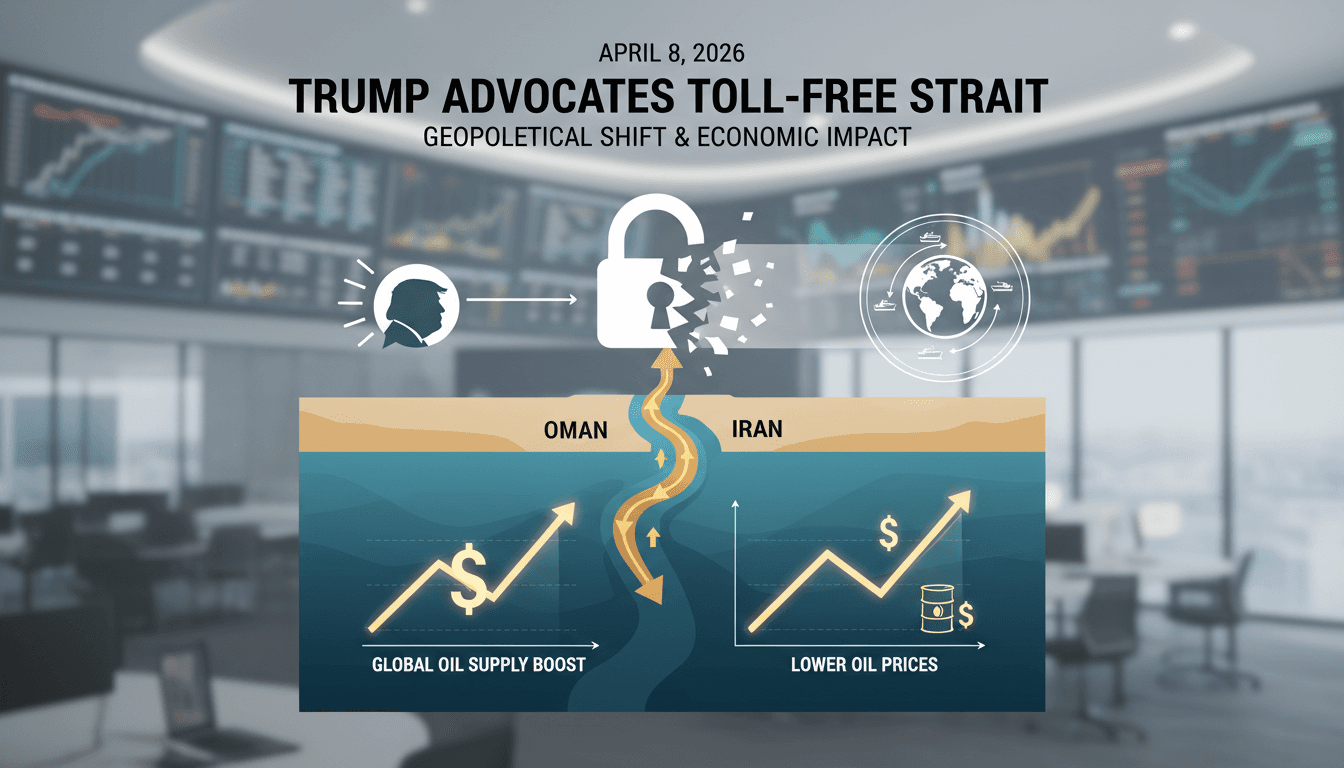
Here's what it means for you.
If you rely on global energy markets, the reopening of the Strait of Hormuz without tolls could stabilize oil prices and reduce costs for consumers.
Why it matters
The Strait of Hormuz is a critical maritime chokepoint for global oil and LNG, affecting supply chains and energy prices worldwide.
What happened (in 30 seconds)
- On April 8, 2026, White House Press Secretary Karoline Leavitt announced President Trump's push for toll-free reopening of the Strait of Hormuz.
- This announcement follows a two-week ceasefire between the US and Iran, which partially reopened the strait after a month-long closure due to regional conflicts.
- Iran has proposed tolls during ongoing negotiations, but the US is advocating for free passage to facilitate increased maritime traffic.
The context you actually need
- 20% of the world's seaborne oil and LNG flows through the Strait of Hormuz, making it a vital artery for global energy supply.
- Iran's closure of the strait in late March 2026 escalated tensions, leading to threats from President Trump and ultimatums for reopening.
- The UAE has demanded that Iran cease attacks and ensure unconditional access to the strait, warning of economic repercussions if tolls or further conflicts arise.
What's really happening
The Strait of Hormuz has long been a flashpoint in geopolitical tensions, particularly between the US and Iran. As of late March 2026, Iran's closure of the strait significantly impacted global oil markets, leading to surges in prices above $120 per barrel. This closure was a response to escalating regional conflicts, particularly Israeli strikes on Hezbollah in Lebanon, which prompted a series of ultimatums from President Trump.
Trump's administration has leveraged the reopening of the strait as a critical diplomatic goal, emphasizing the need for toll-free access to ensure the continuous flow of oil and gas. The White House's recent announcement reflects a strategic pivot to stabilize energy markets amid rising prices and inflationary pressures that have affected consumers globally.
Iran's proposal for tolls during negotiations complicates the situation, as it could introduce new costs for shipping companies and potentially lead to further escalations if not resolved amicably. The US administration's insistence on free passage aims to alleviate market fears and restore confidence in energy supply chains, which are crucial for economies heavily reliant on oil imports.
The partial reopening of the strait, coupled with a ceasefire, has already led to a drop in global oil prices, with Brent crude falling below $100 per barrel. This shift is significant for consumers and businesses alike, as it could translate to lower fuel prices and reduced inflationary pressures. However, the UAE's demands for compensation and assurances of security highlight the fragility of the current situation, with potential risks looming if negotiations falter.
As the situation evolves, the dynamics of energy supply and geopolitical relations will continue to shape market conditions, impacting everything from fuel prices to international trade agreements. The outcome of these negotiations will not only affect the immediate stakeholders but also reverberate through global markets, influencing economic conditions worldwide.
Who feels it first (and how)
- Energy companies: They will see immediate impacts on operational costs and pricing strategies.
- Consumers: Lower oil prices could lead to reduced fuel costs, benefiting households and businesses.
- Shipping and logistics firms: Changes in toll structures will directly affect their operational expenses and shipping rates.
- Investors in oil markets: Fluctuations in oil prices will influence investment strategies and market stability.
- UAE residents: They may experience relief from inflationary pressures tied to energy costs.
What to watch next
- Iran's response to US demands: Their willingness to negotiate on tolls will be crucial for the stability of the Strait of Hormuz.
- Global oil price trends: Continued monitoring of Brent crude prices will indicate market reactions to developments in the region.
- Geopolitical developments: Any escalation in US-Iran tensions could lead to renewed volatility in energy markets.
The Strait of Hormuz is essential for global oil and LNG transit, affecting international energy prices.
If toll-free access is granted, oil prices may stabilize, benefiting consumers and businesses.
The long-term implications of Iran's negotiations and regional stability remain uncertain.
Frequently Asked Questions
- Why it matters?
- The Strait of Hormuz is a critical maritime chokepoint for global oil and LNG, affecting supply chains and energy prices worldwide.
- What happened (in 30 seconds)?
- On April 8, 2026, White House Press Secretary Karoline Leavitt announced President Trump's push for toll-free reopening of the Strait of Hormuz. This announcement follows a two-week ceasefire between the US and Iran, which partially reopened the strait after a month-long closure due to regional conflicts. Iran has proposed tolls during ongoing negotiations, but the US is advocating for free passage to facilitate increased maritime traffic.
- What's really happening?
- The Strait of Hormuz has long been a flashpoint in geopolitical tensions, particularly between the US and Iran. As of late March 2026, Iran's closure of the strait significantly impacted global oil markets, leading to surges in prices above $120 per barrel. This closure was a response to escalating regional conflicts, particularly Israeli strikes on Hezbollah in Lebanon, which prompted a series of ultimatums from President Trump. Trump's administration has leveraged the reopening of the strait
- Who feels it first (and how)?
- Energy companies: They will see immediate impacts on operational costs and pricing strategies. Consumers: Lower oil prices could lead to reduced fuel costs, benefiting households and businesses. Shipping and logistics firms: Changes in toll structures will directly affect their operational expenses and shipping rates. Investors in oil markets: Fluctuations in oil prices will influence investment strategies and market stability. UAE residents: They may experience relief from inflationary
- What to watch next?
- Iran's response to US demands: Their willingness to negotiate on tolls will be crucial for the stability of the Strait of Hormuz. Global oil price trends: Continued monitoring of Brent crude prices will indicate market reactions to developments in the region. Geopolitical developments: Any escalation in US-Iran tensions could lead to renewed volatility in energy markets.
Arabic-language UAE newspaper coverage focused on domestic affairs, public institutions, business, society, and regional developments.
"Al Khaleej coverage generally reflects a mainstream UAE editorial lens with strong attention to public affairs, institutions, and regional developments."
— A47 Editor
البيت الأبيض: ترامب يضغط لمعاودة فتح «هرمز» دون رسوم
White House spokesperson Caroline Levitt announced that President Donald Trump is advocating for the reopening of the Strait of Hormuz to oil tankers and other vessels without any restrictions, including tolls. Levitt emphasized that the president's ...
Macro commentary, policy analysis, growth/inflation themes, and global outlooks.
"Contextual macro coverage that complements day-to-day market headlines."
— A47 Editor
Trump pushes for Strait of Hormuz reopening without tolls, White House says
President Donald Trump is advocating for the reopening of the Strait of Hormuz without tolls, emphasizing its importance for global oil shipments. This push comes amid heightened tensions with Iran, which has been given a deadline to comply with U.S....