
Rockefeller University develops CRISPR method to produce broadly neutralizing antibodies
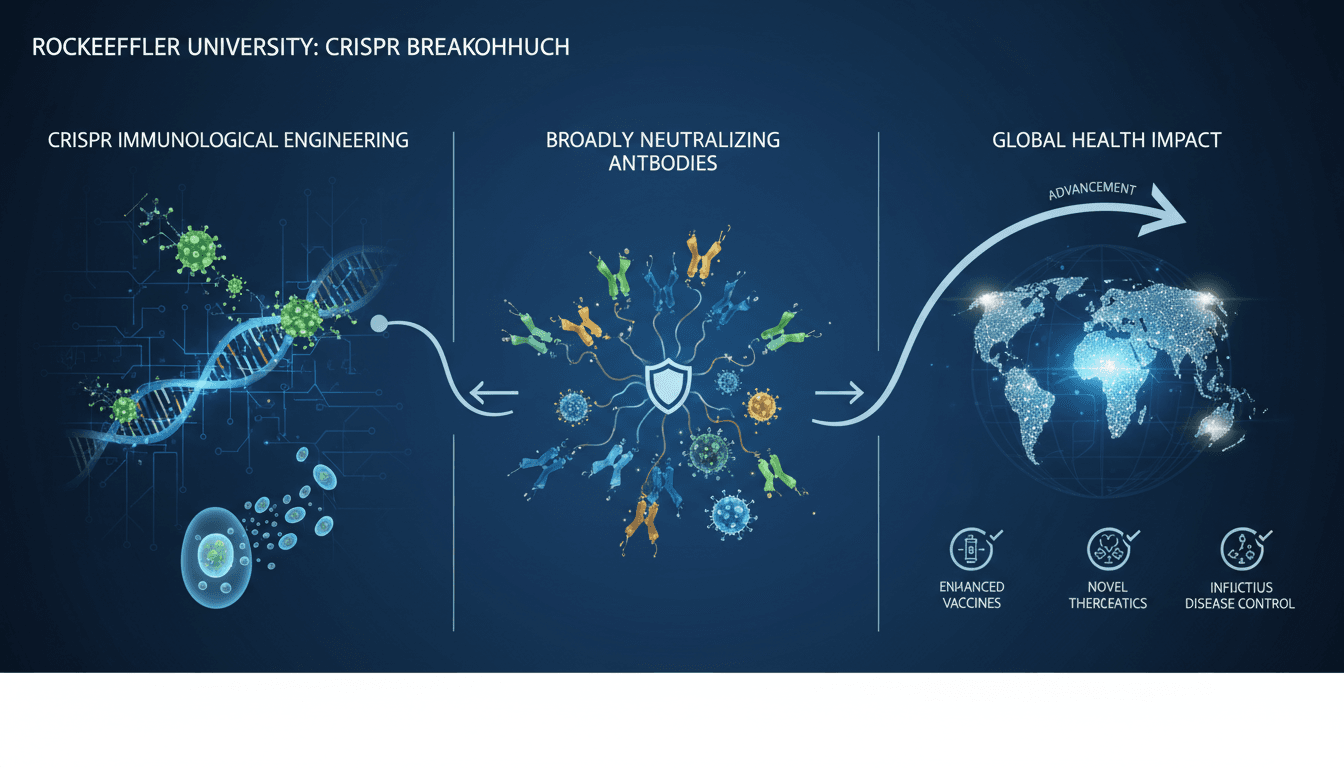
Here's what it means for you.
This breakthrough could redefine immunotherapy, potentially making advanced treatments more accessible worldwide.
Why it matters
The ability to produce broadly neutralizing antibodies could significantly enhance vaccine efficacy against persistent global health threats.
What happened (in 30 seconds)
- On April 16, 2026, researchers at Rockefeller University announced a CRISPR-based method to reprogram hematopoietic stem cells.
- The technique enables the immune system to produce rare broadly neutralizing antibodies (bnAbs) and therapeutic proteins, addressing challenges in combating pathogens like HIV and influenza.
- Preclinical trials in mice showed long-term antibody production and protection against lethal influenza, with potential applications for human cells.
The context you actually need
- Broadly neutralizing antibodies are crucial for effective vaccines against evasive pathogens, which often evade immune responses.
- Current strategies for eliciting bnAbs have had limited success, necessitating innovative approaches like the one developed at Rockefeller University.
- Global health priorities are increasingly focused on infectious diseases, with funding from institutions aimed at enhancing research and development in this area.
What's really happening
Researchers in Michel Nussenzweig's Laboratory of Molecular Immunology have developed a groundbreaking platform utilizing CRISPR-Cas9 technology to insert genes encoding broadly neutralizing antibodies into hematopoietic stem and progenitor cells (HSPCs). This innovative approach requires only a few dozen edited HSPCs to achieve robust, long-term production of protective bnAbs in mice.
The process begins with the precise editing of HSPCs, which are then transplanted into recipient mice. These edited cells differentiate into B cells primed for antibody production. Following this, a vaccination strategy is employed to expand the population of these B cells, resulting in sustained high-titer production of bnAbs. The research demonstrated that this method not only works effectively in mice but also extends to human HSPCs, generating functional B cells capable of producing therapeutic antibodies.
The implications of this research are profound. By enabling the immune system to produce its own therapeutic proteins, the method could lead to new treatments for diseases that currently lack effective vaccines, such as HIV and influenza. Furthermore, the versatility of this platform allows for the potential development of multi-antibody cocktails, which could counteract viral escape mechanisms that pathogens employ to evade immune responses.
The Rockefeller team's findings, published in the journal Science, highlight the feasibility of translating this technology into human applications, pending successful clinical trials. This research aligns with global infectious disease priorities, particularly as funding from institutions like the Stavros Niarchos Foundation Institute for Global Infectious Disease Research continues to support innovative solutions to ongoing health threats.
Who feels it first (and how)
- Researchers and scientists in immunology and genetic engineering will be at the forefront of developing and refining these techniques.
- Healthcare providers may see new treatment options emerge, enhancing their ability to combat infectious diseases.
- Patients suffering from diseases like HIV and influenza could benefit from more effective therapies as these innovations progress to clinical applications.
- Pharmaceutical companies may need to adapt their research and development strategies to incorporate these new technologies into their pipelines.
What to watch next
- Clinical trial announcements: The initiation of human trials will be a critical indicator of the technology's viability and potential market entry.
- Funding shifts: Increased investment in immunotherapy and genetic engineering could signal growing confidence in this approach.
- Regulatory developments: Changes in regulations surrounding gene editing and immunotherapy could impact the speed at which these treatments become available.
The CRISPR-based method can successfully produce bnAbs in mice.
Human applications will follow pending successful clinical trials and regulatory approvals.
The timeline for widespread adoption of these therapies in clinical settings remains uncertain.
Frequently Asked Questions
- Why it matters?
- The ability to produce broadly neutralizing antibodies could significantly enhance vaccine efficacy against persistent global health threats.
- What happened (in 30 seconds)?
- On April 16, 2026, researchers at Rockefeller University announced a CRISPR-based method to reprogram hematopoietic stem cells. The technique enables the immune system to produce rare broadly neutralizing antibodies (bnAbs) and therapeutic proteins, addressing challenges in combating pathogens like HIV and influenza. Preclinical trials in mice showed long-term antibody production and protection against lethal influenza, with potential applications for human cells.
- What's really happening?
- Researchers in Michel Nussenzweig's Laboratory of Molecular Immunology have developed a groundbreaking platform utilizing CRISPR-Cas9 technology to insert genes encoding broadly neutralizing antibodies into hematopoietic stem and progenitor cells (HSPCs). This innovative approach requires only a few dozen edited HSPCs to achieve robust, long-term production of protective bnAbs in mice. The process begins with the precise editing of HSPCs, which are then transplanted into recipient mice. These
- Who feels it first (and how)?
- Researchers and scientists in immunology and genetic engineering will be at the forefront of developing and refining these techniques. Healthcare providers may see new treatment options emerge, enhancing their ability to combat infectious diseases. Patients suffering from diseases like HIV and influenza could benefit from more effective therapies as these innovations progress to clinical applications. Pharmaceutical companies may need to adapt their research and development strategies to i
- What to watch next?
- Clinical trial announcements: The initiation of human trials will be a critical indicator of the technology's viability and potential market entry. Funding shifts: Increased investment in immunotherapy and genetic engineering could signal growing confidence in this approach. Regulatory developments: Changes in regulations surrounding gene editing and immunotherapy could impact the speed at which these treatments become available.
Arabic-language UAE newspaper coverage focused on domestic affairs, public institutions, business, society, and regional developments.
"Al Khaleej coverage generally reflects a mainstream UAE editorial lens with strong attention to public affairs, institutions, and regional developments."
— A47 Editor
باحثون: برمجة الجهاز المناعي تنتج أجساماً مضادة نادرة
American researchers have announced a new method to program the immune system to produce beneficial proteins, including rare and highly effective antibodies that are typically difficult to generate. This technique involves reprogramming immune cells,...
Pan-Arab news coverage spanning politics, business, sports, and regional affairs.
"Asharq Al-Awsat reflects a broad Arab editorial perspective with strong attention to regional geopolitics."
— A47 Editor
دراسة: الجهاز المناعي يمكن إعادة برمجته لإنتاج أجسام مضادة نادرة
Researchers have potentially discovered a new method to reprogram the immune system to produce rare and highly effective antibodies, which are typically challenging to generate. This breakthrough could lead to significant advancements in therapeutic ...
Pan-Arab news coverage spanning politics, business, sports, and regional affairs.
"Asharq Al-Awsat reflects a broad Arab editorial perspective with strong attention to regional geopolitics."
— A47 Editor
دراسة: الجهاز المناعي يمكن إعادة برمجته لإنتاج أجسام مضادة نادرة
Researchers have potentially discovered a new method to reprogram the immune system to produce beneficial proteins, including highly effective antibodies that are typically difficult to generate. This advancement could lead to significant improvement...