
Saudi Arabia and Pakistan sign Strategic Mutual Defense Agreement
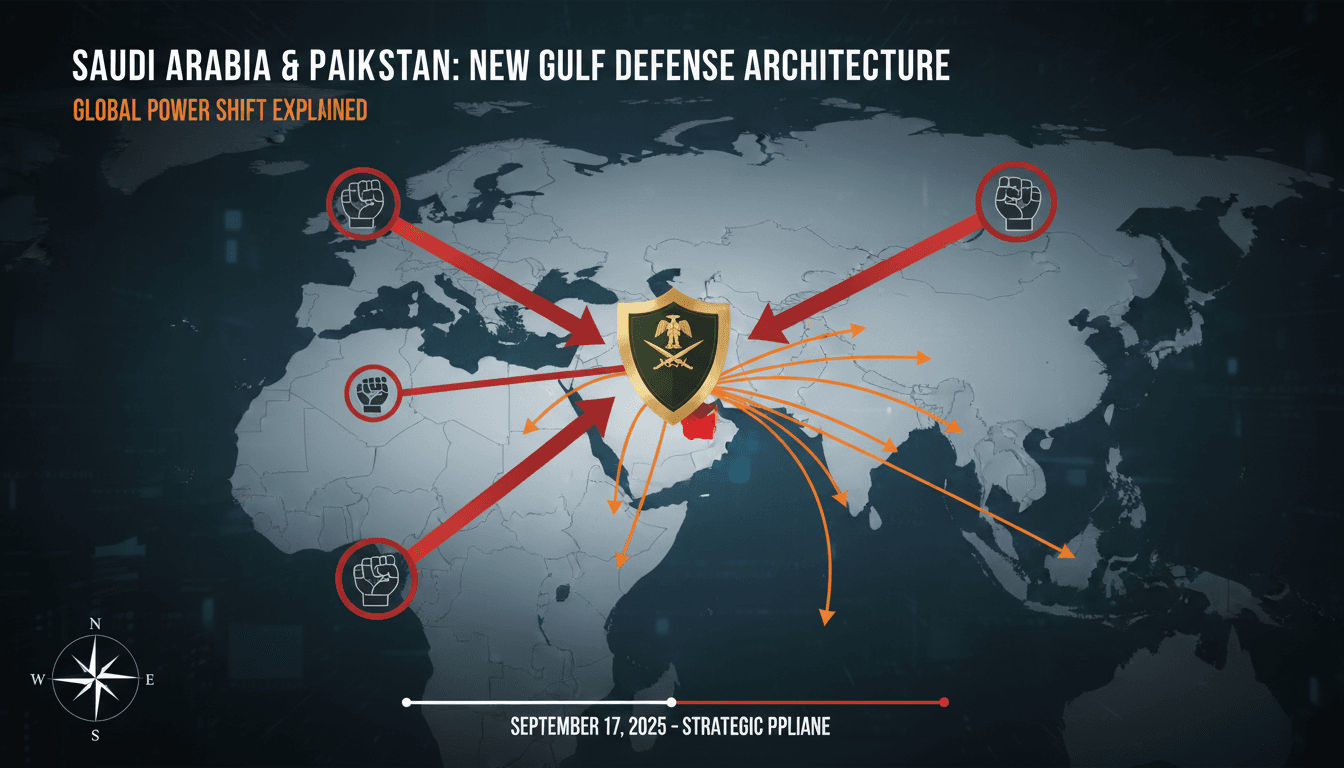
Here's what it means for you.
This agreement could reshape security dynamics in the Gulf, impacting energy markets and regional stability.
Why it matters
The pact formalizes a strategic alliance that enhances military cooperation and deterrence in a volatile region.
What happened (in 30 seconds)
- On 17 September 2025, Saudi Crown Prince Mohammed bin Salman and Pakistani Prime Minister Shehbaz Sharif signed a Strategic Mutual Defense Agreement in Riyadh.
- The agreement commits both nations to treat any aggression against one as an attack on both, enhancing joint military capabilities.
- In April 2026, amid rising regional tensions, Pakistan deployed military forces, including fighter jets, to Saudi Arabia under the agreement.
The context you actually need
- Saudi Arabia and Pakistan have a long history of military and economic ties dating back to the 1960s, including previous troop deployments.
- Geopolitical shifts, such as an Israeli airstrike on Qatar, have eroded trust in U.S. security guarantees, prompting this strategic alignment.
- The agreement combines Saudi Arabia's economic and spiritual leadership with Pakistan's military capabilities, including an estimated 170 nuclear warheads.
What's really happening
The Strategic Mutual Defense Agreement between Saudi Arabia and Pakistan represents a significant shift in the security landscape of the Gulf region. This pact formalizes a long-standing relationship that has evolved over decades, driven by mutual interests in military cooperation and regional stability. The agreement is particularly relevant in the context of increasing geopolitical tensions, notably the Iran War, which has seen escalated military actions involving Israel and the U.S. against Iranian interests.
By committing to a mutual defense framework, both nations aim to bolster their deterrence capabilities against perceived threats, particularly from Iran. The deployment of Pakistani forces to Saudi Arabia in April 2026 underscores the urgency of this alliance, as both countries seek to project strength and stability in a region marked by uncertainty. The agreement facilitates operational planning, intelligence sharing, and joint military exercises, which are crucial for enhancing their collective defense posture.
Moreover, the pact reflects a broader trend of countries in the region reassessing their security strategies in light of shifting global power dynamics. The erosion of trust in U.S. security guarantees has prompted nations like Saudi Arabia and Pakistan to seek alternative alliances that can provide a more reliable security framework. This strategic pivot is not just about military cooperation; it also encompasses economic ties and energy security, which are vital for both nations.
The implications of this agreement extend beyond the immediate military context. For Dubai and the broader Gulf region, enhanced security cooperation between Saudi Arabia and Pakistan could stabilize energy supply routes and mitigate risks to trade and aviation hubs. As tensions rise, the collective security framework established by this agreement may serve to reassure investors and businesses operating in the region, fostering a more stable economic environment.
In summary, the Saudi-Pakistani defense pact is a calculated response to regional threats and a strategic move to enhance military cooperation. It signifies a shift towards a more multipolar security landscape in the Gulf, where traditional alliances are being redefined in response to emerging challenges.
Who feels it first (and how)
- Military sectors in both Saudi Arabia and Pakistan will see increased collaboration and resource allocation.
- Energy markets may experience fluctuations based on perceived regional stability and security.
- Businesses and investors in Dubai and the Gulf region will be affected by changes in trade dynamics and security assurances.
What to watch next
- Military deployments: Monitor the scale and frequency of Pakistani military presence in Saudi Arabia, as it will indicate the depth of their cooperation.
- Regional tensions: Keep an eye on developments in the Iran War and how they influence the security landscape in the Gulf.
- Economic impacts: Watch for shifts in energy prices and trade routes as the agreement influences regional stability.
The agreement formalizes military cooperation between Saudi Arabia and Pakistan.
Increased military collaboration will enhance regional deterrence against threats, particularly from Iran.
The long-term economic impacts on Gulf markets and energy prices remain to be seen.
Frequently Asked Questions
- Why it matters?
- The pact formalizes a strategic alliance that enhances military cooperation and deterrence in a volatile region.
- What happened (in 30 seconds)?
- On 17 September 2025, Saudi Crown Prince Mohammed bin Salman and Pakistani Prime Minister Shehbaz Sharif signed a Strategic Mutual Defense Agreement in Riyadh. The agreement commits both nations to treat any aggression against one as an attack on both, enhancing joint military capabilities. In April 2026, amid rising regional tensions, Pakistan deployed military forces, including fighter jets, to Saudi Arabia under the agreement.
- What's really happening?
- The Strategic Mutual Defense Agreement between Saudi Arabia and Pakistan represents a significant shift in the security landscape of the Gulf region. This pact formalizes a long-standing relationship that has evolved over decades, driven by mutual interests in military cooperation and regional stability. The agreement is particularly relevant in the context of increasing geopolitical tensions, notably the Iran War, which has seen escalated military actions involving Israel and the U.S. against I
- Who feels it first (and how)?
- Military sectors in both Saudi Arabia and Pakistan will see increased collaboration and resource allocation. Energy markets may experience fluctuations based on perceived regional stability and security. Businesses and investors in Dubai and the Gulf region will be affected by changes in trade dynamics and security assurances.
- What to watch next?
- Military deployments: Monitor the scale and frequency of Pakistani military presence in Saudi Arabia, as it will indicate the depth of their cooperation. Regional tensions: Keep an eye on developments in the Iran War and how they influence the security landscape in the Gulf. Economic impacts: Watch for shifts in energy prices and trade routes as the agreement influences regional stability.
Arabic-language reporting focused on domestic developments in Saudi Arabia.
"Okaz is a mainstream Saudi newspaper that often reflects domestic priorities and official-facing coverage."
— A47 Editor
اتفاقية الدفاع المشترك بين السعودية وباكستان.. مظلة ردع لحماية الخليج والعالم الإسلامي
In September 2025, Saudi Arabia and Pakistan signed a strategic defense agreement, stating that an attack on one nation would be considered an attack on both. The signing took place at the royal palace in Riyadh, with Crown Prince Mohammed bin Salman...
Pan-Arab news coverage spanning politics, business, sports, and regional affairs.
"Asharq Al-Awsat reflects a broad Arab editorial perspective with strong attention to regional geopolitics."
— A47 Editor
قوة عسكرية باكستانية تصل إلى السعودية ضمن «اتفاقية الدفاع المشترك»
The Saudi Ministry of Defense announced the arrival of a military force from Pakistan at King Abdulaziz Air Base in the Eastern Province, as part of a strategic defense agreement between the two nations. This development highlights the ongoing milita...
Egyptian politics, economy, and society coverage.
"Al Masry Al Youm is a major Egyptian newspaper with broad national coverage."
— A47 Editor
قوة باكستانية تصل السعودية ضمن اتفاقية الدفاع المشترك
The Saudi Ministry of Defense announced the arrival of a military force from Pakistan to the country as part of a joint defense agreement between the two nations. This development highlights the ongoing collaboration and strategic partnership in defe...