
US and Israeli Airstrikes Target Iranian Infrastructure Amid Strait of Hormuz Ultimatum
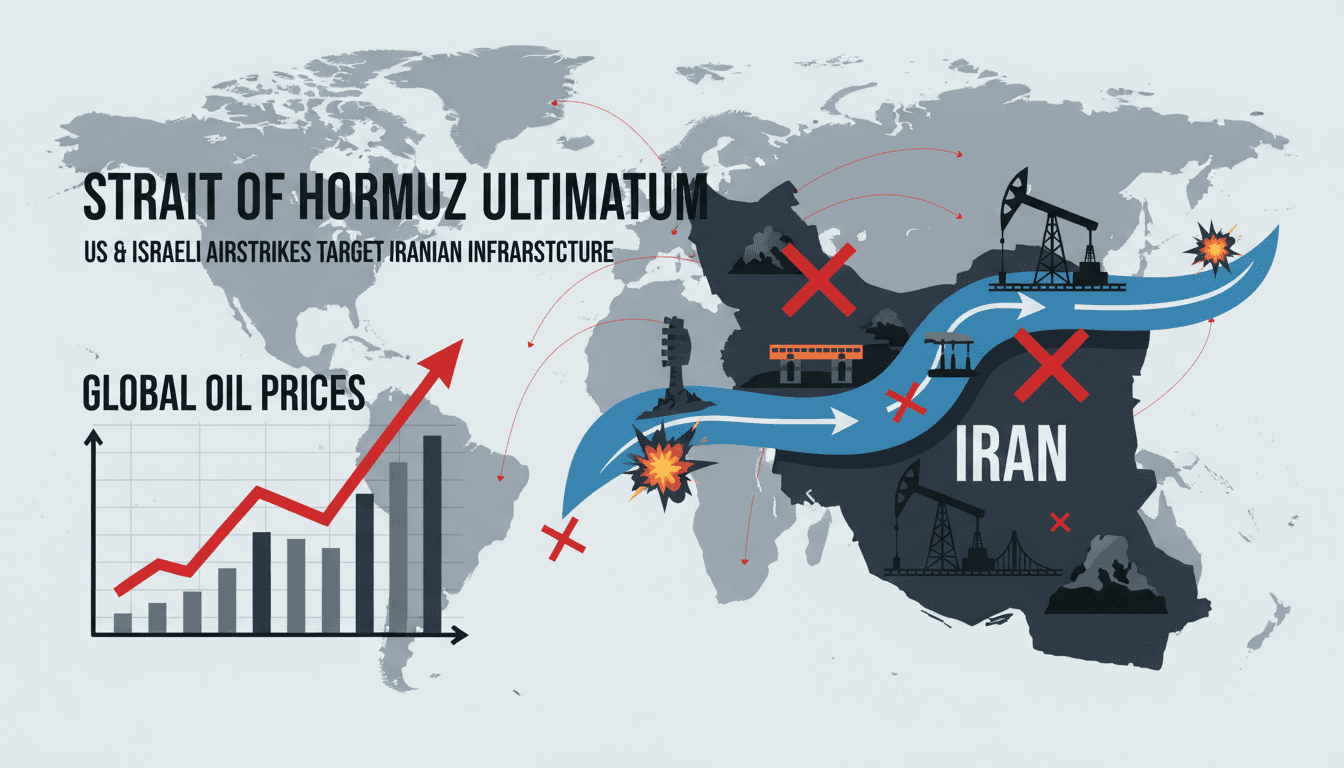
Here's what it means for you.
Rising oil prices and supply chain disruptions could impact your daily expenses and business operations.
Why it matters
The ongoing conflict threatens global oil supply, directly affecting prices and availability.
What happened (in 30 seconds)
- On April 7, 2026, US and Israeli airstrikes targeted Iranian infrastructure, including bridges and railways, amid escalating tensions.
- Iran's response included rejecting a ceasefire proposal and urging citizens to protect power plants, indicating a potential for further conflict.
- Global oil prices surged over 50% since the onset of the conflict, with Brent crude exceeding $108 per barrel.
The context you actually need
- The Strait of Hormuz is a critical chokepoint for global oil transit, with approximately 90% of Iran's crude oil exports processed through Kharg Island facilities.
- The conflict escalated after Iran blockaded the Strait of Hormuz in late February 2026, disrupting oil shipments and prompting US-Israeli military action.
- Diplomatic negotiations have stalled, with mediators like Pakistan, Egypt, and Turkey failing to achieve a breakthrough, heightening the risk of further military engagement.
What's really happening
The airstrikes on April 7, 2026, mark a significant escalation in the ongoing conflict between the US-Israeli alliance and Iran. The strikes were strategically aimed at critical transportation and energy infrastructure, including bridges and railways, which are vital for Iran's oil exports. This military action was a direct response to Iran's blockade of the Strait of Hormuz, a key maritime route for global oil shipments. The blockade, initiated in late February, has already disrupted the flow of oil, causing prices to spike and raising concerns among global markets.
President Trump’s ultimatum for Iran to reopen the Strait of Hormuz by 8:00 p.m. ET on the same day further intensified the situation. The strikes were not only a show of military force but also a calculated move to pressure Iran into compliance. By targeting infrastructure that supports Iran's oil export capabilities, the US and Israel aim to weaken Iran's economic position and compel them to negotiate. The Israeli military confirmed the strikes but provided no specific details, reflecting the sensitive nature of the operation.
The aftermath of the airstrikes has seen Iran rejecting a proposed ceasefire, instead calling for citizens to form human chains around power plants to protect them from potential attacks. This indicates a shift towards a more aggressive posture from Iran, which could lead to further military actions. The volatility in global oil markets is already apparent, with prices rising significantly since the conflict began, impacting not just oil producers but also consumers worldwide.
As the situation unfolds, the interconnectedness of global supply chains means that disruptions in the Middle East can have far-reaching effects. Businesses reliant on oil and goods transported through this region may face increased costs and delays. The ongoing military actions and the potential for further escalation create an environment of uncertainty, making it crucial for stakeholders to monitor developments closely.
Who feels it first (and how)
- Consumers: Higher fuel prices and increased costs for goods due to supply chain disruptions.
- Businesses: Companies reliant on oil and transportation may face rising operational costs and delays.
- Investors: Volatility in oil markets could impact investment strategies and portfolio valuations.
- Shipping industries: Increased insurance costs and rerouting of vessels due to heightened conflict risks.
What to watch next
- Iran's military response: Monitor for any retaliatory actions that could escalate the conflict further.
- Oil price fluctuations: Keep an eye on Brent crude prices as they reflect market reactions to geopolitical tensions.
- Diplomatic negotiations: Watch for any new developments in mediation efforts that could lead to a de-escalation of hostilities.
The airstrikes have damaged Iranian infrastructure and escalated tensions in the region.
Oil prices will continue to rise as the conflict unfolds, impacting global markets.
The potential for a broader military conflict and its implications for international relations remain uncertain.
Frequently Asked Questions
- Why it matters?
- The ongoing conflict threatens global oil supply, directly affecting prices and availability.
- What happened (in 30 seconds)?
- On April 7, 2026, US and Israeli airstrikes targeted Iranian infrastructure, including bridges and railways, amid escalating tensions. Iran's response included rejecting a ceasefire proposal and urging citizens to protect power plants, indicating a potential for further conflict. Global oil prices surged over 50% since the onset of the conflict, with Brent crude exceeding $108 per barrel.
- What's really happening?
- The airstrikes on April 7, 2026, mark a significant escalation in the ongoing conflict between the US-Israeli alliance and Iran. The strikes were strategically aimed at critical transportation and energy infrastructure, including bridges and railways, which are vital for Iran's oil exports. This military action was a direct response to Iran's blockade of the Strait of Hormuz, a key maritime route for global oil shipments. The blockade, initiated in late February, has already disrupted the flow o
- Who feels it first (and how)?
- Consumers: Higher fuel prices and increased costs for goods due to supply chain disruptions. Businesses: Companies reliant on oil and transportation may face rising operational costs and delays. Investors: Volatility in oil markets could impact investment strategies and portfolio valuations. Shipping industries: Increased insurance costs and rerouting of vessels due to heightened conflict risks.
- What to watch next?
- Iran's military response: Monitor for any retaliatory actions that could escalate the conflict further. Oil price fluctuations: Keep an eye on Brent crude prices as they reflect market reactions to geopolitical tensions. Diplomatic negotiations: Watch for any new developments in mediation efforts that could lead to a de-escalation of hostilities.
English-language reporting on Saudi politics, policy, and society.
"Saudi Gazette reflects mainstream Saudi institutional perspectives."
— A47 Editor
Iran claims US-Israel strikes damage bridges, railways ahead of Trump's deadline
Iran reported that US-Israeli air strikes on Tuesday damaged at least two bridges, railway infrastructure, and a key highway, resulting in two fatalities and three injuries in Kashan, according to regional officials. The strikes are part of a broader...
Pan-Arab news coverage spanning politics, business, sports, and regional affairs.
"Asharq Al-Awsat reflects a broad Arab editorial perspective with strong attention to regional geopolitics."
— A47 Editor
إيران تحت النار مع قرب انقضاء مهلة ترمب
Iran has experienced an escalation in attacks, particularly targeting bridges and railway networks, coinciding with the nearing deadline set by U.S. President Donald Trump. This surge in military actions highlights the increasing tensions within the ...