
Reserve Bank of New Zealand Maintains Cash Rate Amid Inflation Concerns Linked to Middle East Conflict
Here's what it means for you.
If you’re in the global market, the Reserve Bank of New Zealand's decision impacts your investment strategies and inflation expectations.
Why it matters
This decision reflects broader economic vulnerabilities tied to geopolitical tensions, particularly in oil supply chains.
What happened (in 30 seconds)
- The Reserve Bank of New Zealand held the Official Cash Rate at 2.25% on April 8, 2026, amid inflation concerns.
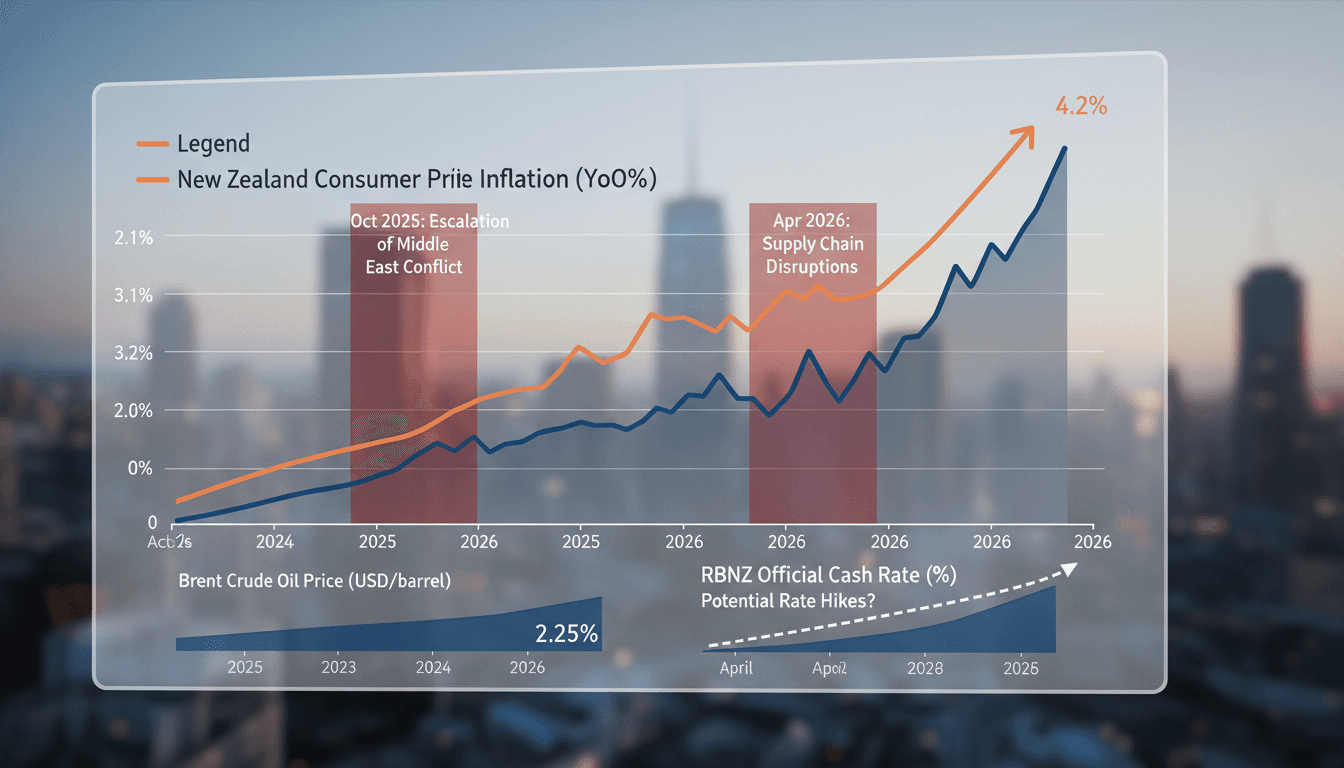
- Inflation projections rose to 4.2% for June 2026 due to disruptions in oil supplies from the Middle East.
- Governor Anna Breman indicated readiness for future rate hikes if inflation pressures persist.
The context you actually need
- Anna Breman is the first female governor of the RBNZ, appointed in December 2025, following a series of aggressive rate hikes post-COVID-19.
- New Zealand's economy showed signs of recovery with a 0.2% GDP growth in December 2025, but recent geopolitical events have complicated this outlook.
- The Strait of Hormuz is a critical chokepoint for global oil supplies, and disruptions here have significant implications for inflation rates worldwide.
What's really happening
The Reserve Bank of New Zealand (RBNZ) is navigating a precarious economic landscape shaped by external pressures, particularly from the ongoing conflict in the Middle East. The decision to maintain the Official Cash Rate (OCR) at 2.25% reflects a careful balancing act between fostering economic recovery and controlling inflation.
Governor Anna Breman's leadership comes at a time when inflationary pressures are mounting due to rising oil prices, driven by reduced supply from Iran through the Strait of Hormuz. The RBNZ's latest projections indicate consumer price inflation (CPI) could reach 4.2% in the June 2026 quarter, a significant increase from 3.1% in the December 2025 quarter. This uptick in inflation is primarily attributed to higher fuel prices, which have a cascading effect on overall consumer prices.
The RBNZ's decision to hold rates steady is a strategic move to avoid stifling the nascent economic recovery observed in late 2025. After a period of aggressive rate hikes that aimed to curb inflation post-COVID-19, the bank had previously cut rates by 325 basis points since August 2024. The current economic indicators suggest a fragile recovery, with GDP growth inching up, but the potential for inflation to spiral out of control remains a pressing concern.
In this context, the RBNZ's Monetary Policy Committee is maintaining a vigilant stance. They are prepared to implement decisive rate hikes should inflation pressures intensify further. The committee is closely monitoring second-round effects, such as wage pressures and inflation expectations, which could exacerbate the situation. The decision to hold rates is not a sign of complacency; rather, it reflects a commitment to ensuring that inflation expectations remain anchored around the 2% target midpoint.
As the geopolitical landscape evolves, the RBNZ's approach will likely adapt. The committee's readiness to act swiftly if inflation risks escalate highlights the interconnectedness of global events and local economic policies. The implications of this decision extend beyond New Zealand, influencing global markets and investment strategies, particularly in regions heavily reliant on oil imports.
Who feels it first (and how)
- Consumers: Higher fuel prices will directly impact household budgets, leading to increased costs for goods and services.
- Investors: Market volatility may affect investment strategies, particularly in sectors sensitive to inflation and interest rates.
- Businesses: Companies reliant on stable supply chains may face increased operational costs, affecting profitability and pricing strategies.
- Geopolitical analysts: The ongoing conflict in the Middle East will be closely monitored for its broader economic implications.
What to watch next
- Oil prices: Fluctuations in global oil prices will be critical, as they directly influence inflation rates and consumer spending.
- Inflation reports: Upcoming CPI reports will provide insights into whether inflation is stabilizing or escalating, impacting monetary policy decisions.
- RBNZ communications: Any signals from the RBNZ regarding future rate hikes will be key indicators of their inflation outlook and economic strategy.
The OCR is currently held at 2.25%, with inflation projected to rise to 4.2% in June 2026.
The RBNZ may implement rate hikes in the coming months if inflation pressures persist.
The long-term impact of the Middle East conflict on global oil supplies and inflation remains uncertain.
Frequently Asked Questions
- Why it matters?
- This decision reflects broader economic vulnerabilities tied to geopolitical tensions, particularly in oil supply chains.
- What happened (in 30 seconds)?
- The Reserve Bank of New Zealand held the Official Cash Rate at 2.25% on April 8, 2026, amid inflation concerns. Inflation projections rose to 4.2% for June 2026 due to disruptions in oil supplies from the Middle East. Governor Anna Breman indicated readiness for future rate hikes if inflation pressures persist.
- What's really happening?
- The Reserve Bank of New Zealand (RBNZ) is navigating a precarious economic landscape shaped by external pressures, particularly from the ongoing conflict in the Middle East. The decision to maintain the Official Cash Rate (OCR) at 2.25% reflects a careful balancing act between fostering economic recovery and controlling inflation. Governor Anna Breman's leadership comes at a time when inflationary pressures are mounting due to rising oil prices, driven by reduced supply from Iran through the S
- Who feels it first (and how)?
- Consumers: Higher fuel prices will directly impact household budgets, leading to increased costs for goods and services. Investors: Market volatility may affect investment strategies, particularly in sectors sensitive to inflation and interest rates. Businesses: Companies reliant on stable supply chains may face increased operational costs, affecting profitability and pricing strategies. Geopolitical analysts: The ongoing conflict in the Middle East will be closely monitored for its broade
- What to watch next?
- Oil prices: Fluctuations in global oil prices will be critical, as they directly influence inflation rates and consumer spending. Inflation reports: Upcoming CPI reports will provide insights into whether inflation is stabilizing or escalating, impacting monetary policy decisions. RBNZ communications: Any signals from the RBNZ regarding future rate hikes will be key indicators of their inflation outlook and economic strategy.
Social/economic commentary and analysis relevant to business and markets.
"WSJ blends data-driven economic insight with commentary on policy and society."
— A47 Editor
New Zealand Central Bank Governor Vigilant to Inflation Threat
New Zealand Central Bank Governor Anna Breman has emphasized her commitment to reducing inflation to the midpoint of the bank's target range of 1% to 3%. This statement reflects the central bank's proactive stance in addressing inflationary pressures...
Global markets, investing, and macroeconomics from a premier financial newsroom.
"Bloomberg is respected for in-depth financial reporting and data-driven analysis."
— A47 Editor
RBNZ: Will Act Decisively If Core Inflation Picks Up
Reserve Bank of New Zealand (RBNZ) Governor Anna Breman announced that the central bank will implement interest rate increases if core inflation accelerates, particularly in light of rising fuel prices linked to the ongoing conflict in the Middle Eas...
Global markets, investing, and macroeconomics from a premier financial newsroom.
"Bloomberg is respected for in-depth financial reporting and data-driven analysis."
— A47 Editor
RBNZ to ‘Act Decisively’ If Core Prices Pick Up, Breman Says
New Zealand's central bank, the Reserve Bank of New Zealand (RBNZ), indicated that it will implement interest rate increases if there is a notable rise in core inflation, as stated by Governor Anna Breman. This warning comes amid escalating fuel pric...