
Iran Rejects U.S. Ceasefire Proposal Amid Escalating Military Conflict
Here's what it means for you.
Rising tensions in the Middle East could lead to significant disruptions in global oil supply and price volatility.
Why it matters
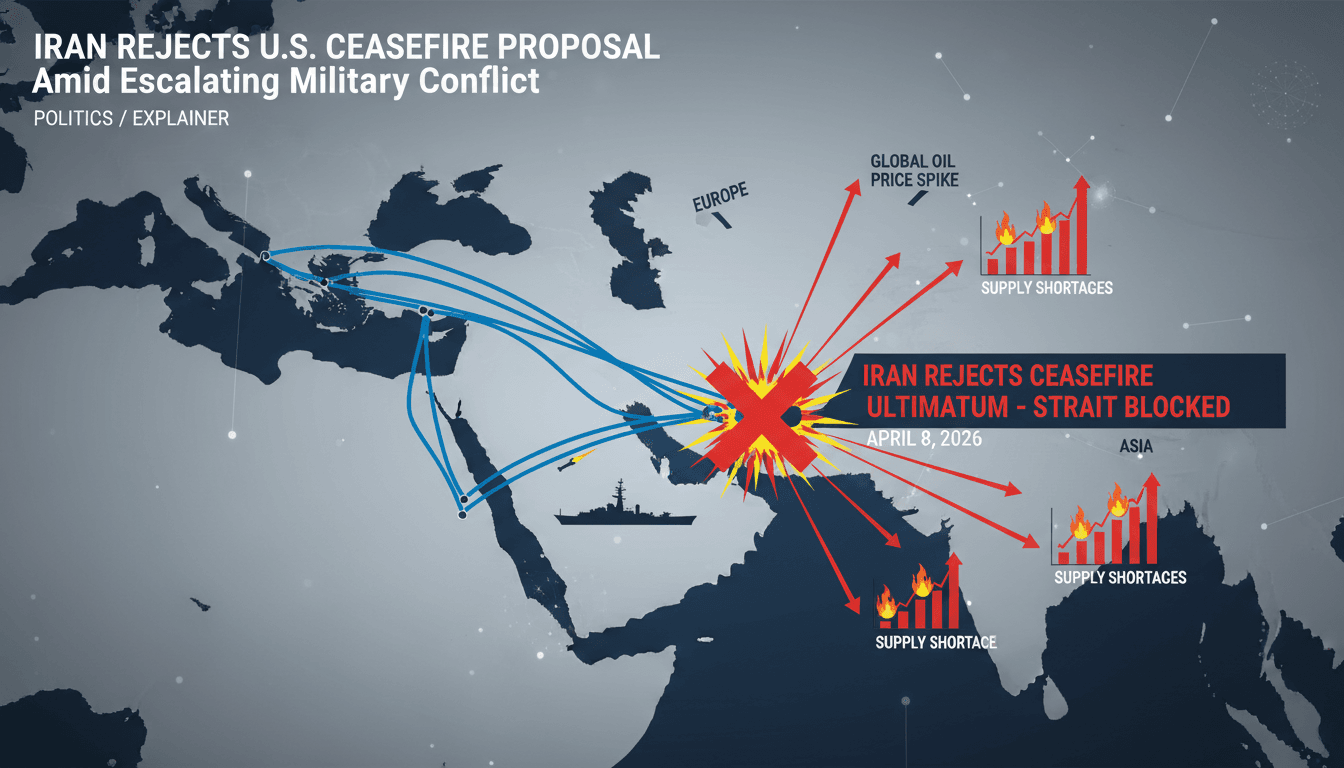
The Strait of Hormuz is a critical maritime chokepoint, with 20% of the world's oil and natural gas supply transiting through it.
What happened (in 30 seconds)
- Iran rejected a U.S.-brokered ceasefire proposal and refused to reopen the Strait of Hormuz ahead of a looming deadline.
- Israel conducted airstrikes on Iranian facilities, while Iranian missiles were intercepted by Saudi defenses.
- Trump threatened targeted strikes on Iranian infrastructure if compliance was not met by midnight EDT on April 8, 2026.
The context you actually need
- The conflict began on February 28, 2026, with U.S. and Israeli military operations aimed at Iran's nuclear and missile programs.
- Iran imposed a blockade on the Strait of Hormuz, leveraging its control over this vital shipping route.
- Trump's ultimatum included threats of destruction to Iranian infrastructure, escalating the already tense situation.
What's really happening
The geopolitical landscape in the Middle East is increasingly precarious as Iran's rejection of the U.S. ceasefire proposal signals a deepening conflict. The U.S. and Israel initiated military operations against Iran in late February 2026, targeting its nuclear weapons development and missile capabilities. In retaliation, Iran has leveraged its control over the Strait of Hormuz, a crucial maritime route for global oil and gas supplies, to exert pressure on the U.S. and its allies.
Iran's leadership perceives the blockade as a strategic advantage, using it to negotiate for sanctions relief and reconstruction aid. The 10-clause demand list issued by Tehran reflects its desire to regain economic stability while maintaining its regional influence. This rejection of the ceasefire proposal is not merely a tactical maneuver; it represents a broader strategy to resist external pressures and assert Iran's sovereignty.
The U.S. response, led by President Trump, has been characterized by aggressive posturing and threats of military action. The ultimatum for a ceasefire and reopening of the Strait of Hormuz by midnight EDT on April 8, 2026, underscores the urgency of the situation. Trump's administration is willing to escalate military operations, including targeted strikes on Iranian infrastructure, if Iran does not comply. This creates a precarious balance where any miscalculation could lead to a broader military conflict.
The implications of this standoff extend beyond the immediate region. With approximately 20% of the world's oil and natural gas supply transiting through the Strait of Hormuz, any disruption could lead to significant increases in global oil prices. As seen recently, Brent crude oil prices have surged above $110 per barrel, reflecting market anxieties over potential supply disruptions. The economic repercussions are likely to be felt globally, impacting everything from transportation costs to inflation rates.
Moreover, regional players such as Saudi Arabia, the United Arab Emirates, and Bahrain are also on high alert, activating safety protocols amid heightened military activity. The interconnectedness of global markets means that instability in the Middle East can have far-reaching consequences, affecting economies and consumers worldwide.
Who feels it first (and how)
- Oil and gas companies: Increased operational costs and potential supply chain disruptions.
- Consumers: Rising fuel prices leading to higher transportation and utility costs.
- Investors in commodities: Volatility in oil futures markets affecting investment strategies.
- Regional governments: Heightened security concerns and economic pressures from rising oil prices.
What to watch next
- Oil price fluctuations: Monitor Brent and WTI prices for signs of market reactions to ongoing tensions.
- Military developments: Keep an eye on any escalations in military operations from the U.S. and Israel against Iran.
- Diplomatic negotiations: Watch for any shifts in diplomatic efforts that could lead to a ceasefire or further conflict.
The Strait of Hormuz is critical for global oil supply, with 20% of the world's oil transiting through it.
Continued military tensions will lead to rising oil prices and economic instability in the region.
The potential for a broader military conflict and its implications for global markets remains uncertain.
Frequently Asked Questions
- Why it matters?
- The Strait of Hormuz is a critical maritime chokepoint, with 20% of the world's oil and natural gas supply transiting through it.
- What happened (in 30 seconds)?
- Iran rejected a U.S.-brokered ceasefire proposal and refused to reopen the Strait of Hormuz ahead of a looming deadline. Israel conducted airstrikes on Iranian facilities, while Iranian missiles were intercepted by Saudi defenses. Trump threatened targeted strikes on Iranian infrastructure if compliance was not met by midnight EDT on April 8, 2026.
- What's really happening?
- The geopolitical landscape in the Middle East is increasingly precarious as Iran's rejection of the U.S. ceasefire proposal signals a deepening conflict. The U.S. and Israel initiated military operations against Iran in late February 2026, targeting its nuclear weapons development and missile capabilities. In retaliation, Iran has leveraged its control over the Strait of Hormuz, a crucial maritime route for global oil and gas supplies, to exert pressure on the U.S. and its allies. Iran's leader
- Who feels it first (and how)?
- Oil and gas companies: Increased operational costs and potential supply chain disruptions. Consumers: Rising fuel prices leading to higher transportation and utility costs. Investors in commodities: Volatility in oil futures markets affecting investment strategies. Regional governments: Heightened security concerns and economic pressures from rising oil prices.
- What to watch next?
- Oil price fluctuations: Monitor Brent and WTI prices for signs of market reactions to ongoing tensions. Military developments: Keep an eye on any escalations in military operations from the U.S. and Israel against Iran. Diplomatic negotiations: Watch for any shifts in diplomatic efforts that could lead to a ceasefire or further conflict.
Regional coverage and analysis focused on politics, diplomacy, and business across the Middle East.
"Al-Monitor is known for analytical reporting on Middle East politics and policy developments."
— A47 Editor
Iran defiant on eve of Trump's ceasefire deadline
On April 7, 2026, Iran and Israel engaged in mutual attacks as Iran firmly rejected a ceasefire proposal from the U.S., which was brokered by Pakistan, and refused to reopen the strategic Strait of Hormuz. This rejection came just before a deadline s...
Comprehensive coverage of Middle Eastern and global issues.
"Al Jazeera is a prominent voice from the Global South, especially the Middle East, with an emphasis on underreported stories."
— A47 Editor
‘Why would Iran agree to a ceasefire given US and Israeli track record?’
Iran has officially rejected a proposed ceasefire deal from the United States, as political analyst Trita Parsi highlights the historical mistrust between Iran and the US, particularly in light of recent escalations in the region. This rejection coin...