
Bitcoin Price Drops to $75,000 Following Iran's Closure of Strait of Hormuz
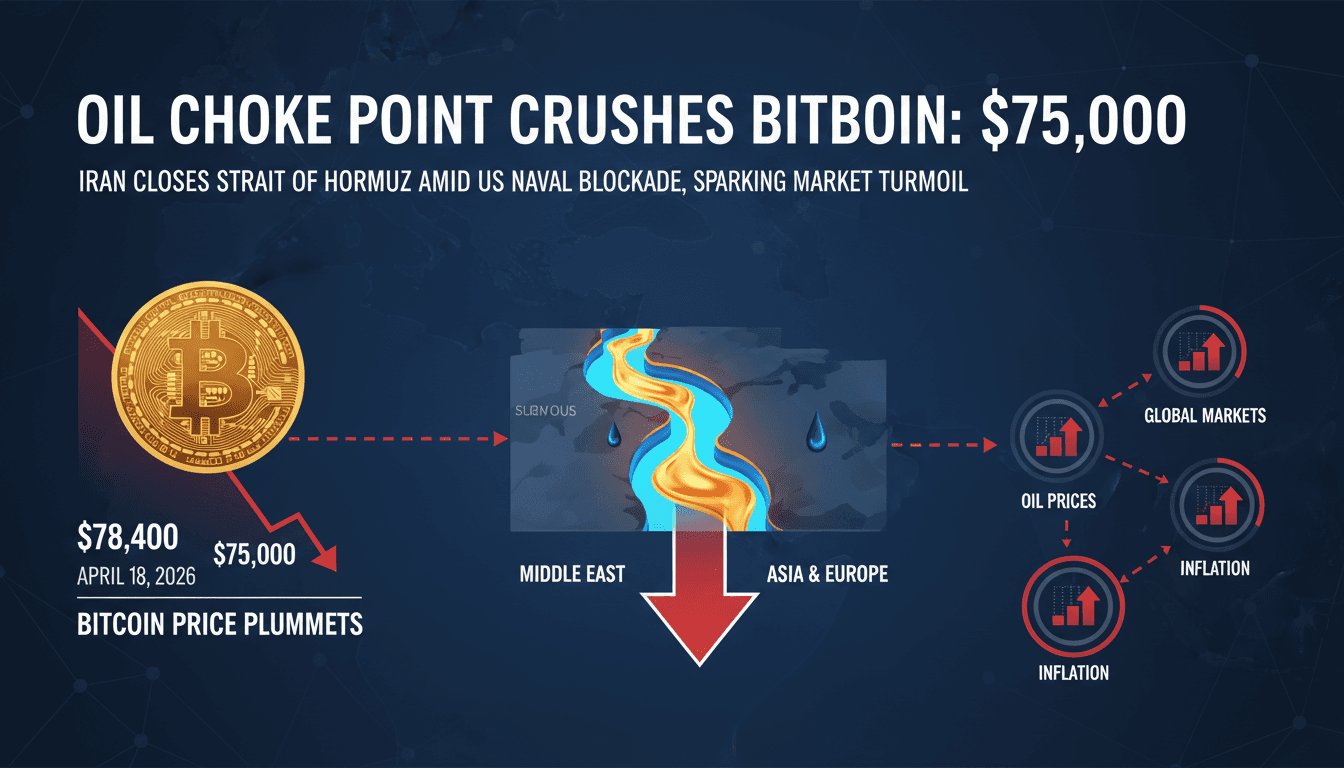
Here's what it means for you.
If you’re invested in cryptocurrencies or reliant on oil prices, the recent geopolitical tensions could impact your financial landscape significantly.
Why it matters
The closure of the Strait of Hormuz disrupts global oil supply and influences cryptocurrency markets, affecting prices and economic stability.
What happened (in 30 seconds)
- Iran re-closed the Strait of Hormuz on April 18, 2026, amid escalating tensions with the United States, leading to a significant market reaction.
- Bitcoin's price dropped from $78,400 to approximately $75,000, with over $260 million in liquidations occurring in the crypto market.
- Oil prices surged over 7%, with Brent crude reaching $96.94 per barrel, as the focus shifted from cryptocurrencies to oil futures.
The context you actually need
- The Strait of Hormuz is a critical chokepoint for global oil trade, with 25% of the world's seaborne oil passing through it.
- The US-Iran war, which began on February 28, 2026, has led to significant disruptions in oil supply, including missile attacks and naval blockades.
- Temporary ceasefires and reopening attempts have failed, with the latest closure exacerbating market volatility and inflation risks.
What's really happening
The recent closure of the Strait of Hormuz is a direct consequence of the ongoing US-Iran conflict, which escalated dramatically after the assassination of Iran's Supreme Leader Ali Khamenei by US-Israeli airstrikes. This act triggered a series of retaliatory measures from Iran, including missile attacks and the initial closure of the Strait, which halted the flow of approximately 20 million barrels of oil per day. The geopolitical landscape has become increasingly fragile, with temporary ceasefires and negotiations failing to stabilize the situation.
On April 17, 2026, Iran briefly reopened the Strait amid discussions for a truce in Lebanon, but the US's naval blockade of Iranian ports prompted the re-closure the following day. This closure not only affects oil prices but also has a cascading effect on the cryptocurrency market. As tensions rose, Bitcoin, which had been trading at $78,400, saw a sharp decline to around $75,000, reflecting investor anxiety and a shift in focus towards oil futures. The cryptocurrency market experienced over $260 million in liquidations, primarily affecting long positions, as traders reacted to the volatility.
The implications of this closure extend beyond immediate price drops. With oil prices rebounding over 7%, the cost of fuel, groceries, and transportation is expected to rise, particularly in regions like the UAE, which relies heavily on oil imports. The UAE government has condemned the closure as "economic terrorism," advocating for international resolutions to ensure navigation freedom. This geopolitical tension is likely to lead to increased shipping insurance costs and supply chain disruptions, further exacerbating inflationary pressures globally.
As the situation unfolds, analysts are closely monitoring Bitcoin's performance, particularly its rejection at the 21-week exponential moving average (EMA), which could signal a potential retest of the $73,000 mark. The interconnectedness of oil and cryptocurrency markets means that any further escalation in the Strait of Hormuz will likely lead to more pronounced market reactions, affecting both traditional and digital assets.
Who feels it first (and how)
- Investors in cryptocurrencies: Immediate impact on portfolio values and trading strategies.
- Oil-dependent economies: Increased costs for consumers and businesses, particularly in the UAE and other Gulf states.
- Shipping and logistics companies: Higher insurance premiums and potential delays in supply chains.
- Global consumers: Rising prices for fuel and goods due to increased oil costs.
What to watch next
- Bitcoin price movements: Watch for potential retests of key support levels, which could indicate further volatility.
- Oil price trends: Monitor Brent and WTI prices for signs of sustained increases or corrections as geopolitical tensions evolve.
- Geopolitical developments: Keep an eye on diplomatic efforts or military actions that could influence the Strait of Hormuz and global oil supply.
The Strait of Hormuz is a critical chokepoint for global oil trade, and its closure affects oil prices.
Continued volatility in cryptocurrency markets as investors react to geopolitical developments.
The duration of the Strait's closure and its long-term impact on global inflation and economic stability.
Frequently Asked Questions
- Why it matters?
- The closure of the Strait of Hormuz disrupts global oil supply and influences cryptocurrency markets, affecting prices and economic stability.
- What happened (in 30 seconds)?
- Iran re-closed the Strait of Hormuz on April 18, 2026, amid escalating tensions with the United States, leading to a significant market reaction. Bitcoin's price dropped from $78,400 to approximately $75,000, with over $260 million in liquidations occurring in the crypto market. Oil prices surged over 7%, with Brent crude reaching $96.94 per barrel, as the focus shifted from cryptocurrencies to oil futures.
- What's really happening?
- The recent closure of the Strait of Hormuz is a direct consequence of the ongoing US-Iran conflict, which escalated dramatically after the assassination of Iran's Supreme Leader Ali Khamenei by US-Israeli airstrikes. This act triggered a series of retaliatory measures from Iran, including missile attacks and the initial closure of the Strait, which halted the flow of approximately 20 million barrels of oil per day. The geopolitical landscape has become increasingly fragile, with temporary ceasef
- Who feels it first (and how)?
- Investors in cryptocurrencies: Immediate impact on portfolio values and trading strategies. Oil-dependent economies: Increased costs for consumers and businesses, particularly in the UAE and other Gulf states. Shipping and logistics companies: Higher insurance premiums and potential delays in supply chains. Global consumers: Rising prices for fuel and goods due to increased oil costs.
- What to watch next?
- Bitcoin price movements: Watch for potential retests of key support levels, which could indicate further volatility. Oil price trends: Monitor Brent and WTI prices for signs of sustained increases or corrections as geopolitical tensions evolve. Geopolitical developments: Keep an eye on diplomatic efforts or military actions that could influence the Strait of Hormuz and global oil supply.
Covers blockchain, cryptocurrency news, project analysis, and market insights.
"Cointelegraph is a leading crypto-focused media outlet known for timely news, analysis, and educational content related to blockchain and digital assets."
— A47 Editor
Bitcoin price drops to $75K as new Hormuz closure puts focus on oil
Bitcoin's price has dropped to $75,000 amid renewed geopolitical tensions following Iran's closure of the Strait of Hormuz, a critical oil route. This closure has reignited fears of conflict in the region, impacting market sentiment and leading to si...
Research, news, and analysis on blockchain startups, DeFi, and regulations.
"Crypto Briefing provides research, news, and analysis on blockchain startups, DeFi, and crypto regulations with investor-focused coverage."
— A47 Editor
Iran accepts Bitcoin for oil tolls in Strait of Hormuz, stablecoins dominate
Iran has officially accepted Bitcoin as a payment method for oil tolls in the Strait of Hormuz, a strategic maritime passage crucial for global oil trade. This move reflects Iran's intent to leverage cryptocurrency amidst ongoing geopolitical tension...
Research, news, and analysis on blockchain startups, DeFi, and regulations.
"Crypto Briefing provides research, news, and analysis on blockchain startups, DeFi, and crypto regulations with investor-focused coverage."
— A47 Editor
Iran closes Strait of Hormuz, Bitcoin and Ethereum prices drop
The closure of the Strait of Hormuz by Iran has intensified geopolitical tensions, leading to a notable drop in the prices of Bitcoin and Ethereum. This strategic maritime passage is crucial for global oil trade, and its closure has raised concerns a...
Bitcoin news, technical analysis, and forecasts across crypto markets.
"NewsBTC covers Bitcoin news, technical analysis, and forecasts across crypto markets and major blockchain projects."
— A47 Editor
Bitcoin Could See Short-Term Pullback Following Price Rebound — Analyst
Bitcoin's price experienced a notable rebound, rising by 2.77% to approximately $78,348 following Iran's announcement that the Strait of Hormuz would remain open during a ceasefire with the U.S. This development has sparked optimism in the cryptocurr...
Covers blockchain, cryptocurrency news, project analysis, and market insights.
"CoinDesk is a well-established cryptocurrency and blockchain news provider, offering comprehensive insights, market data, and industry research."
— A47 Editor
Bitcoin falls back to $76,000 as Iran shuts Hormuz again
Bitcoin's price has fallen back to $76,000 following a significant market reaction to Iran's decision to close the Strait of Hormuz again, resulting in one of the largest short liquidations in recent history, wiping out $593 million in bearish bets o...
Covers Bitcoin plus altcoin news, market updates, and educational resources.
"Bitcoin.com provides news, market data, and guides focused on Bitcoin and the wider crypto industry."
— A47 Editor
Bitcoin Hits $78,348 as Strait of Hormuz Reopening Ignites Global Relief Rally
Bitcoin's price surged to $78,348 following the reopening of the Strait of Hormuz, which has alleviated market fears and ignited a global relief rally. This development comes amid a ceasefire agreement between the U.S. and Iran, contributing to a sig...
Covers blockchain, cryptocurrency news, project analysis, and market insights.
"CoinDesk is a well-established cryptocurrency and blockchain news provider, offering comprehensive insights, market data, and industry research."
— A47 Editor
Beaten-down digital asset treasury names lead crypto stock surge as bitcoin hits $78,000
Bitcoin's price surged to $78,000, marking a significant recovery for digital assets as geopolitical tensions in the Strait of Hormuz eased following Iran's commitment to keep the passage open. This development comes amidst fluctuating oil prices and...
News, analysis, and thought leadership focusing exclusively on Bitcoin.
"Bitcoin Magazine is one of the original publications devoted to Bitcoin, offering in-depth news, analysis, and commentary."
— A47 Editor
Bitcoin Price Charges Past $77,000 as Iran Says Strait of Hormuz Fully Open
Bitcoin's price surged past $77,000 following Iran's announcement that the Strait of Hormuz is fully open under a ceasefire, alleviating market fears and contributing to a risk-on rally in cryptocurrency markets.
Covers blockchain, cryptocurrency news, project analysis, and market insights.
"CoinDesk is a well-established cryptocurrency and blockchain news provider, offering comprehensive insights, market data, and industry research."
— A47 Editor
Bitcoin rises past $76,000, aiming at major breakout as oil plunges on Iran cooldown
Bitcoin's price has surged past $76,000, buoyed by positive signals regarding a potential ceasefire between the U.S. and Iran, which has led to a significant boost in market sentiment. Iran's foreign minister confirmed that the Strait of Hormuz will ...