
Asian Markets React to Renewed Strait of Hormuz Crisis and U.S. Warnings
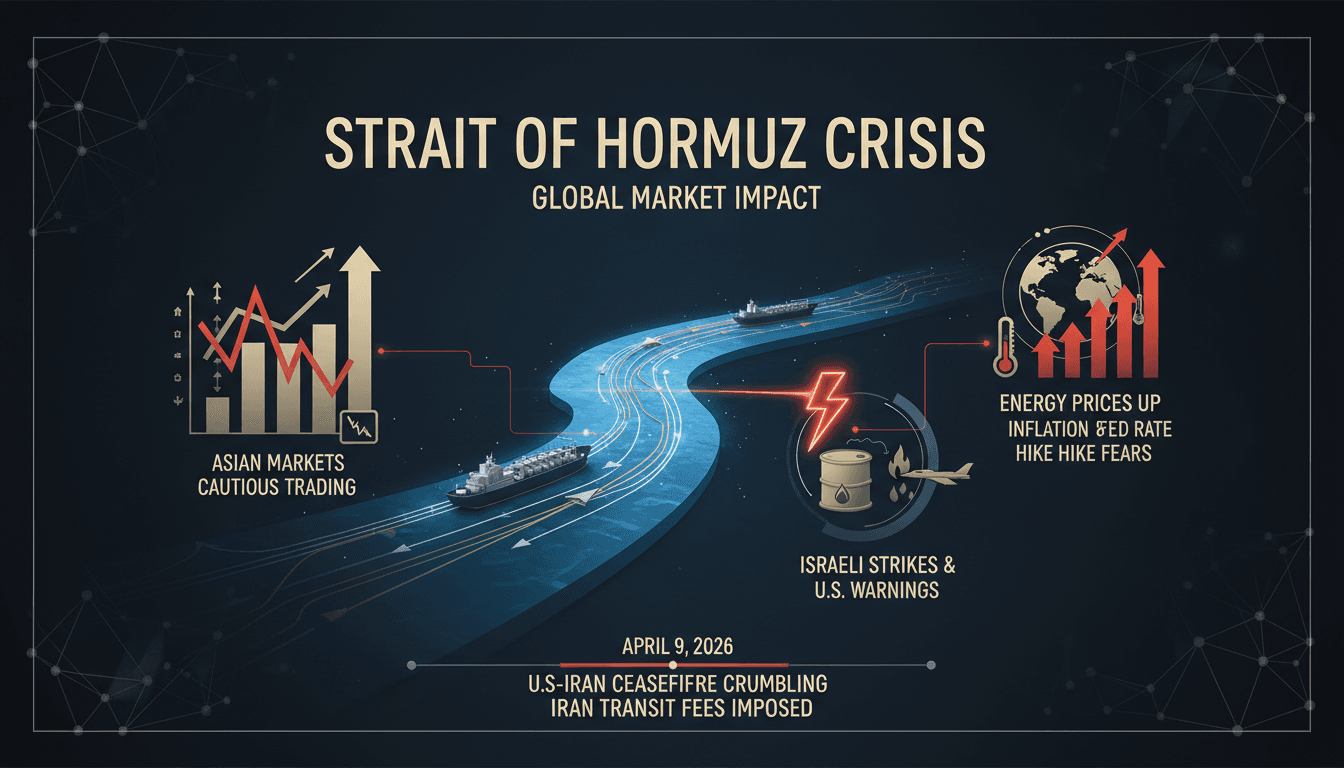
Here's what it means for you.
If you’re in the energy sector or rely on oil prices, the ongoing tensions in the Strait of Hormuz could directly impact your costs and operations.
Why it matters
Investor sentiment in Asian markets is heavily influenced by geopolitical stability, particularly in oil transit routes.
What happened (in 30 seconds)
- Asian stock markets experienced cautious trading as the fragile U.S.-Iran ceasefire showed signs of strain.
- Oil prices surged by 40% compared to pre-conflict levels, raising inflation concerns.
- U.S. President Trump warned of renewed military action, further unsettling investors.
The context you actually need
- The Strait of Hormuz is critical for global oil supply, with approximately 20% of crude oil flowing through it.
- Recent military actions by Israel against Hezbollah in Lebanon escalated tensions, prompting Iran to impose restrictions on oil transit.
- The U.S. military presence in the Gulf is being reinforced, with Trump emphasizing a commitment to regional stability.
What's really happening
On April 8, 2026, Israel launched significant airstrikes on Hezbollah positions in Lebanon, marking a severe escalation in the ongoing conflict. This military action prompted Iran to reinstate strict controls over the Strait of Hormuz, a vital maritime route for oil shipments. Iran's government announced that only vessels with special permissions would be allowed passage, alongside the imposition of fees, effectively disrupting the flow of oil and raising prices globally.
In response to these developments, U.S. President Donald Trump took to social media to assert that U.S. forces would remain in the Gulf until compliance with agreements was achieved. He warned that failure to adhere to these agreements could lead to renewed military engagement, stating, "shooting will start again." This rhetoric has heightened fears among investors and market analysts, leading to a cautious trading atmosphere in major Asian financial centers such as Tokyo, Seoul, Shanghai, and Hong Kong.
As a result, Asian markets reacted with restraint. Japan's Nikkei index fluctuated near breakeven after a prior surge, while South Korea's index saw a slight decline following a significant previous gain. China's leading stocks also fell, reflecting the overall investor anxiety regarding the geopolitical landscape. U.S. futures eased slightly, and oil benchmarks rose by 2-3%, further exacerbating inflation concerns.
The implications of these developments are profound. The 2026 Strait of Hormuz crisis stems from a broader geopolitical struggle involving the U.S., Iran, and regional allies. The initial closure of the strait during the U.S.-Iran conflict disrupted about 20% of global crude oil flows, leading to a significant spike in oil prices. The current situation, characterized by Iran's reimposition of transit controls and the U.S.'s military posture, suggests that the energy market will continue to experience volatility.
In Dubai, residents are already feeling the impact, with a reported 33% increase in fuel prices for April 2026 due to the disruptions in Hormuz. The UAE government has initiated a $270 million relief initiative to help households and businesses cope with the rising energy costs and supply uncertainties. This situation underscores the interconnectedness of geopolitical events and economic realities, particularly in energy-dependent regions.
Who feels it first (and how)
- Energy sector professionals: Increased operational costs and uncertainty in supply chains.
- Consumers in oil-dependent regions: Rising fuel prices directly affecting household budgets.
- Investors in Asian markets: Heightened volatility leading to cautious trading strategies.
What to watch next
- Oil price fluctuations: Continued monitoring of oil prices will be crucial as geopolitical tensions evolve, impacting inflation and economic stability.
- U.S. military actions: Any changes in U.S. military engagement in the Gulf could signal shifts in market confidence and investor sentiment.
- Iran's response to diplomatic efforts: Iran's willingness to engage in peace talks or further escalate tensions will significantly influence market dynamics.
Oil prices have risen by 40% relative to pre-conflict levels.
Continued volatility in Asian stock markets as geopolitical tensions persist.
The long-term impact of U.S. military presence on regional stability and oil supply.
Frequently Asked Questions
- Why it matters?
- Investor sentiment in Asian markets is heavily influenced by geopolitical stability, particularly in oil transit routes.
- What happened (in 30 seconds)?
- Asian stock markets experienced cautious trading as the fragile U.S.-Iran ceasefire showed signs of strain. Oil prices surged by 40% compared to pre-conflict levels, raising inflation concerns. U.S. President Trump warned of renewed military action, further unsettling investors.
- What's really happening?
- On April 8, 2026, Israel launched significant airstrikes on Hezbollah positions in Lebanon, marking a severe escalation in the ongoing conflict. This military action prompted Iran to reinstate strict controls over the Strait of Hormuz, a vital maritime route for oil shipments. Iran's government announced that only vessels with special permissions would be allowed passage, alongside the imposition of fees, effectively disrupting the flow of oil and raising prices globally. In response to these d
- Who feels it first (and how)?
- Energy sector professionals: Increased operational costs and uncertainty in supply chains. Consumers in oil-dependent regions: Rising fuel prices directly affecting household budgets. Investors in Asian markets: Heightened volatility leading to cautious trading strategies.
- What to watch next?
- Oil price fluctuations: Continued monitoring of oil prices will be crucial as geopolitical tensions evolve, impacting inflation and economic stability. U.S. military actions: Any changes in U.S. military engagement in the Gulf could signal shifts in market confidence and investor sentiment. Iran's response to diplomatic efforts: Iran's willingness to engage in peace talks or further escalate tensions will significantly influence market dynamics.
Pan-Arab news coverage spanning politics, business, sports, and regional affairs.
"Asharq Al-Awsat reflects a broad Arab editorial perspective with strong attention to regional geopolitics."
— A47 Editor
ترقب حذر في الأسواق الآسيوية مع تجدد أزمة «هرمز» وتهديدات ترمب
Asian markets experienced a cautious calm on Thursday as signs of a rapid breakdown in the ceasefire between the United States and Iran emerged, raising concerns over regional stability.
Arabic-language UAE newspaper coverage focused on domestic affairs, public institutions, business, society, and regional developments.
"Al Khaleej coverage generally reflects a mainstream UAE editorial lens with strong attention to public affairs, institutions, and regional developments."
— A47 Editor
الأسهم الآسيوية تتراجع مع تقييم المستثمرين لاتفاق وقف إطلاق النار الهش
Asian and Pacific markets declined on Thursday as the Iranian Parliament Speaker accused the United States of violating the terms of a fragile two-week ceasefire agreement. This development has raised concerns among investors regarding the stability ...