
Naval Standoff in Strait of Hormuz Highlights U.S.-Iran Negotiation Tensions
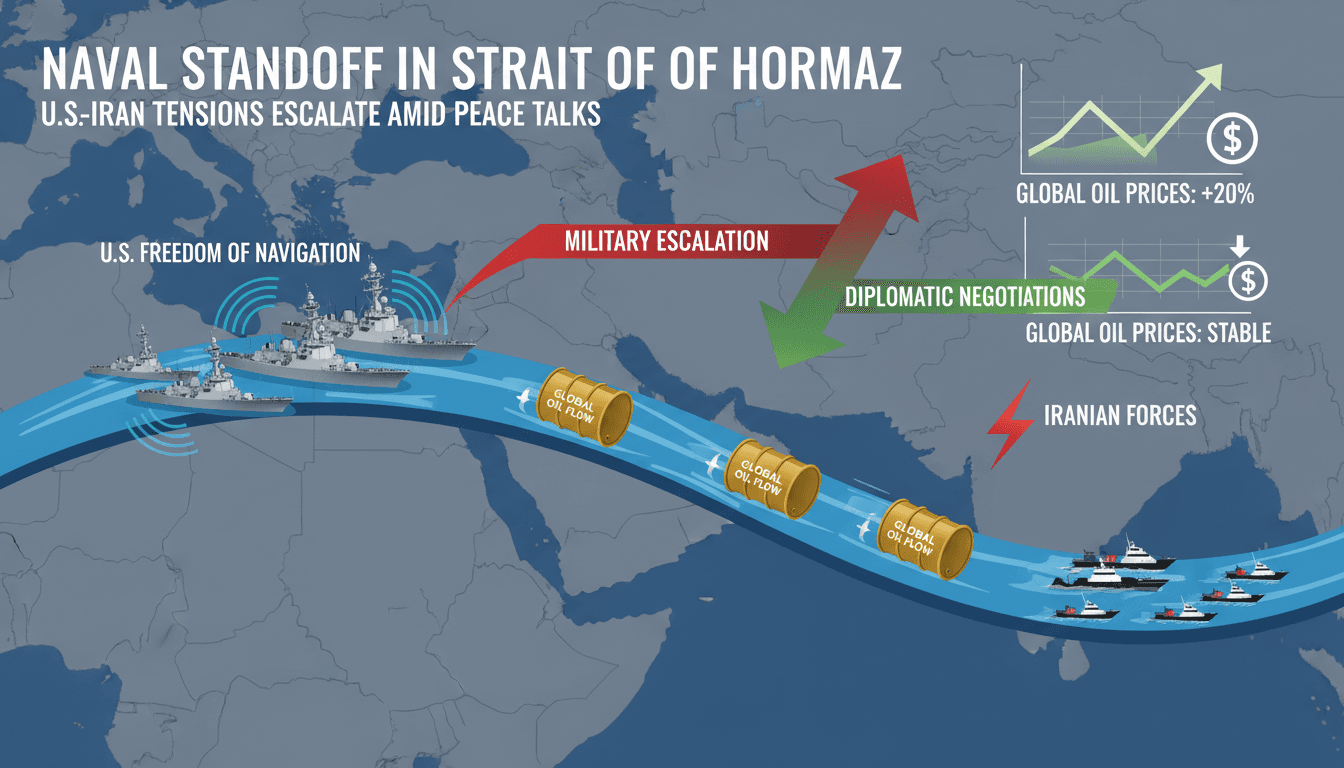
Here's what it means for you.
If you're in the energy sector or rely on global shipping, the tensions in the Strait of Hormuz could directly impact your costs and supply chains.
Why it matters
The Strait of Hormuz is a critical chokepoint for 27% of the world's oil trade, making any disruptions a global concern.
What happened (in 30 seconds)
- On April 11, 2026, two U.S. Navy destroyers entered the Strait of Hormuz amid ongoing U.S.-Iran peace negotiations.
- Iran's IRGC Navy issued warnings to the U.S. vessels, asserting control over the strait during a fragile cease-fire.
- The standoff de-escalated without shots fired, but it underscored the strait's significance in broader geopolitical negotiations.
The context you actually need
- The Strait of Hormuz is vital for global oil trade, with 27% of maritime oil passing through it, affecting prices worldwide.
- Iran's recent actions included imposing tolls and restricting shipping, leveraging its control for negotiations on sanctions and nuclear issues.
- The U.S. and Iran are engaged in high-stakes talks in Islamabad, focusing on reopening the strait as a precondition for further discussions.
What's really happening
The naval standoff in the Strait of Hormuz on April 11, 2026, is emblematic of the heightened tensions between the U.S. and Iran, particularly in the context of a recent war that escalated in late February 2026. The U.S. and Israeli strikes on Iranian targets prompted Iran to respond by restricting access to the strait, a critical maritime route for global oil trade. By imposing tolls, mining channels, and limiting traffic, Iran is leveraging its control over this chokepoint to gain leverage in ongoing negotiations regarding sanctions relief, nuclear issues, and regional proxies.
The U.S. Navy's decision to transit the strait with two destroyers was a calculated move to assert freedom of navigation and challenge Iran's claims. The U.S. Central Command reported that the destroyers successfully exited the strait without incident, initiating mine-clearing operations that are crucial for ensuring safe passage for commercial vessels. This operation is not just about military presence; it is also a strategic signal to Iran and the international community that the U.S. remains committed to maintaining open shipping lanes.
The ongoing talks in Islamabad, which involve high-level U.S. officials and Iranian representatives, are critical. They represent the highest-level discussions since 1979 and are focused on reopening the strait as a precondition for broader negotiations. However, the lack of breakthroughs thus far indicates that while both sides are engaged in dialogue, significant differences remain, particularly regarding Iran's nuclear ambitions and its influence in the region.
The implications of this standoff extend beyond military posturing. Oil prices have already begun to react, with prices nearing $100 per barrel as global markets monitor the situation closely. The potential for temporary agreements to prolong negotiations exists, but the underlying tensions suggest that the situation could escalate again if diplomatic efforts falter. As the U.S. continues to assert its military presence, Iran is likely to respond with further restrictions, creating a cycle of tension that could impact global energy markets and shipping routes.
Who feels it first (and how)
- Energy companies: Increased operational costs due to rising oil prices and shipping disruptions.
- Shipping industries: Higher freight rates and potential delays in transit times.
- Consumers: Elevated fuel prices and costs for goods reliant on oil transport.
- Investors: Volatility in oil markets affecting stock prices and investment strategies.
What to watch next
- Oil price fluctuations: Monitor how prices respond to ongoing tensions and potential agreements. This will impact energy costs globally.
- Negotiation outcomes: Watch for any breakthroughs in U.S.-Iran talks that could lead to de-escalation or further restrictions in the Strait. This will shape future maritime trade routes.
- Military movements: Keep an eye on U.S. and Iranian military activities in the region, as increased military presence could signal an escalation of tensions.
The Strait of Hormuz is critical for global oil trade, with 27% of maritime oil passing through it.
Continued tensions between the U.S. and Iran will affect oil prices and shipping routes.
The long-term outcomes of the ongoing negotiations and their impact on regional stability.
Frequently Asked Questions
- Why it matters?
- The Strait of Hormuz is a critical chokepoint for 27% of the world's oil trade, making any disruptions a global concern.
- What happened (in 30 seconds)?
- On April 11, 2026, two U.S. Navy destroyers entered the Strait of Hormuz amid ongoing U.S.-Iran peace negotiations. Iran's IRGC Navy issued warnings to the U.S. vessels, asserting control over the strait during a fragile cease-fire. The standoff de-escalated without shots fired, but it underscored the strait's significance in broader geopolitical negotiations.
- What's really happening?
- The naval standoff in the Strait of Hormuz on April 11, 2026, is emblematic of the heightened tensions between the U.S. and Iran, particularly in the context of a recent war that escalated in late February 2026. The U.S. and Israeli strikes on Iranian targets prompted Iran to respond by restricting access to the strait, a critical maritime route for global oil trade. By imposing tolls, mining channels, and limiting traffic, Iran is leveraging its control over this chokepoint to gain leverage in
- Who feels it first (and how)?
- Energy companies: Increased operational costs due to rising oil prices and shipping disruptions. Shipping industries: Higher freight rates and potential delays in transit times. Consumers: Elevated fuel prices and costs for goods reliant on oil transport. Investors: Volatility in oil markets affecting stock prices and investment strategies.
- What to watch next?
- Oil price fluctuations: Monitor how prices respond to ongoing tensions and potential agreements. This will impact energy costs globally. Negotiation outcomes: Watch for any breakthroughs in U.S.-Iran talks that could lead to de-escalation or further restrictions in the Strait. This will shape future maritime trade routes. Military movements: Keep an eye on U.S. and Iranian military activities in the region, as increased military presence could signal an escalation of tensions.
Global political, business, and cultural coverage from WSJ international desks.
"The Wall Street Journal offers extensive international reporting with a reputation for financial insight and a center-right editorial stance."
— A47 Editor
A Naval Standoff in Hormuz Shows the High Stakes in U.S.-Iran Talks
The United States has sent two destroyers through the Strait of Hormuz, marking a significant escalation in tensions amid ongoing negotiations with Iran. This naval maneuver is part of a mine-clearing operation and coincides with the first direct tal...
Right-of-center views on political news.
"The Washington Times is a conservative-leaning newspaper known for its political coverage and advocacy of right-of-center viewpoints."
— A47 Editor
U.S. sends Navy destroyers through Strait of Hormuz with aim to demine it
The U.S. Navy has deployed two guided missile destroyers through the Strait of Hormuz as part of an initiative to demine the critical waterway, which has been obstructed by Iranian mining activities. This operation marks a significant step toward reo...