
Displaced Lebanese Delay Return Amid Fragile Ceasefire with Israel and Hezbollah
Here's what it means for you.
The ongoing instability in Lebanon could impact global markets, particularly in energy and real estate sectors.
Why it matters
The fragile ceasefire affects regional security dynamics, influencing oil prices and economic conditions in Dubai and beyond.
What happened (in 30 seconds)
- On April 17, 2026, a U.S.-brokered ceasefire between Israel and Hezbollah activated, allowing over one million displaced Lebanese to visit their homes.
- Despite the ceasefire, many displaced individuals are hesitant to return permanently due to fears of renewed violence and instability.
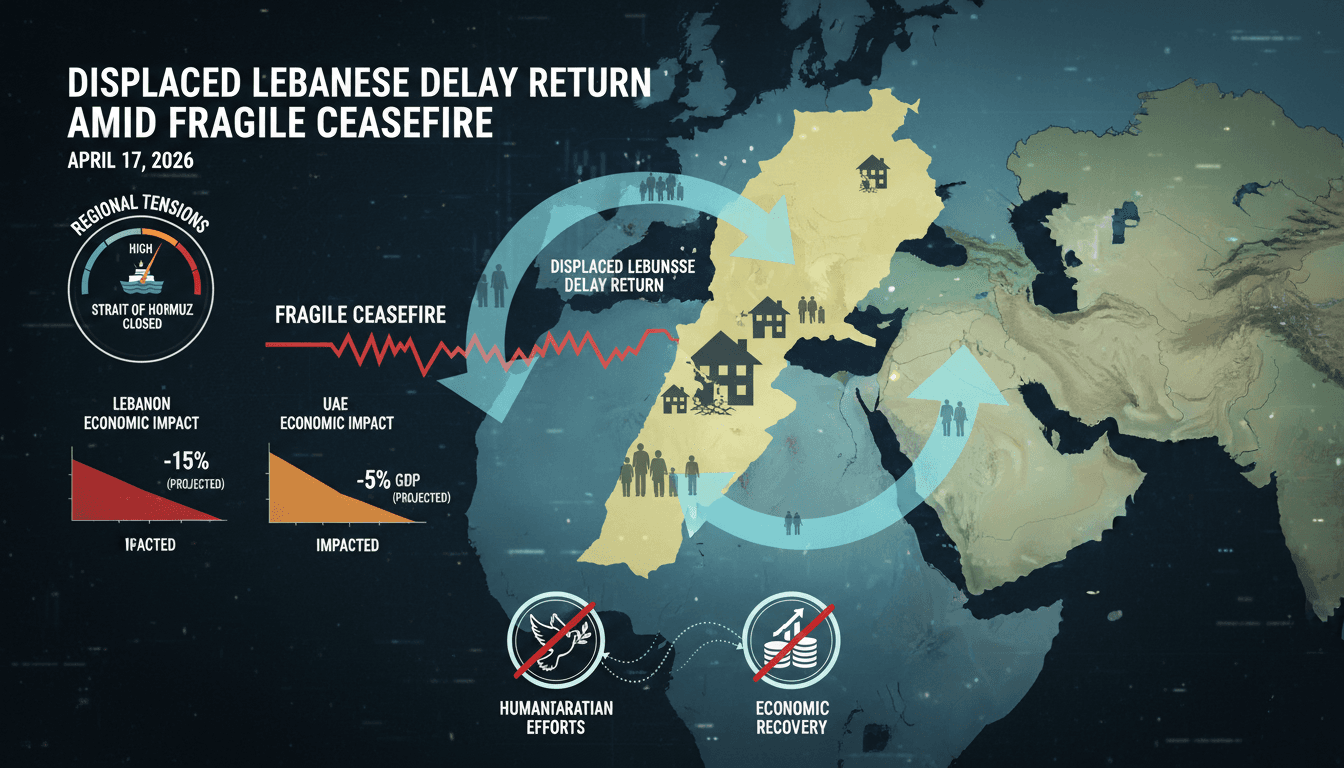
- Regional tensions are exacerbated by Iran's closure of the Strait of Hormuz, impacting oil shipments and market volatility.
The context you actually need
- The 2026 Lebanon war began on March 2, 2026, following Hezbollah's missile attacks in response to U.S.-Israeli actions against Iran, leading to significant civilian displacement.
- Over 1.2 million Lebanese have been internally displaced, representing 20% of the country's population, amid ongoing hostilities and a fragile truce.
- Hezbollah and Israel continue to exchange accusations, with Hezbollah warning of potential Israeli treachery and Israel establishing a security zone to mitigate threats.
What's really happening
The ceasefire that commenced on April 17, 2026, is a temporary reprieve in a long-standing conflict that has seen significant escalation since March. The U.S. played a crucial role in brokering this truce, but the underlying tensions remain unresolved. The ceasefire allows displaced Lebanese to return to their homes, but many are choosing to delay their resettlement due to fears of renewed violence. Hezbollah officials have publicly expressed skepticism about Israel's intentions, warning that any perceived violations could lead to retaliation.
The situation is further complicated by the geopolitical landscape, particularly Iran's recent closure of the Strait of Hormuz, a critical chokepoint for global oil shipments. This closure has already begun to affect oil prices, creating ripples in the global market that could impact economies far beyond the Middle East. The Lebanese economy, already fragile, is under additional pressure as the Lebanese pound weakens and inflation rises, exacerbated by the ongoing conflict and the uncertainty surrounding the ceasefire.
Local authorities in Lebanon are working to clear roads and bridges to facilitate the return of displaced families, but the reality on the ground remains precarious. The Israeli Defense Forces continue to conduct operations within the newly established 10-kilometer security zone, further complicating the situation for returning residents. The Lebanese Armed Forces are tasked with maintaining order, but their capacity to do so is limited given the scale of displacement and the ongoing threat of violence.
As the ceasefire holds, albeit tenuously, the international community is watching closely. The potential for a more permanent resolution remains uncertain, with both Hezbollah and Israel maintaining hardline stances. The fear of a collapse in the ceasefire could lead to further displacement and instability, impacting not only Lebanon but also the broader region.
Who feels it first (and how)
- Displaced Lebanese civilians: Many are hesitant to return home, fearing for their safety and the stability of the ceasefire.
- Lebanese businesses: Economic uncertainty affects operations and investment decisions, particularly in war-damaged areas.
- Expatriates in Dubai: Concerns for family safety in Lebanon lead to anxiety and calls for lasting peace, impacting community dynamics.
- Energy sector stakeholders: Fluctuations in oil prices due to regional tensions affect profitability and operational costs.
What to watch next
- Ceasefire violations: Any significant breaches could lead to renewed conflict, impacting regional stability and economic conditions.
- Oil market fluctuations: Continued disruptions in the Strait of Hormuz will influence global oil prices, affecting economies reliant on energy imports.
- Lebanese economic indicators: Monitoring the Lebanese pound and inflation rates will provide insights into the broader economic impact of the conflict and ceasefire.
The ceasefire is currently fragile, with reported violations and ongoing tensions.
Displaced Lebanese will continue to hesitate in returning home until a more stable environment is assured.
The long-term implications of the ceasefire on regional security and economic stability remain uncertain.
Frequently Asked Questions
- Why it matters?
- The fragile ceasefire affects regional security dynamics, influencing oil prices and economic conditions in Dubai and beyond.
- What happened (in 30 seconds)?
- On April 17, 2026, a U.S.-brokered ceasefire between Israel and Hezbollah activated, allowing over one million displaced Lebanese to visit their homes. Despite the ceasefire, many displaced individuals are hesitant to return permanently due to fears of renewed violence and instability. Regional tensions are exacerbated by Iran's closure of the Strait of Hormuz, impacting oil shipments and market volatility.
- What's really happening?
- The ceasefire that commenced on April 17, 2026, is a temporary reprieve in a long-standing conflict that has seen significant escalation since March. The U.S. played a crucial role in brokering this truce, but the underlying tensions remain unresolved. The ceasefire allows displaced Lebanese to return to their homes, but many are choosing to delay their resettlement due to fears of renewed violence. Hezbollah officials have publicly expressed skepticism about Israel's intentions, warning that an
- Who feels it first (and how)?
- Displaced Lebanese civilians: Many are hesitant to return home, fearing for their safety and the stability of the ceasefire. Lebanese businesses: Economic uncertainty affects operations and investment decisions, particularly in war-damaged areas. Expatriates in Dubai: Concerns for family safety in Lebanon lead to anxiety and calls for lasting peace, impacting community dynamics. Energy sector stakeholders: Fluctuations in oil prices due to regional tensions affect profitability and operati
- What to watch next?
- Ceasefire violations: Any significant breaches could lead to renewed conflict, impacting regional stability and economic conditions. Oil market fluctuations: Continued disruptions in the Strait of Hormuz will influence global oil prices, affecting economies reliant on energy imports. Lebanese economic indicators: Monitoring the Lebanese pound and inflation rates will provide insights into the broader economic impact of the conflict and ceasefire.
Pan-Arab news coverage spanning politics, business, sports, and regional affairs.
"Asharq Al-Awsat reflects a broad Arab editorial perspective with strong attention to regional geopolitics."
— A47 Editor
نازحون لبنانيون يتريثون في العودة إلى منازلهم خشية انهيار الهدنة
Lebanese displaced individuals are hesitating to return to their homes despite some having already done so following the ceasefire. Many are currently living in tents in Beirut, awaiting the conclusion of the ten-day period set by Trump for the cease...
Regional coverage and analysis focused on politics, diplomacy, and business across the Middle East.
"Al-Monitor is known for analytical reporting on Middle East politics and policy developments."
— A47 Editor
Displaced Lebanese hesitant to return home as lasting truce uncertain
Following the recent ceasefire in Lebanon, many displaced individuals, including Samah Hajoul, are hesitant to return to their homes due to ongoing instability. Despite a temporary halt in military conflict, fears persist about the durability of the ...
European coverage of Middle East politics and security issues.
"France 24 offers international reporting with a European editorial perspective."
— A47 Editor
"We are just displaced and we have to go back" : Lebanese return to southern villages
Thousands of people are returning to their homes in southern Lebanon despite warnings from authorities about the fragile ceasefire with Israel. Many of these individuals do not identify as refugees but as internally displaced persons within their own...
24/7 international news from a French perspective in multiple languages.
"France 24 is viewed as a globally focused outlet with balanced coverage and a European perspective."
— A47 Editor
"We are just displaced and we have to go back" : Lebanese return to southern villages
Thousands of people are returning to their homes in southern Lebanon despite warnings from authorities about the fragile ceasefire with Israel. Many of these individuals do not identify as refugees but as internally displaced persons within their own...
Arabic-language UAE newspaper coverage focused on domestic affairs, public institutions, business, society, and regional developments.
"Al Khaleej coverage generally reflects a mainstream UAE editorial lens with strong attention to public affairs, institutions, and regional developments."
— A47 Editor
رغم أنها باتت ركاماً..اللبنانيون يتدفقون إلى مناطقهم المدمّرة في الضاحية
Residents of southern Lebanon and the southern suburbs of Beirut began returning to their homes on Friday, which have been devastated by the war with Israel. The destruction has left many areas in ruins, highlighting the severe impact of the conflict...
Regional coverage and analysis focused on politics, diplomacy, and business across the Middle East.
"Al-Monitor is known for analytical reporting on Middle East politics and policy developments."
— A47 Editor
Lebanese joy at returning to homes in the south mixed with horror at ruins of war
Following a recent ceasefire between Israel and Lebanon, Lebanese families are returning to their homes in the south, where they are greeted with a mix of joy and horror as they confront the devastation left by weeks of conflict. Nearly a quarter of ...
Arabic-language coverage of political affairs and current events.
"Okaz political coverage typically follows mainstream Saudi framing on national and regional affairs."
— A47 Editor
مع بدء سريان الهدنة.. لبنان: آلاف النازحين يعودون إلى الضاحية وجنوب لبنان
As of early Friday morning, with the ceasefire with Israel now in effect, tens of thousands of Lebanese displaced persons began their return to their homes in the southern suburbs of Beirut and various towns in the south. This mass return caused sign...
Arabic-language UAE newspaper coverage focused on domestic affairs, public institutions, business, society, and regional developments.
"Al Khaleej coverage generally reflects a mainstream UAE editorial lens with strong attention to public affairs, institutions, and regional developments."
— A47 Editor
عودة النازحين إلى جنوب لبنان عبر جسر القاسمية المدمّر مع دخول الهدنة حيّز التنفيذ (فيديو)
Thousands of Lebanese displaced individuals have begun returning to their villages in southern Lebanon following the implementation of a ceasefire agreement. This development marks a significant step towards stability in the region, as many families ...