
Gulf Stock Markets Show Mixed Results Following Trump's Ultimatum to Iran
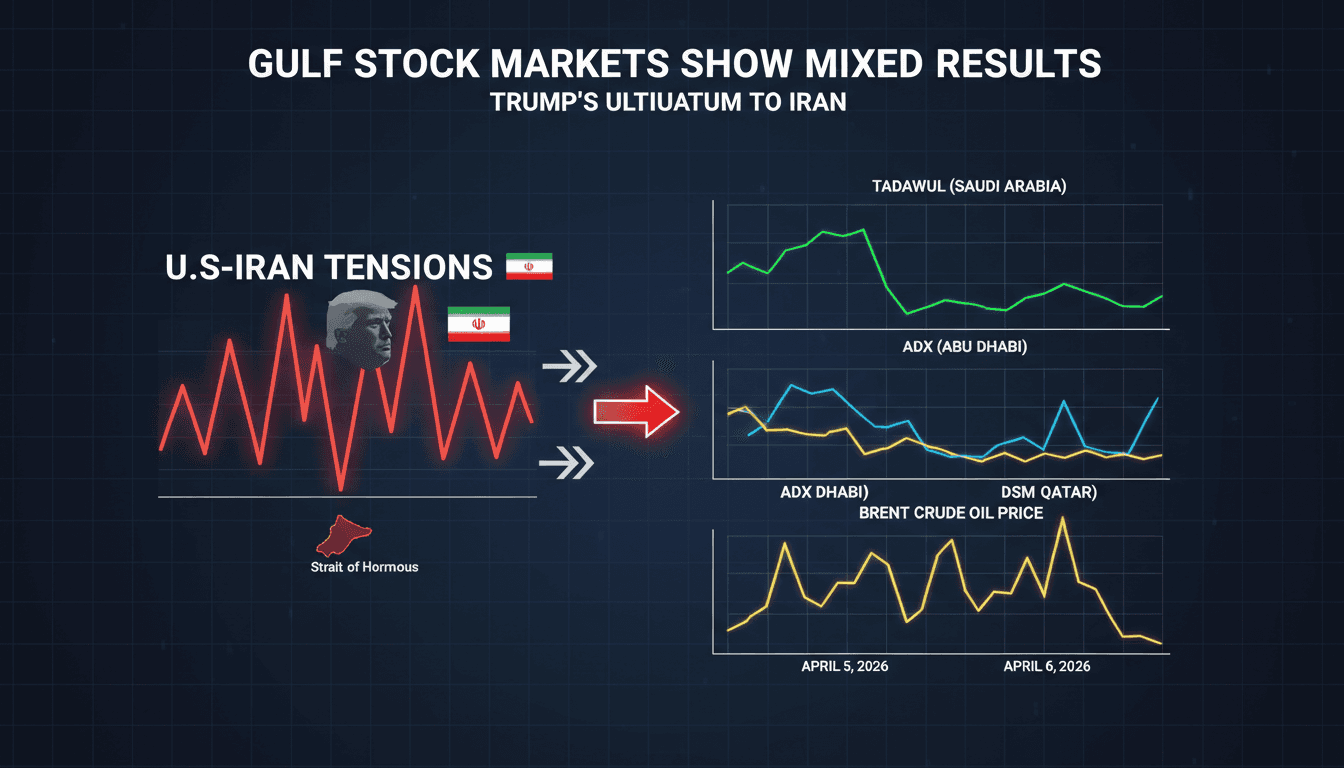
Here's what it means for you.
If you’re invested in Gulf markets or reliant on regional stability, the current geopolitical tensions could directly impact your financial outlook.
Why it matters
The mixed performances in Gulf stock markets reflect investor anxiety over escalating U.S.-Iran tensions, which could disrupt oil supplies and economic stability in the region.
What happened (in 30 seconds)
- Trump issued a warning to Iran on April 5, threatening military action unless the Strait of Hormuz is reopened.
- Gulf stock markets closed mixed on April 6, with Saudi Arabia down 0.1% and Qatar up 1.8%, reflecting divergent investor sentiment.
- Brent crude prices dipped slightly to $108.67 per barrel amid the geopolitical uncertainty.
The context you actually need
- Ongoing conflict: The U.S.-Iran tensions have been escalating, particularly after Iran's actions in the Strait of Hormuz disrupted global oil flows.
- Ceasefire negotiations stalled: A proposed ceasefire framework was rejected by Tehran, increasing fears of military escalation.
- Market fluctuations: Investor sentiment has been volatile, reacting to both threats of strikes and potential de-escalation talks.
What's really happening
On Easter Sunday, April 5, 2026, U.S. President Donald Trump took to social media to issue a stark ultimatum to Iran, warning of severe consequences unless the Strait of Hormuz was reopened. This ultimatum came in the wake of a proposed ceasefire framework between the U.S. and Iran, which had already stalled due to Iran's rejection of the terms amid ongoing threats. The Strait of Hormuz is a critical chokepoint for global oil shipments, and any disruption could have far-reaching implications for oil prices and market stability.
In the immediate aftermath, Gulf Cooperation Council (GCC) stock markets exhibited mixed performances on April 6. The Saudi benchmark index fell by 0.1%, while Dubai's index dropped 0.7%, primarily driven by a significant 3% decline in Emaar Properties shares. Conversely, Qatar's index surged by 1.8%, buoyed by gains in Qatar National Bank, which rose 1.6%. This divergence in market performance underscores the localized investor sentiment across different GCC countries, reflecting varying levels of confidence in their economic resilience amid geopolitical tensions.
Brent crude oil prices settled at $108.67 per barrel, marking a slight decline of 0.33%. This price movement indicates that while investors are concerned about potential supply disruptions, the market is not yet panicking. Analysts suggest that the current volatility is a reflection of heightened uncertainty regarding Iranian retaliation and the potential for further military escalation.
The mixed market responses also highlight the broader implications of U.S.-Iran relations on regional economies. Countries like Qatar and Kuwait, which showed gains, may be perceived as more insulated from the direct impacts of U.S.-Iran tensions, while markets in Saudi Arabia and Dubai, heavily reliant on oil and tourism, are more vulnerable to disruptions.
Who feels it first (and how)
- Institutional investors: They are closely monitoring geopolitical developments, adjusting portfolios based on perceived risks.
- Real estate sector: Investors in Dubai, particularly in real estate and tourism, may feel immediate impacts from market fluctuations.
- Oil-dependent economies: Countries like Saudi Arabia, which rely heavily on oil exports, will face economic pressures if tensions escalate.
What to watch next
- U.S.-Iran negotiations: Any developments in ceasefire talks will be crucial in determining market stability and investor confidence.
- Oil price fluctuations: Watch for changes in Brent crude prices, as they will indicate market reactions to geopolitical events.
- Regional investor sentiment: Keep an eye on stock market performances across GCC countries, as they will reflect localized responses to ongoing tensions.
Gulf stock markets are reacting to geopolitical tensions with mixed performances.
Continued volatility in oil prices as investors react to news from U.S.-Iran negotiations.
The long-term implications of these tensions on regional economic stability and growth.
Frequently Asked Questions
- Why it matters?
- The mixed performances in Gulf stock markets reflect investor anxiety over escalating U.S.-Iran tensions, which could disrupt oil supplies and economic stability in the region.
- What happened (in 30 seconds)?
- Trump issued a warning to Iran on April 5, threatening military action unless the Strait of Hormuz is reopened. Gulf stock markets closed mixed on April 6, with Saudi Arabia down 0.1% and Qatar up 1.8%, reflecting divergent investor sentiment. Brent crude prices dipped slightly to $108.67 per barrel amid the geopolitical uncertainty.
- What's really happening?
- On Easter Sunday, April 5, 2026, U.S. President Donald Trump took to social media to issue a stark ultimatum to Iran, warning of severe consequences unless the Strait of Hormuz was reopened. This ultimatum came in the wake of a proposed ceasefire framework between the U.S. and Iran, which had already stalled due to Iran's rejection of the terms amid ongoing threats. The Strait of Hormuz is a critical chokepoint for global oil shipments, and any disruption could have far-reaching implications for
- Who feels it first (and how)?
- Institutional investors: They are closely monitoring geopolitical developments, adjusting portfolios based on perceived risks. Real estate sector: Investors in Dubai, particularly in real estate and tourism, may feel immediate impacts from market fluctuations. Oil-dependent economies: Countries like Saudi Arabia, which rely heavily on oil exports, will face economic pressures if tensions escalate.
- What to watch next?
- U.S.-Iran negotiations: Any developments in ceasefire talks will be crucial in determining market stability and investor confidence. Oil price fluctuations: Watch for changes in Brent crude prices, as they will indicate market reactions to geopolitical events. Regional investor sentiment: Keep an eye on stock market performances across GCC countries, as they will reflect localized responses to ongoing tensions.
Sports reporting with a focus on Saudi and regional competitions.
"Okaz sports coverage is broad and audience-friendly, with strong attention to Saudi teams and leagues."
— A47 Editor
مع تحذير ترمب لإيران.. أداء متباين لأسواق أسهم الخليج
Gulf stock markets closed with mixed results as investors await clarification on reports regarding ceasefire talks between the United States and Iran, following President Donald Trump's warning to Tehran of 'hell' if it does not reopen the Strait of ...
Pan-Arab news coverage spanning politics, business, sports, and regional affairs.
"Asharq Al-Awsat reflects a broad Arab editorial perspective with strong attention to regional geopolitics."
— A47 Editor
تباين أداء أسواق الخليج في ختام تداولات الاثنين
Gulf markets exhibited mixed performance at the close of trading on Monday, as investors awaited further clarity regarding reports of ceasefire talks between the United States and Iran.
Pan-Arab news coverage spanning politics, business, sports, and regional affairs.
"Asharq Al-Awsat reflects a broad Arab editorial perspective with strong attention to regional geopolitics."
— A47 Editor
تباين أداء الأسواق الخليجية مع ترقُّب وضوح بشأن محادثات أميركية- إيرانية
The performance of major Gulf markets showed a mixed trend in early trading as investors awaited further clarity regarding ceasefire talks between the United States and Iran. This uncertainty in geopolitical relations is influencing market dynamics a...