
Brent Crude Oil Prices Exceed $95 Amid US-Israel-Iran Conflict
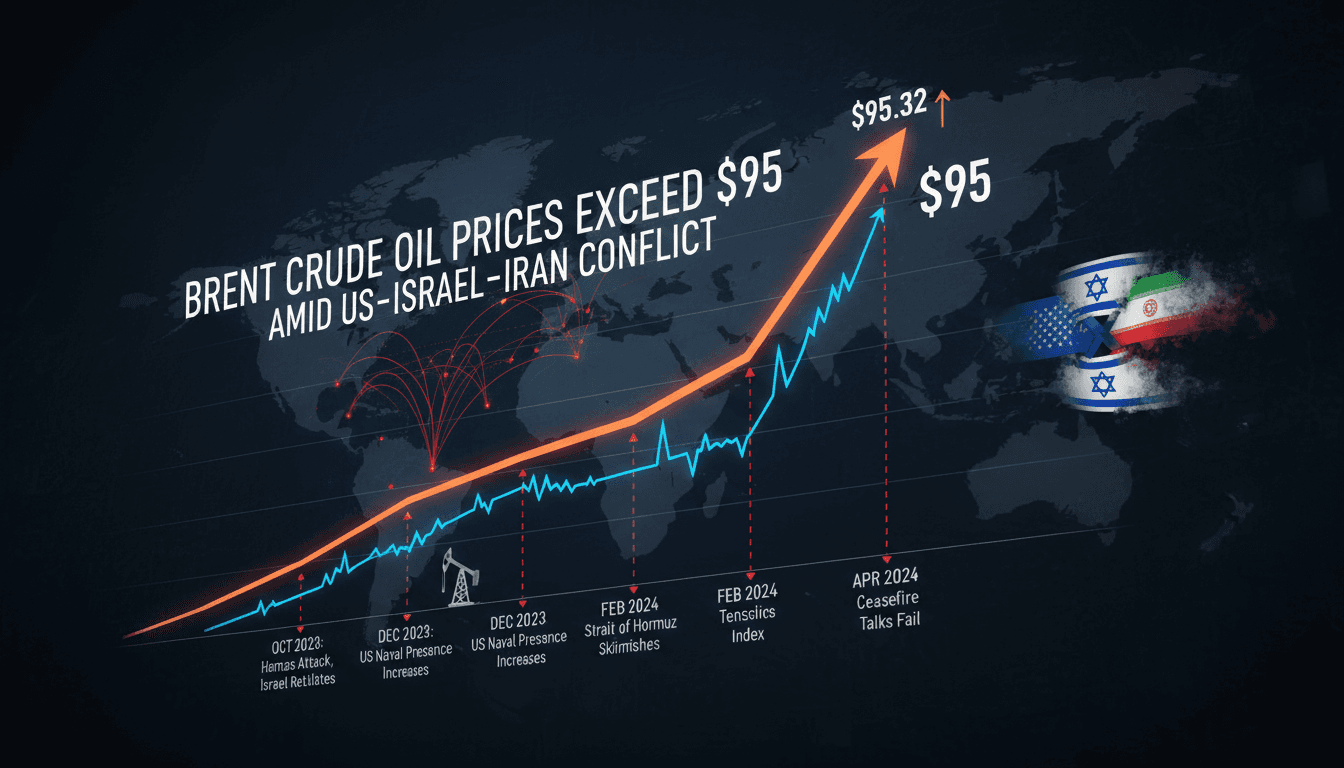
Here's what it means for you.
Rising oil prices could lead to increased costs for consumers and businesses globally, impacting everything from fuel to goods.
Why it matters
The surge in oil prices reflects geopolitical tensions that can disrupt global supply chains and economic stability.
What happened (in 30 seconds)
- Brent crude oil prices exceeded $95 per barrel on April 15, 2026, amid ongoing conflict in the Middle East.
- The US-Israel-Iran war, which began in late February 2026, has led to significant disruptions in oil supply routes, particularly the Strait of Hormuz.
- Ceasefire negotiations have stalled, causing market volatility and concerns over future oil supply stability.
The context you actually need
- The Strait of Hormuz is a critical chokepoint for global oil transit, accounting for 20% of the world's oil supply.
- Oil prices surged from approximately $70 per barrel before the conflict to a peak of $119.50 on March 9, 2026, following the closure of the Strait.
- UAE petrol prices increased over 30% in April 2026, reflecting the global surge and prompting economic support measures from the Dubai government.
What's really happening
The ongoing US-Israel-Iran war has created a precarious situation for global oil markets, primarily due to the strategic importance of the Strait of Hormuz. This narrow waterway is vital for oil transportation, and its closure has immediate ramifications for supply and pricing. The conflict escalated rapidly, with initial US-Israeli strikes on Iranian targets leading to retaliatory actions from Iran, including the blockade of this crucial maritime route.
As a result, Brent crude oil prices soared from around $70 per barrel to a peak of $119.50 within a matter of weeks. This volatility is driven by traders reacting to the uncertainty surrounding supply availability and geopolitical stability. The market is now in a state of flux, with prices fluctuating between $90 and $120 as various factors come into play, including attacks on oil infrastructure and the faltering ceasefire talks.
The implications of these price changes extend beyond immediate market reactions. Higher oil prices can lead to increased transportation and production costs, which are likely to be passed on to consumers. This could result in inflationary pressures in various sectors, particularly in energy-dependent industries. Additionally, countries heavily reliant on oil imports may face economic strain, leading to potential shifts in trade balances and currency valuations.
In the UAE, the economic impact has been pronounced, with petrol prices rising significantly and stock markets in Dubai and Abu Dhabi losing substantial value—approximately $120 billion—due to the heightened uncertainty. The Dubai government has responded with a $270 million relief package aimed at supporting businesses and families affected by these rising costs.
Analysts predict that unless there is a significant de-escalation in the conflict, Brent crude prices are likely to remain elevated, with forecasts suggesting they could stay above $90-$95 through mid-2026. This scenario underscores the interconnectedness of geopolitical events and global economic conditions, highlighting how conflicts in one region can have far-reaching effects on markets worldwide.
Who feels it first (and how)
- Consumers: Higher fuel prices will increase transportation costs, affecting daily expenses.
- Businesses: Companies reliant on oil for production or logistics will face rising operational costs.
- Investors: Stock market volatility may impact investment portfolios, particularly in energy and related sectors.
- Governments: Countries dependent on oil imports may experience economic strain and inflationary pressures.
What to watch next
- Ceasefire negotiations: Progress or setbacks in talks between the US and Iran will significantly influence oil prices and market stability.
- Supply chain disruptions: Any further attacks on oil infrastructure or shipping routes could exacerbate price volatility.
- Global economic indicators: Watch for inflation rates and consumer spending trends, as these will reflect the broader impact of rising oil prices on the economy.
Brent crude oil prices have surpassed $95 per barrel due to geopolitical tensions.
Prices will remain volatile as the situation in the Middle East evolves.
The long-term impact on global economic stability and inflation rates remains uncertain.
Frequently Asked Questions
- Why it matters?
- The surge in oil prices reflects geopolitical tensions that can disrupt global supply chains and economic stability.
- What happened (in 30 seconds)?
- Brent crude oil prices exceeded $95 per barrel on April 15, 2026, amid ongoing conflict in the Middle East. The US-Israel-Iran war, which began in late February 2026, has led to significant disruptions in oil supply routes, particularly the Strait of Hormuz. Ceasefire negotiations have stalled, causing market volatility and concerns over future oil supply stability.
- What's really happening?
- The ongoing US-Israel-Iran war has created a precarious situation for global oil markets, primarily due to the strategic importance of the Strait of Hormuz. This narrow waterway is vital for oil transportation, and its closure has immediate ramifications for supply and pricing. The conflict escalated rapidly, with initial US-Israeli strikes on Iranian targets leading to retaliatory actions from Iran, including the blockade of this crucial maritime route. As a result, Brent crude oil prices soa
- Who feels it first (and how)?
- Consumers: Higher fuel prices will increase transportation costs, affecting daily expenses. Businesses: Companies reliant on oil for production or logistics will face rising operational costs. Investors: Stock market volatility may impact investment portfolios, particularly in energy and related sectors. Governments: Countries dependent on oil imports may experience economic strain and inflationary pressures.
- What to watch next?
- Ceasefire negotiations: Progress or setbacks in talks between the US and Iran will significantly influence oil prices and market stability. Supply chain disruptions: Any further attacks on oil infrastructure or shipping routes could exacerbate price volatility. Global economic indicators: Watch for inflation rates and consumer spending trends, as these will reflect the broader impact of rising oil prices on the economy.
Arabic-language digital news outlet covering UAE, regional, and international developments with broad general-news coverage.
"Al Ain News coverage typically blends UAE-focused reporting with wider Arab regional and international news."
— A47 Editor
أسواق النفط تراقب مسار حرب إيران.. خام برنت فوق 95 دولارا للبرميل
The oil markets are currently experiencing a fragile balance amid rapid geopolitical developments in the Middle East, with rising concerns over maritime supply disruptions. This situation is compounded by conflicting political statements that are inf...
Arabic-language UAE newspaper coverage focused on domestic affairs, public institutions, business, society, and regional developments.
"Al Khaleej coverage generally reflects a mainstream UAE editorial lens with strong attention to public affairs, institutions, and regional developments."
— A47 Editor
ارتفاع النفط.. و«برنت» دون 90 دولاراً
Oil prices rose on Wednesday as traders assessed the prospects of resuming peace talks between the United States and Iran. The price of Brent crude remained below $90 per barrel, reflecting market reactions to geopolitical developments.