
Gulf States Warn US-Iran Talks Could Strengthen Iran's Control Over Strait of Hormuz
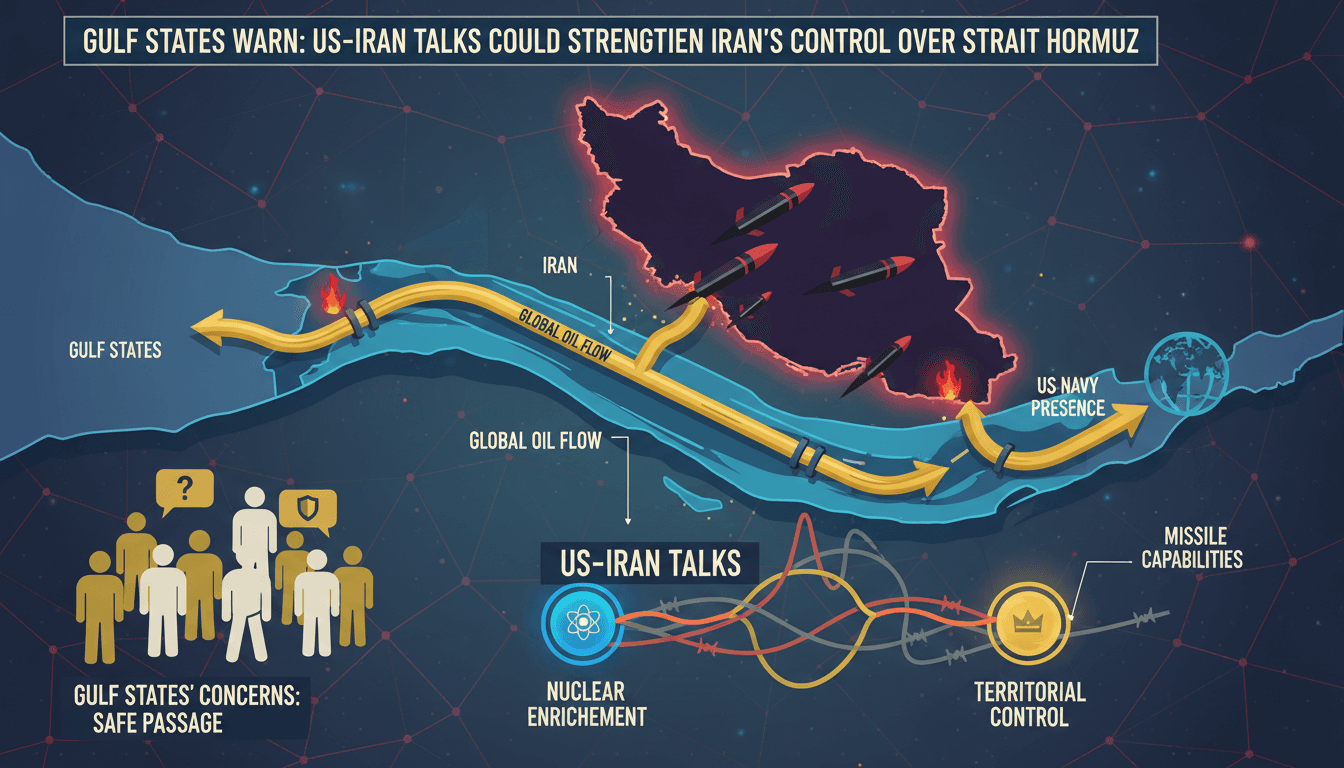
Here's what it means for you.
If you rely on global oil markets, the evolving dynamics between the US, Iran, and Gulf states could impact energy prices and supply stability.
Why it matters
The Strait of Hormuz is a critical chokepoint for global oil supplies, and any shift in control or security dynamics can have widespread economic implications.
What happened (in 30 seconds)
- On April 20, 2026, Gulf Arab states expressed concerns that US-Iran negotiations may solidify Iran's control over the Strait of Hormuz.
- The talks have shifted focus from Iran's missile capabilities to nuclear enrichment and regional influence, following a recent US-Israeli military campaign against Iran.
- Gulf officials warn that prioritizing economic stability could entrench Iran's strategic dominance without addressing its military threats.
The context you actually need
- The Strait of Hormuz transits approximately 20% of global oil supplies, making it a vital maritime route for energy security.
- Recent military actions by the US and Israel against Iran have escalated tensions, leading to Iranian threats to disrupt shipping in the Strait.
- Gulf states are increasingly concerned about their reliance on US military support and the implications of a potential US-Iran agreement that may overlook their security needs.
What's really happening
The ongoing US-Iran negotiations are taking place against a backdrop of heightened military tensions and strategic maneuvering in the Persian Gulf. Since the US-Israeli military campaign against Iran began on February 28, 2026, the region has witnessed a significant escalation in hostilities. Iranian missile strikes on Gulf energy infrastructure have raised alarms about the potential for further disruptions in the Strait of Hormuz, a critical passage for global oil shipments.
The negotiations, which are now focused on nuclear enrichment and Iran's geographic control over the Strait, have alarmed Gulf Arab states. They fear that by prioritizing economic stability and diplomatic engagement with Iran, the US may inadvertently reinforce Tehran's strategic leverage in the region. This concern is compounded by the normalization of threats to disrupt shipping in the Strait, which had previously been considered a taboo.
Gulf officials are advocating for a more inclusive approach to the negotiations, emphasizing the need for their involvement and the importance of addressing Iran's missile capabilities and proxy militias. They argue that any agreement that does not dismantle Iran's deterrent capabilities could lead to a precarious security environment, where Iran's influence over regional energy flows remains unchallenged.
The economic implications of these negotiations are significant. As the Gulf states grapple with the potential for sustained conflict and instability, they face rising shipping insurance costs and elevated energy import expenses. Analysts in the UAE have highlighted the risks associated with over-reliance on US protection, while calls for guarantees on Hormuz passage in any US-Iran accord have intensified.
In this complex geopolitical landscape, the Gulf states are navigating a delicate balance between seeking security assurances from the US and managing their own regional vulnerabilities. The outcome of the negotiations will not only shape the future of US-Iran relations but also have lasting implications for energy markets and regional stability.
Who feels it first (and how)
- Energy companies: Increased shipping costs and potential supply disruptions could impact profitability.
- Consumers: Rising oil prices may lead to higher fuel costs and inflation.
- Gulf governments: Heightened security concerns may necessitate increased military spending and diplomatic efforts.
- Investors: Volatility in oil markets could affect investment strategies and risk assessments.
What to watch next
- Next round of negotiations: The outcome of the upcoming talks in Islamabad will be crucial in determining the future of US-Iran relations and regional stability.
- Oil market reactions: Monitor fluctuations in oil prices as geopolitical tensions evolve, particularly around the Strait of Hormuz.
- Military developments: Keep an eye on any escalations in military actions or threats from Iran, which could signal shifts in the security landscape.
The Strait of Hormuz is critical for global oil supplies, with 20% of oil transiting through it.
Gulf states will continue to push for inclusion in US-Iran negotiations to safeguard their interests.
The long-term impact of the negotiations on regional security dynamics and energy markets remains uncertain.
Frequently Asked Questions
- Why it matters?
- The Strait of Hormuz is a critical chokepoint for global oil supplies, and any shift in control or security dynamics can have widespread economic implications.
- What happened (in 30 seconds)?
- On April 20, 2026, Gulf Arab states expressed concerns that US-Iran negotiations may solidify Iran's control over the Strait of Hormuz. The talks have shifted focus from Iran's missile capabilities to nuclear enrichment and regional influence, following a recent US-Israeli military campaign against Iran. Gulf officials warn that prioritizing economic stability could entrench Iran's strategic dominance without addressing its military threats.
- What's really happening?
- The ongoing US-Iran negotiations are taking place against a backdrop of heightened military tensions and strategic maneuvering in the Persian Gulf. Since the US-Israeli military campaign against Iran began on February 28, 2026, the region has witnessed a significant escalation in hostilities. Iranian missile strikes on Gulf energy infrastructure have raised alarms about the potential for further disruptions in the Strait of Hormuz, a critical passage for global oil shipments. The negotiations,
- Who feels it first (and how)?
- Energy companies: Increased shipping costs and potential supply disruptions could impact profitability. Consumers: Rising oil prices may lead to higher fuel costs and inflation. Gulf governments: Heightened security concerns may necessitate increased military spending and diplomatic efforts. Investors: Volatility in oil markets could affect investment strategies and risk assessments.
- What to watch next?
- Next round of negotiations: The outcome of the upcoming talks in Islamabad will be crucial in determining the future of US-Iran relations and regional stability. Oil market reactions: Monitor fluctuations in oil prices as geopolitical tensions evolve, particularly around the Strait of Hormuz. Military developments: Keep an eye on any escalations in military actions or threats from Iran, which could signal shifts in the security landscape.
Regional coverage and analysis focused on politics, diplomacy, and business across the Middle East.
"Al-Monitor is known for analytical reporting on Middle East politics and policy developments."
— A47 Editor
Analysis-Gulf worries US-Iran talks may cement Tehran's 'golden' grip on Hormuz
Recent discussions between the U.S. and Iran have raised concerns among Gulf states that the negotiations may only lead to a limited reopening of the Strait of Hormuz, rather than a comprehensive de-escalation of tensions. Former Russian president Dm...
Oil, metals, and agriculture: supply/demand headlines, OPEC chatter, inventories, and price action.
"Solid tape for energy and metals traders tracking macro and micro catalysts."
— A47 Editor
Analysis-Gulf worries US-Iran talks may cement Tehran’s ’golden’ grip on Hormuz
Recent developments indicate that Gulf nations are increasingly concerned that ongoing U.S.-Iran talks may inadvertently strengthen Tehran's control over the strategically vital Strait of Hormuz. This region is crucial for global oil shipments, and a...