
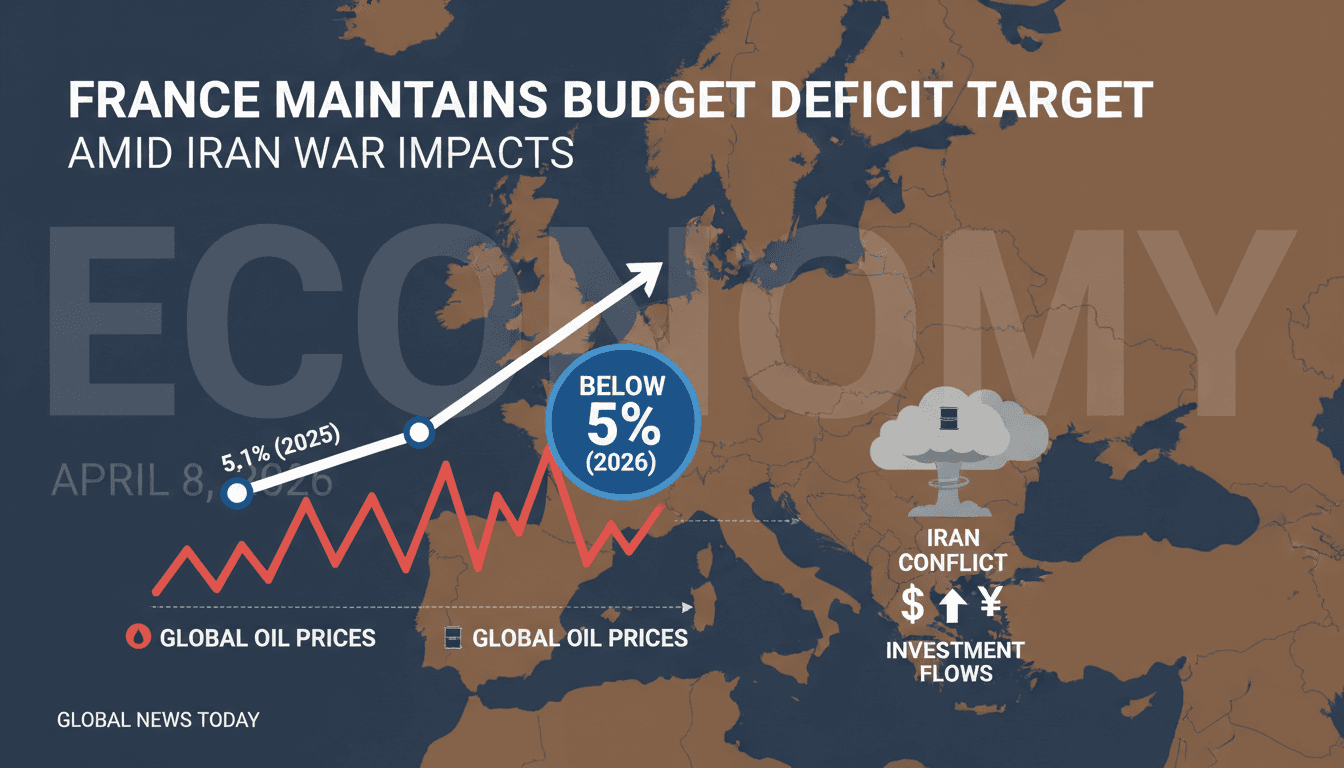
France Maintains 2026 Budget Deficit Target Below 5% Amid Iran War Impacts
Here's what it means for you.
If you’re invested in European markets or energy sectors, France's fiscal decisions could influence your financial strategies.
Why it matters
France's budgetary discipline impacts Eurozone stability, affecting investment flows and economic confidence across Europe.
What happened (in 30 seconds)
- On April 8, 2026, French Budget Minister David Amiel reaffirmed the 2026 budget deficit target below 5% of GDP despite macroeconomic uncertainties.
- The 2025 deficit was confirmed at 5.1%, slightly better than the previous year's 5.8%, indicating some fiscal improvement.
- The ongoing Iran war, which began on February 28, 2026, is creating volatility in energy prices, complicating France's economic outlook.
The context you actually need
- France has faced elevated deficits since the 2024 elections, leading to a delayed budget passage earlier in 2026.
- The Iran war has disrupted oil supplies, pushing prices above $120 per barrel and straining European economies already under fiscal constraints.
- France's reaffirmed deficit target is a strategic move to maintain credibility with the European Union amid rising geopolitical tensions.
What's really happening
The French government's decision to maintain a budget deficit target below 5% of GDP is a calculated response to both internal and external pressures. Following a turbulent political landscape post-2024 elections, France has been grappling with fiscal challenges, including a deficit that peaked at 5.8% in 2024. The recent announcement comes on the heels of a slightly improved 2025 deficit of 5.1%, which, while better than expected, still exceeds the original target of 5.4%. This improvement was largely attributed to one-off factors rather than sustainable economic growth.
The backdrop of the Iran war, which escalated dramatically after US-Israel airstrikes on February 28, 2026, has introduced significant uncertainty into global markets. The conflict has disrupted the Strait of Hormuz, a critical chokepoint for oil shipments, resulting in soaring oil prices. For France, which is already facing energy supply challenges, this situation complicates its fiscal planning. Higher energy costs can lead to inflationary pressures, which in turn could affect consumer spending and overall economic growth.
By reaffirming the budget deficit target, France aims to project stability and fiscal responsibility to both domestic and international stakeholders. The government is aware that any deviation from this target could raise concerns among investors and EU partners, potentially leading to wider financial repercussions. The upcoming April 21 review of economic forecasts will be crucial, as it will provide updated insights into how the war's economic toll is being assessed.
Moreover, the French government is under pressure to balance fiscal discipline with the need for targeted economic support in response to rising energy costs. The €70 million aid package announced in March is a step in this direction, but it reflects the limitations imposed by the current budgetary framework. The Bank of France's Governor, François Villeroy, has emphasized the constraints on fiscal responses due to the existing budgetary targets, highlighting the tension between immediate economic needs and long-term fiscal goals.
Who feels it first (and how)
- Investors in European markets: They may see volatility in bond spreads and equity markets as fiscal policies are reassessed.
- Energy consumers in France: Rising oil prices will lead to increased costs for households and businesses, impacting disposable income.
- French exporters: They may benefit from higher oil prices if they are in the energy sector, but face challenges in other sectors due to increased operational costs.
What to watch next
- April 21 EU economic forecasts: These will provide critical insights into how the Iran war is affecting economic projections and France's fiscal strategy.
- Oil price fluctuations: Continued volatility in oil prices will directly impact France's inflation rates and economic growth outlook.
- Political developments in Iran: Any changes in the conflict's dynamics could shift energy prices and, consequently, France's budgetary considerations.
France's budget deficit for 2025 was confirmed at 5.1%.
The April 21 review will adjust economic forecasts based on the ongoing Iran war.
The long-term impact of the Iran war on global energy prices and France's economic stability remains uncertain.
Frequently Asked Questions
- Why it matters?
- France's budgetary discipline impacts Eurozone stability, affecting investment flows and economic confidence across Europe.
- What happened (in 30 seconds)?
- On April 8, 2026, French Budget Minister David Amiel reaffirmed the 2026 budget deficit target below 5% of GDP despite macroeconomic uncertainties. The 2025 deficit was confirmed at 5.1%, slightly better than the previous year's 5.8%, indicating some fiscal improvement. The ongoing Iran war, which began on February 28, 2026, is creating volatility in energy prices, complicating France's economic outlook.
- What's really happening?
- The French government's decision to maintain a budget deficit target below 5% of GDP is a calculated response to both internal and external pressures. Following a turbulent political landscape post-2024 elections, France has been grappling with fiscal challenges, including a deficit that peaked at 5.8% in 2024. The recent announcement comes on the heels of a slightly improved 2025 deficit of 5.1%, which, while better than expected, still exceeds the original target of 5.4%. This improvement was
- Who feels it first (and how)?
- Investors in European markets: They may see volatility in bond spreads and equity markets as fiscal policies are reassessed. Energy consumers in France: Rising oil prices will lead to increased costs for households and businesses, impacting disposable income. French exporters: They may benefit from higher oil prices if they are in the energy sector, but face challenges in other sectors due to increased operational costs.
- What to watch next?
- April 21 EU economic forecasts: These will provide critical insights into how the Iran war is affecting economic projections and France's fiscal strategy. Oil price fluctuations: Continued volatility in oil prices will directly impact France's inflation rates and economic growth outlook. Political developments in Iran: Any changes in the conflict's dynamics could shift energy prices and, consequently, France's budgetary considerations.
Macro commentary, policy analysis, growth/inflation themes, and global outlooks.
"Contextual macro coverage that complements day-to-day market headlines."
— A47 Editor
France maintains 2026 deficit target amid Middle East uncertainty
France has reaffirmed its commitment to meet its 2026 deficit target despite the ongoing geopolitical uncertainties in the Middle East, which have raised concerns about economic stability. This decision comes amid rising inflation and fluctuating oil...
Global markets, investing, and macroeconomics from a premier financial newsroom.
"Bloomberg is respected for in-depth financial reporting and data-driven analysis."
— A47 Editor
France to Keep 5% 2026 Deficit Goal for Now, Budget Chief Says
France's budget minister announced that the country will maintain its 5% deficit target for 2026, despite a more significant reduction in the deficit last year than anticipated. This decision reflects a cautious approach to fiscal policy amid ongoing...