
Tankers Transit Strait of Hormuz Amid U.S.-Iran Tensions
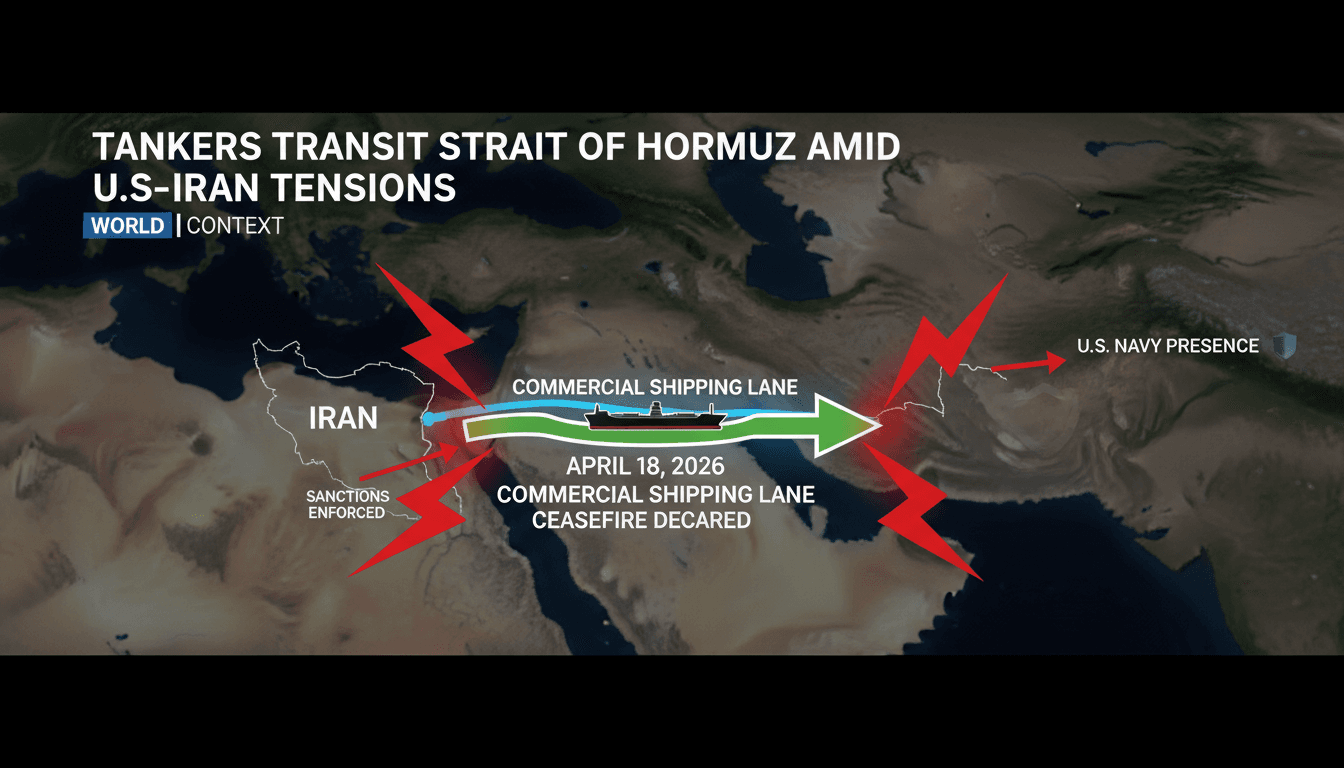
Here's what it means for you.
The successful transit of tankers through a tense geopolitical hotspot could stabilize energy prices and shipping routes critical to global trade.
What happened
On April 18, 2026, a convoy of tankers successfully transited the Strait of Hormuz amid ongoing U.S.-Iran tensions.
The Context
- U.S. Naval Blockade: The U.S. has enforced a blockade on Iranian ports since early April 2026, aiming to uphold sanctions and ceasefire terms.
- Iran's Position: Iran declared the Strait of Hormuz open for commercial traffic, requiring coordinated routing, despite previous incidents of vessels being turned back.
- Market Reaction: The convoy's successful passage led to a decline in global oil prices by over 10%, indicating market relief and potential normalization.
The Number
ships have been directed to turn around by U.S. forces since the blockade began, highlighting the high stakes of maritime navigation in this region.
Takeaway
As tensions persist, the dynamics of maritime trade in the Strait of Hormuz will continue to evolve, impacting global energy markets and shipping strategies.
Arabic-language UAE newspaper coverage focused on domestic affairs, public institutions, business, society, and regional developments.
"Al Khaleej coverage generally reflects a mainstream UAE editorial lens with strong attention to public affairs, institutions, and regional developments."
— A47 Editor
أسطول ناقلات يغادر الخليج ويعبر مضيق هرمز
A fleet of tankers has been observed leaving the Gulf and crossing the Strait of Hormuz, according to ship tracking data. This movement indicates a significant maritime operation in a region known for its strategic importance in global oil transporta...
Pan-Arab political news and analysis.
"Al-Quds Al-Arabi is a London-based Arabic newspaper known for political coverage."
— A47 Editor
أسطول ناقلات يغادر الخليج ويعبر مضيق هرمز
A fleet of tankers has departed from the Gulf and is currently transiting the Strait of Hormuz, as reported by ship tracking data from Marine Traffic. The fleet consists of four liquefied petroleum gas carriers, several oil product and chemical tanke...