
Pohlsepia mazonensis fossil reclassified as nautiloid cephalopod
Here's what it means for you.
This reclassification reshapes our understanding of cephalopod evolution, impacting scientific research and education globally.
Why it matters
The reclassification highlights the importance of advanced imaging techniques in paleontology, potentially influencing future fossil studies and interpretations.
What happened (in 30 seconds)
- Reclassification: On April 8, 2026, scientists announced that Pohlsepia mazonensis, previously considered the oldest octopus fossil, is actually a nautiloid.
- New Findings: Advanced imaging revealed a nautiloid radula, overturning previous interpretations based on superficial features.
- Record Impact: Guinness World Records suspended its title as the oldest octopus fossil pending review, reflecting the fossil's new status.
The context you actually need
- Initial Discovery: Pohlsepia mazonensis was discovered in the Mazon Creek Lagerstätte, Illinois, and initially described as an early octopus in 2000.
- Evolutionary Significance: The fossil was celebrated for pushing back the timeline of cephalopod evolution by 150 million years, but doubts about its classification persisted due to limited preservation.
- Technological Advances: Recent synchrotron X-ray analysis and micro-CT imaging techniques played a crucial role in revealing the true nature of the fossil, leading to its reclassification.
What's really happening
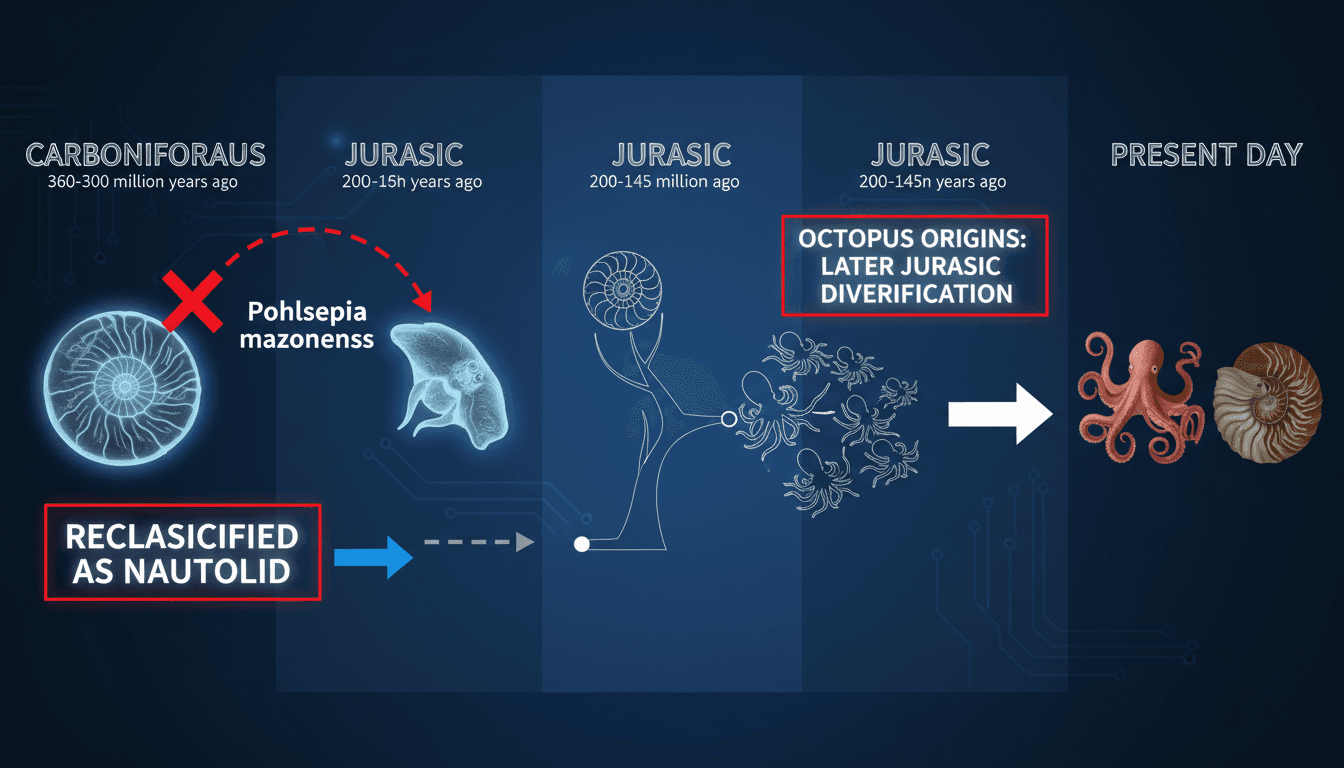
The reclassification of Pohlsepia mazonensis from the oldest known octopus to a nautiloid cephalopod marks a significant shift in our understanding of cephalopod evolution. Initially discovered in the Mazon Creek Lagerstätte, this fossil was celebrated for its implications about the timeline of cephalopod development. However, the initial classification was based on superficial features that resembled octopuses, which were later found to be the result of post-mortem decomposition.
The breakthrough came with advanced imaging techniques, including synchrotron X-ray analysis, which allowed researchers to examine the fossil's internal structures in unprecedented detail. This analysis revealed a radula—a feeding structure—characteristic of nautiloids, leading to a consensus among scientists that Pohlsepia mazonensis is indeed a nautiloid rather than an octopus. This finding aligns with the understanding that octopuses likely diversified during the Jurassic period, rather than the Carboniferous period as previously thought.
The implications of this reclassification extend beyond mere taxonomy. It highlights the evolving nature of paleontological research, where new technologies can overturn long-held beliefs. The study, published in the Proceedings of the Royal Society B, utilized a combination of synchrotron imaging, micro-CT, and scanning electron microscopy (SEM) to uncover the nautiloid characteristics of the fossil. This methodological shift underscores the importance of technological advancements in refining our understanding of evolutionary history.
Moreover, the reclassification has prompted a review of Guinness World Records, which had previously recognized Pohlsepia mazonensis as the oldest octopus fossil. The managing editor expressed interest in the new evidence, indicating a willingness to adapt to scientific advancements. The Field Museum, which houses the fossil, has also embraced the findings, noting that it is now recognized as the oldest soft-tissue nautiloid.
This reclassification resolves decades of debate within the scientific community regarding the origins of octopuses and their relatives. It emphasizes the need for continuous re-evaluation of fossil records as new techniques emerge, potentially leading to further discoveries that could reshape our understanding of the evolutionary timeline of various species.
Who feels it first (and how)
- Paleontologists: They will need to adjust their understanding of cephalopod evolution and may explore new avenues of research based on this finding.
- Educational Institutions: Universities and museums may update their curricula and exhibits to reflect the new classification, impacting how cephalopod evolution is taught.
- Fossil Collectors and Enthusiasts: The reclassification may influence the value and significance attributed to similar fossils, affecting collectors and the fossil market.
What to watch next
- Future Research Publications: Keep an eye on upcoming studies utilizing advanced imaging techniques, as they may lead to more reclassifications or discoveries.
- Guinness World Records Review: The outcome of the review regarding the fossil's status may set a precedent for how scientific discoveries influence record-keeping.
- Public Interest in Paleontology: Monitor how this reclassification affects public engagement with paleontology and fossil exhibitions, potentially leading to increased funding and interest in the field.
The fossil is now classified as a nautiloid, overturning its previous status as the oldest octopus.
This finding will lead to renewed interest in cephalopod evolution and the use of advanced imaging techniques in paleontology.
The long-term impact on the fossil market and public interest in paleontology remains to be seen.
Frequently Asked Questions
- Why it matters?
- The reclassification highlights the importance of advanced imaging techniques in paleontology, potentially influencing future fossil studies and interpretations.
- What happened (in 30 seconds)?
- Reclassification: On April 8, 2026, scientists announced that Pohlsepia mazonensis, previously considered the oldest octopus fossil, is actually a nautiloid. New Findings: Advanced imaging revealed a nautiloid radula, overturning previous interpretations based on superficial features. Record Impact: Guinness World Records suspended its title as the oldest octopus fossil pending review, reflecting the fossil's new status.
- What's really happening?
- The reclassification of Pohlsepia mazonensis from the oldest known octopus to a nautiloid cephalopod marks a significant shift in our understanding of cephalopod evolution. Initially discovered in the Mazon Creek Lagerstätte, this fossil was celebrated for its implications about the timeline of cephalopod development. However, the initial classification was based on superficial features that resembled octopuses, which were later found to be the result of post-mortem decomposition. The breakthro
- Who feels it first (and how)?
- Paleontologists: They will need to adjust their understanding of cephalopod evolution and may explore new avenues of research based on this finding. Educational Institutions: Universities and museums may update their curricula and exhibits to reflect the new classification, impacting how cephalopod evolution is taught. Fossil Collectors and Enthusiasts: The reclassification may influence the value and significance attributed to similar fossils, affecting collectors and the fossil market.
- What to watch next?
- Future Research Publications: Keep an eye on upcoming studies utilizing advanced imaging techniques, as they may lead to more reclassifications or discoveries. Guinness World Records Review: The outcome of the review regarding the fossil's status may set a precedent for how scientific discoveries influence record-keeping. Public Interest in Paleontology: Monitor how this reclassification affects public engagement with paleontology and fossil exhibitions, potentially leading to increased fund
Independent journalism covering technology, AI, and digital culture.
"An independent newsroom by veteran tech reporters known for critical, investigative coverage of AI and tech power."
— A47 Editor
The Oldest Octopus Fossil Ever Isn’t An Octopus At All, Scientists Discover
A recent re-examination of a 300-million-year-old fossil, previously believed to be the earliest octopus, has revealed that the specimen is actually a member of the nautilus family. This discovery challenges long-held assumptions about the evolutiona...
Arabic-language UAE newspaper coverage focused on domestic affairs, public institutions, business, society, and regional developments.
"Al Khaleej coverage generally reflects a mainstream UAE editorial lens with strong attention to public affairs, institutions, and regional developments."
— A47 Editor
أقدم أخطبوط في العالم مخلوق مختلف
British researchers from the University of Reading have revealed that a 300-million-year-old fossil, previously thought to be the oldest octopus, is actually a completely different creature related to the modern nautilus, possessing an external shell...
Regional and international reporting focused on Middle Eastern politics, diplomacy, and economics.
"Asharq Al-Awsat is a Saudi-owned international newspaper reflecting mainstream Gulf political perspectives."
— A47 Editor
Scientists: World's Oldest Octopus Fossil Isn't an Octopus after All
Recent research has revealed that what was once thought to be the world's oldest octopus fossil is not an octopus after all, challenging previous assumptions about its classification and evolutionary history. This finding underscores the complexities...