
Syrian Government Assumes Control of All Former U.S. Military Bases
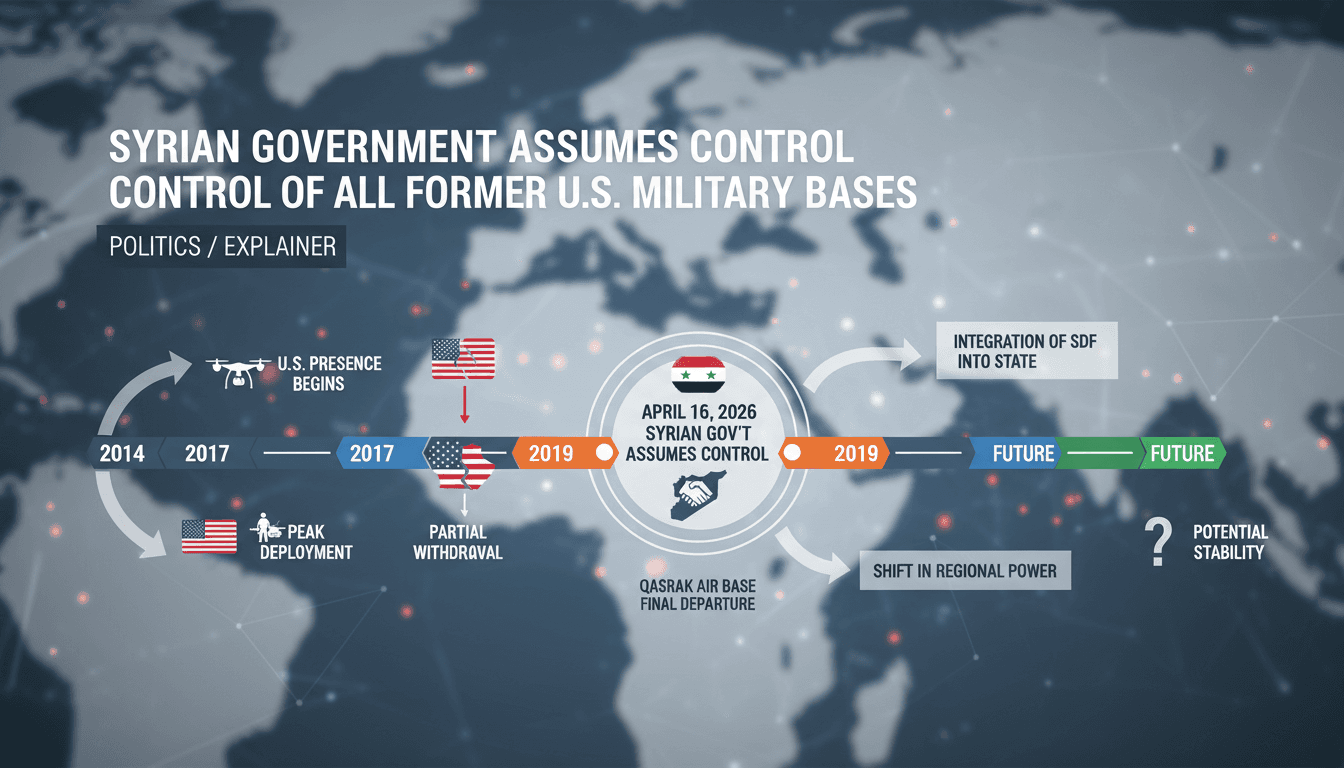
Here's what it means for you.
The end of U.S. military presence in Syria could reshape regional dynamics, impacting global trade and energy markets.
Why it matters
This shift marks a significant change in the geopolitical landscape of the Middle East, with potential implications for stability and economic conditions.
What happened (in 30 seconds)
- On April 16, 2026, Syrian forces completed the takeover of all military bases previously occupied by U.S. troops.
- The U.S. withdrawal began in February 2026, following a ceasefire and integration agreement between Damascus and the Syrian Democratic Forces (SDF).
- The handover was coordinated with U.S. Central Command, signaling a deliberate transition in military strategy in the region.
The context you actually need
- U.S. forces entered Syria in 2014 to combat ISIS, partnering with the SDF to control key territories.
- Post-2019, the defeat of ISIS led to strained relations between the SDF and Damascus, culminating in clashes and a ceasefire in January 2026.
- The recent agreements formalized the integration of SDF elements into the Syrian army, shifting control of border areas and institutions back to Damascus.
What's really happening
The U.S. military's withdrawal from Syria represents a culmination of years of complex interactions between various factions in the region. Initially deployed in 2014 as part of an international coalition against ISIS, U.S. forces collaborated with the SDF to secure northeastern Syria, including vital oil fields and border areas. This partnership was crucial in the territorial defeat of ISIS by 2019, but it also sowed the seeds of future conflict as the SDF sought greater autonomy, which was met with resistance from the Syrian government.
In January 2026, clashes erupted between Syrian forces and the SDF, highlighting the fragile nature of the situation. A ceasefire was brokered, leading to a series of negotiations that resulted in a formal integration agreement in March 2026. This agreement allowed for the absorption of SDF elements into the Syrian military, effectively restoring control to the Damascus government over previously autonomous regions.
The U.S. withdrawal, which began with the evacuation of the al-Tanf base in February 2026, was characterized as a "deliberate and conditions-based transition" by U.S. Central Command. This indicates a strategic shift in U.S. military policy, focusing on partner-led operations against ISIS rather than direct involvement. The final convoy's departure from Qasrak air base on April 16, 2026, marked the end of a 12-year military presence, a significant milestone in U.S.-Syria relations.
The implications of this transition are multifaceted. For Syria, the handover is framed as a restoration of sovereignty and a step toward national unification. For the U.S., it reflects a recalibration of military priorities in the region, potentially reducing the risks associated with U.S. convoys and operations. However, the broader regional dynamics remain complex, with neighboring countries closely monitoring the situation for any shifts in security or economic stability.
Who feels it first (and how)
- U.S. military personnel: Directly impacted by the withdrawal and changes in operational strategy.
- Syrian government officials: Gain increased control and legitimacy within the country.
- Syrian Democratic Forces (SDF): Experience a significant shift in power dynamics and integration into the Syrian military.
- Regional businesses: May see changes in trade routes and economic conditions as stability fluctuates.
- Energy markets: Potentially affected by shifts in control over oil fields and regional stability.
What to watch next
- Regional stability: Monitor any escalations in conflict or cooperation between Syrian forces and the SDF, as this will impact local security and economic conditions.
- U.S. military strategy: Watch for changes in U.S. counter-ISIS operations and how they adapt to the new landscape in Syria.
- Energy market reactions: Keep an eye on oil prices and trade routes, as shifts in control could influence global energy markets.
The U.S. military has completed its withdrawal from Syria, and Syrian forces have taken control of all former U.S. bases.
The integration of SDF elements into the Syrian military will continue to evolve, impacting local governance and security.
The long-term effects on regional stability and economic conditions remain uncertain, particularly regarding energy markets.
Frequently Asked Questions
- Why it matters?
- This shift marks a significant change in the geopolitical landscape of the Middle East, with potential implications for stability and economic conditions.
- What happened (in 30 seconds)?
- On April 16, 2026, Syrian forces completed the takeover of all military bases previously occupied by U.S. troops. The U.S. withdrawal began in February 2026, following a ceasefire and integration agreement between Damascus and the Syrian Democratic Forces (SDF). The handover was coordinated with U.S. Central Command, signaling a deliberate transition in military strategy in the region.
- What's really happening?
- The U.S. military's withdrawal from Syria represents a culmination of years of complex interactions between various factions in the region. Initially deployed in 2014 as part of an international coalition against ISIS, U.S. forces collaborated with the SDF to secure northeastern Syria, including vital oil fields and border areas. This partnership was crucial in the territorial defeat of ISIS by 2019, but it also sowed the seeds of future conflict as the SDF sought greater autonomy, which was met
- Who feels it first (and how)?
- U.S. military personnel: Directly impacted by the withdrawal and changes in operational strategy. Syrian government officials: Gain increased control and legitimacy within the country. Syrian Democratic Forces (SDF): Experience a significant shift in power dynamics and integration into the Syrian military. Regional businesses: May see changes in trade routes and economic conditions as stability fluctuates. Energy markets: Potentially affected by shifts in control over oil fields and regi
- What to watch next?
- Regional stability: Monitor any escalations in conflict or cooperation between Syrian forces and the SDF, as this will impact local security and economic conditions. U.S. military strategy: Watch for changes in U.S. counter-ISIS operations and how they adapt to the new landscape in Syria. Energy market reactions: Keep an eye on oil prices and trade routes, as shifts in control could influence global energy markets.
Comprehensive coverage of Middle Eastern and global issues.
"Al Jazeera is a prominent voice from the Global South, especially the Middle East, with an emphasis on underreported stories."
— A47 Editor
Syria takes control of all bases where US forces were deployed
Syria has taken control of all military bases previously occupied by US forces, marking a significant shift in the region's military landscape. The final convoy of US soldiers and equipment departed from the Qasrak air base located in the northeaster...
Regional and international reporting focused on Middle Eastern politics, diplomacy, and economics.
"Asharq Al-Awsat is a Saudi-owned international newspaper reflecting mainstream Gulf political perspectives."
— A47 Editor
Syria Says Has Taken Control of All Bases Previously Operated by US Forces
Syria has announced that it has taken control of all military bases previously operated by US forces, marking a significant shift in the country's military landscape following the withdrawal of American troops. This development comes after a decade o...
UAE-based English-language newspaper covering regional politics, economics, and global affairs.
"The National reflects Emirati policy perspectives while maintaining international editorial standards."
— A47 Editor
Syrian army takes control of last US base in country as Al Shara tightens grip
The Syrian army has taken control of the last remaining US military base in the country, marking a significant shift in the power dynamics within the region as Al Shara consolidates its influence. This development underscores the diminishing presence...
Arabic-language coverage of political affairs and current events.
"Okaz political coverage typically follows mainstream Saudi framing on national and regional affairs."
— A47 Editor
بعد انسحاب «التحالف الدولي».. الجيش السوري يتسلم قاعدة «قسرك»
The Syrian Ministry of Defense announced the handover of the Qasrk airbase in the Hasakah countryside on Thursday, following the withdrawal of U.S.-led coalition forces. This transfer marks a significant step in the military reorganization in the reg...
Pan-Arab news coverage spanning politics, business, sports, and regional affairs.
"Asharq Al-Awsat reflects a broad Arab editorial perspective with strong attention to regional geopolitics."
— A47 Editor
دمشق تؤكد تسلّمها كل القواعد التي شغلها الجيش الأميركي في سوريا
The Syrian government confirmed on Thursday that it has taken control of all military bases previously occupied by U.S. forces, which had been deployed in the country for several years as part of the international coalition against ISIS. This develop...
Arabic-language UAE newspaper coverage focused on domestic affairs, public institutions, business, society, and regional developments.
"Al Khaleej coverage generally reflects a mainstream UAE editorial lens with strong attention to public affairs, institutions, and regional developments."
— A47 Editor
الجيش السوري يتسلم قاعدة "قسرك" بعد انسحاب التحالف الدولي
The Syrian Ministry of Defense announced that the Syrian Army has taken control of the Qasrk airbase located in the countryside, following the withdrawal of the international coalition forces. This transfer marks a significant shift in military contr...