
Moody's Revises Bahrain and Iraq Sovereign Outlooks to Negative Due to Regional Conflict Disruptions
Here's what it means for you.
If you have investments or business interests in the Gulf region, the recent outlook changes could signal increased financial risks and potential shifts in market dynamics.
Why it matters
The revisions highlight escalating credit risks in the Gulf, which could affect regional economic stability and investment attractiveness.
What happened (in 30 seconds)
- On April 17, 2026, Moody's Investors Service changed the sovereign outlooks for Bahrain and Iraq from stable to negative.
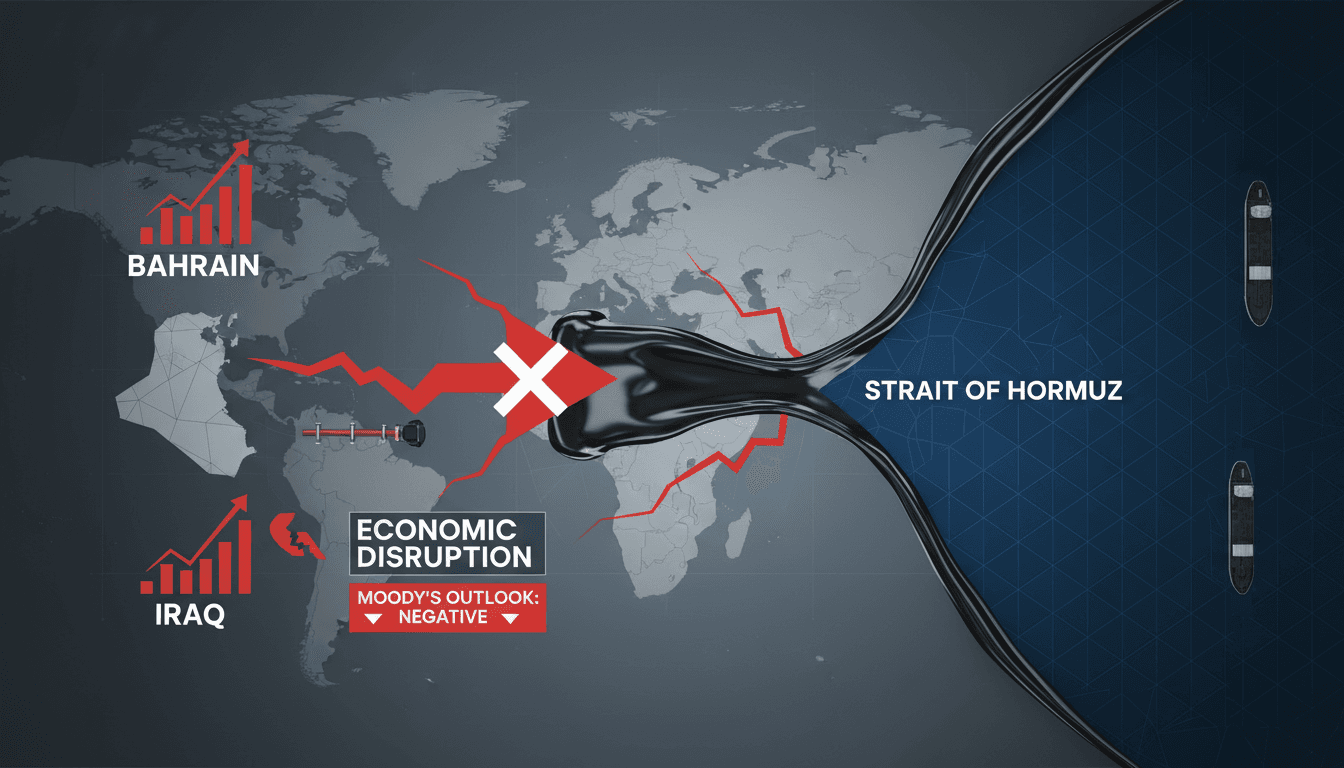
- The revisions are due to economic disruptions caused by the ongoing regional conflict, particularly the closure of the Strait of Hormuz.
- Bahrain and Iraq face deteriorating fiscal conditions and heightened security risks, impacting their economic growth and stability.
The context you actually need
- The 2026 Iran war, which escalated in late February, has severely disrupted shipping routes, particularly affecting oil exports.
- Bahrain's economy relies heavily on hydrocarbon revenues, which constitute half of its government income, while Iraq's economy is similarly oil-dependent.
- Moody's ratings reflect the vulnerabilities of both nations, with Bahrain's debt projected at 147% of GDP and Iraq facing significant internal and external pressures.
What's really happening
The recent revisions by Moody's Investors Service are a direct response to the escalating conflict in the Middle East, particularly the Iran war that began in late February 2026. Following U.S. and Israeli airstrikes on Iranian targets, Iran retaliated by effectively closing the Strait of Hormuz, a critical maritime route for global oil trade. This closure has disrupted approximately 20% of the world's oil supply, significantly impacting Gulf economies that are heavily reliant on hydrocarbon exports.
Bahrain, which has already been grappling with fiscal vulnerabilities, faces further deterioration in its economic metrics. The country initiated fiscal reforms in late 2025, but the ongoing conflict has undermined these efforts. With hydrocarbon revenues accounting for half of its government income, the closure of the Strait has exacerbated Bahrain's financial challenges, leading to Moody's negative outlook revision despite affirming its B2 rating.
Iraq, positioned between Iranian and U.S. interests, is experiencing heightened security risks that threaten its oil exports, with 90% of its crude oil routed through the Strait. The conflict has amplified internal fragilities, and the previously stable outlooks for Iraq are now at risk due to the ongoing disruptions. The World Bank and IMF have downgraded growth forecasts for the region, projecting a mere 1.8% GDP growth for the Middle East in 2026, with Bahrain's growth expected to plummet from 3.1% to 1.3% and Iraq facing an 8.6% contraction.
The implications of these outlook changes extend beyond just Bahrain and Iraq. The broader Gulf Cooperation Council (GCC) region may experience elevated borrowing costs and inflationary pressures as credit risks rise. While GCC banks have maintained resilience through capital buffers, the potential for cascading economic effects remains high if the conflict continues to disrupt trade and investment flows.
Who feels it first (and how)
- Investors in Bahrain and Iraq may face increased risks and volatility in their portfolios.
- Businesses reliant on oil exports or tourism in the Gulf region will likely see reduced revenues and heightened operational challenges.
- Government entities in both countries may struggle with fiscal pressures, impacting public services and infrastructure projects.
What to watch next
- Traffic through the Strait of Hormuz: Monitoring the resumption of shipping traffic will be crucial for assessing economic recovery in Bahrain and Iraq.
- Global oil prices: Fluctuations in oil prices will directly impact the fiscal health of both nations and could influence regional stability.
- International diplomatic efforts: Any developments in peace negotiations or conflict resolution in the region could alter the economic outlook for Bahrain and Iraq.
Moody's has revised the sovereign outlooks for Bahrain and Iraq to negative.
Continued disruptions in the Strait of Hormuz will further strain the economies of Bahrain and Iraq.
The long-term impact of the conflict on regional stability and economic recovery remains uncertain.
Frequently Asked Questions
- Why it matters?
- The revisions highlight escalating credit risks in the Gulf, which could affect regional economic stability and investment attractiveness.
- What happened (in 30 seconds)?
- On April 17, 2026, Moody's Investors Service changed the sovereign outlooks for Bahrain and Iraq from stable to negative. The revisions are due to economic disruptions caused by the ongoing regional conflict, particularly the closure of the Strait of Hormuz. Bahrain and Iraq face deteriorating fiscal conditions and heightened security risks, impacting their economic growth and stability.
- What's really happening?
- The recent revisions by Moody's Investors Service are a direct response to the escalating conflict in the Middle East, particularly the Iran war that began in late February 2026. Following U.S. and Israeli airstrikes on Iranian targets, Iran retaliated by effectively closing the Strait of Hormuz, a critical maritime route for global oil trade. This closure has disrupted approximately 20% of the world's oil supply, significantly impacting Gulf economies that are heavily reliant on hydrocarbon exp
- Who feels it first (and how)?
- Investors in Bahrain and Iraq may face increased risks and volatility in their portfolios. Businesses reliant on oil exports or tourism in the Gulf region will likely see reduced revenues and heightened operational challenges. Government entities in both countries may struggle with fiscal pressures, impacting public services and infrastructure projects.
- What to watch next?
- Traffic through the Strait of Hormuz: Monitoring the resumption of shipping traffic will be crucial for assessing economic recovery in Bahrain and Iraq. Global oil prices: Fluctuations in oil prices will directly impact the fiscal health of both nations and could influence regional stability. International diplomatic efforts: Any developments in peace negotiations or conflict resolution in the region could alter the economic outlook for Bahrain and Iraq.
UAE-based English-language newspaper covering regional politics, economics, and global affairs.
"The National reflects Emirati policy perspectives while maintaining international editorial standards."
— A47 Editor
Moody's changes Bahrain and Iraq's outlook to negative over war fallout
Moody's has downgraded the outlook for Bahrain and Iraq to negative, citing the adverse effects of ongoing regional conflicts, particularly the war in Iran, which has severely impacted both nations' economic stability and security.