
Shell Revises Q1 2026 Gas Production Guidance Following Iranian Attacks in Qatar
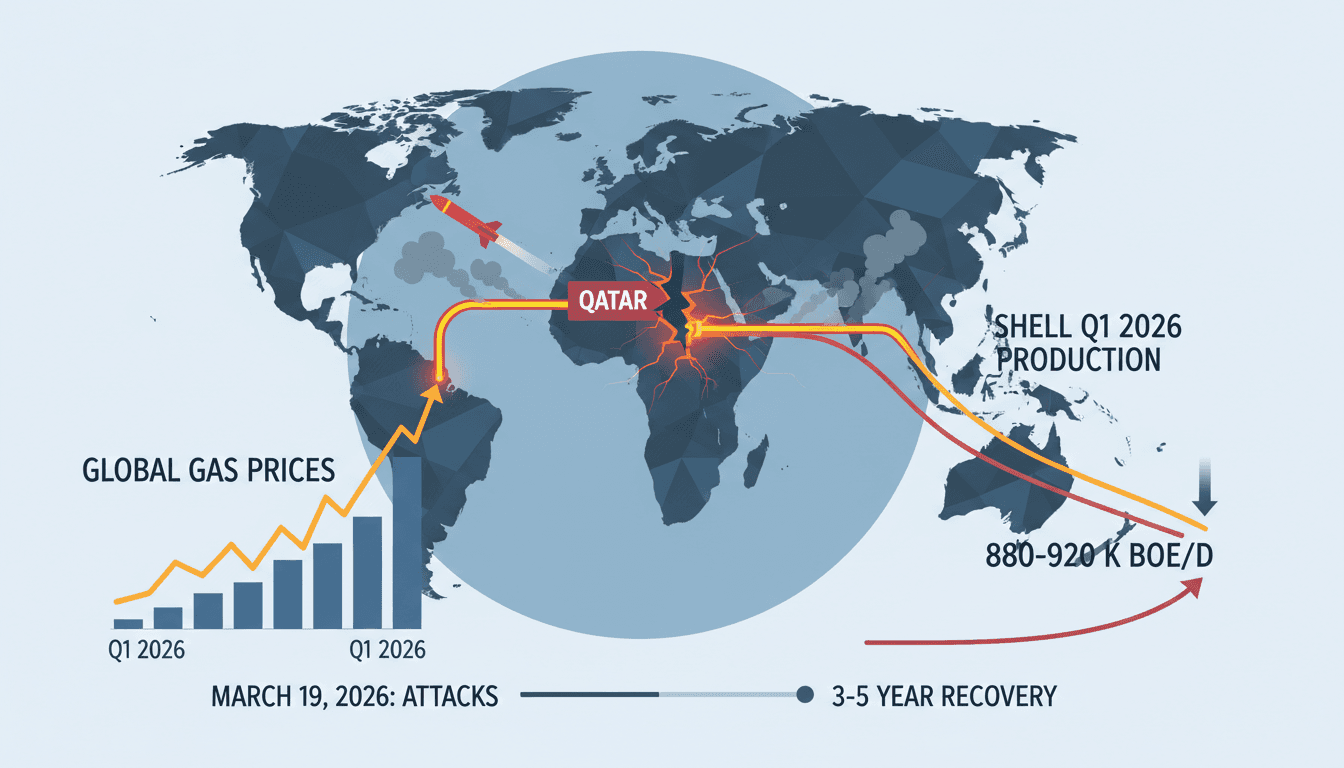
Here's what it means for you.
If you rely on energy markets or are involved in global supply chains, expect rising costs and potential disruptions.
Why it matters
This reduction in production guidance signals significant instability in global energy supply, impacting prices and availability.
What happened (in 30 seconds)
- Shell plc revised its Q1 2026 integrated gas production guidance downward to 880,000–920,000 barrels of oil equivalent per day due to conflict-related disruptions in Qatar.
- Iranian missile attacks on March 19, 2026, damaged key facilities at Ras Laffan Industrial City, halting operations at Shell's Pearl GTL plant and QatarEnergy's LNG trains.
- QatarEnergy declared force majeure on LNG shipments, projecting a recovery timeline of 3–5 years for LNG and one year for GTL repairs.
The context you actually need
- Escalating tensions in the Middle East, particularly between the US, Israel, and Iran, have led to direct attacks on energy infrastructure, affecting global supply chains.
- Ras Laffan Industrial City is a critical hub for Qatar's LNG production, contributing significantly to the country's energy exports and global gas supply.
- Shell's Pearl GTL facility, operational since 2011, plays a vital role in converting natural gas to liquid fuels, making its operational status crucial for energy markets.
What's really happening
The recent missile attacks on March 19, 2026, represent a significant escalation in the ongoing Middle East conflict, particularly affecting Qatar's energy infrastructure. The damage inflicted on Ras Laffan Industrial City, which includes Shell's Pearl GTL plant and two LNG trains operated by QatarEnergy, has led to a substantial reduction in gas production capabilities. This incident is not an isolated event but rather a part of a broader pattern of retaliatory strikes in the region, where Iranian forces have targeted Gulf energy assets in response to Israeli actions against Iranian infrastructure.
Shell's decision to lower its production guidance reflects the immediate impact of these attacks. The company initially projected an output of 920,000–980,000 boe/day but has now adjusted this to 880,000–920,000 boe/day, indicating a loss of approximately 40,000–100,000 boe/day due to the conflict. This reduction is significant, as it not only affects Shell's bottom line but also has ripple effects throughout the global energy market, where gas prices are already experiencing upward pressure.
The declaration of force majeure by QatarEnergy on LNG shipments highlights the severity of the situation. With LNG trains sidelined for an estimated 3–5 years and GTL repairs expected to take one year, the implications for global gas supply are profound. The loss of 17% of Qatar's LNG capacity will likely lead to increased prices and potential shortages in markets that depend on Qatari gas, particularly in Europe and Asia.
As the situation unfolds, the volatility in energy futures markets is expected to continue, with traders reacting to both geopolitical developments and the immediate impacts on production. The broader implications for global energy security are significant, as Gulf states, including the UAE, are ramping up defense measures to protect their infrastructure from similar attacks.
Who feels it first (and how)
- Energy companies: Shell and QatarEnergy will face immediate financial impacts due to reduced production and potential losses in contracts.
- Consumers: Households and businesses relying on gas and oil will likely see increased prices at the pump and for heating.
- Global markets: Investors in energy futures will experience volatility, impacting portfolios and investment strategies.
What to watch next
- Global gas prices: Monitor fluctuations in LNG prices as the market reacts to reduced supply from Qatar.
- Geopolitical developments: Keep an eye on further escalations in the Middle East, particularly any new attacks or retaliatory measures.
- Recovery timelines: Watch for updates from Shell and QatarEnergy regarding the status of repairs and production recovery, which will influence market stability.
Shell has lowered its production guidance due to conflict-related disruptions in Qatar.
Global gas prices will rise as a result of reduced supply from Qatar's LNG facilities.
The long-term geopolitical ramifications of the conflict and their impact on energy infrastructure in the region.
Frequently Asked Questions
- Why it matters?
- This reduction in production guidance signals significant instability in global energy supply, impacting prices and availability.
- What happened (in 30 seconds)?
- Shell plc revised its Q1 2026 integrated gas production guidance downward to 880,000–920,000 barrels of oil equivalent per day due to conflict-related disruptions in Qatar. Iranian missile attacks on March 19, 2026, damaged key facilities at Ras Laffan Industrial City, halting operations at Shell's Pearl GTL plant and QatarEnergy's LNG trains. QatarEnergy declared force majeure on LNG shipments, projecting a recovery timeline of 3–5 years for LNG and one year for GTL repairs.
- What's really happening?
- The recent missile attacks on March 19, 2026, represent a significant escalation in the ongoing Middle East conflict, particularly affecting Qatar's energy infrastructure. The damage inflicted on Ras Laffan Industrial City, which includes Shell's Pearl GTL plant and two LNG trains operated by QatarEnergy, has led to a substantial reduction in gas production capabilities. This incident is not an isolated event but rather a part of a broader pattern of retaliatory strikes in the region, where Iran
- Who feels it first (and how)?
- Energy companies: Shell and QatarEnergy will face immediate financial impacts due to reduced production and potential losses in contracts. Consumers: Households and businesses relying on gas and oil will likely see increased prices at the pump and for heating. Global markets: Investors in energy futures will experience volatility, impacting portfolios and investment strategies.
- What to watch next?
- Global gas prices: Monitor fluctuations in LNG prices as the market reacts to reduced supply from Qatar. Geopolitical developments: Keep an eye on further escalations in the Middle East, particularly any new attacks or retaliatory measures. Recovery timelines: Watch for updates from Shell and QatarEnergy regarding the status of repairs and production recovery, which will influence market stability.
U.S. business news, corporate developments, and economy.
"The Wall Street Journal is respected for deep financial and economic reporting with a center-right editorial perspective."
— A47 Editor
Shell Sees Hit to Gas Production, Boost From Trading Amid Middle East War
Shell has reported a decline in gas production due to lost volumes from Qatar amid ongoing conflicts in the Middle East, while anticipating a boost in oil trading operations compared to the previous quarter.
Market-moving headlines impacting equities, bonds, and related risk assets.
"Real-time catalysts and volatility drivers across indices and sectors."
— A47 Editor
Shell flags Q1 hit from Middle East conflict as refining margins rise
Shell has reported a significant impact on its first-quarter performance due to the ongoing conflict in the Middle East, which has led to rising refining margins amid escalating oil prices. The geopolitical tensions are disrupting supply chains and a...
Global markets, investing, and macroeconomics from a premier financial newsroom.
"Bloomberg is respected for in-depth financial reporting and data-driven analysis."
— A47 Editor
Shell Says Oil Trade Profit Surged as Iran War Caused Chaos
Shell Plc reported a significant increase in profits from its oil trading operations during the first quarter, despite facing challenges in its Middle Eastern assets due to the ongoing conflict in Iran.