
Ukraine Strikes Russia's Ust-Luga Oil Terminal Amid Renewed Operations
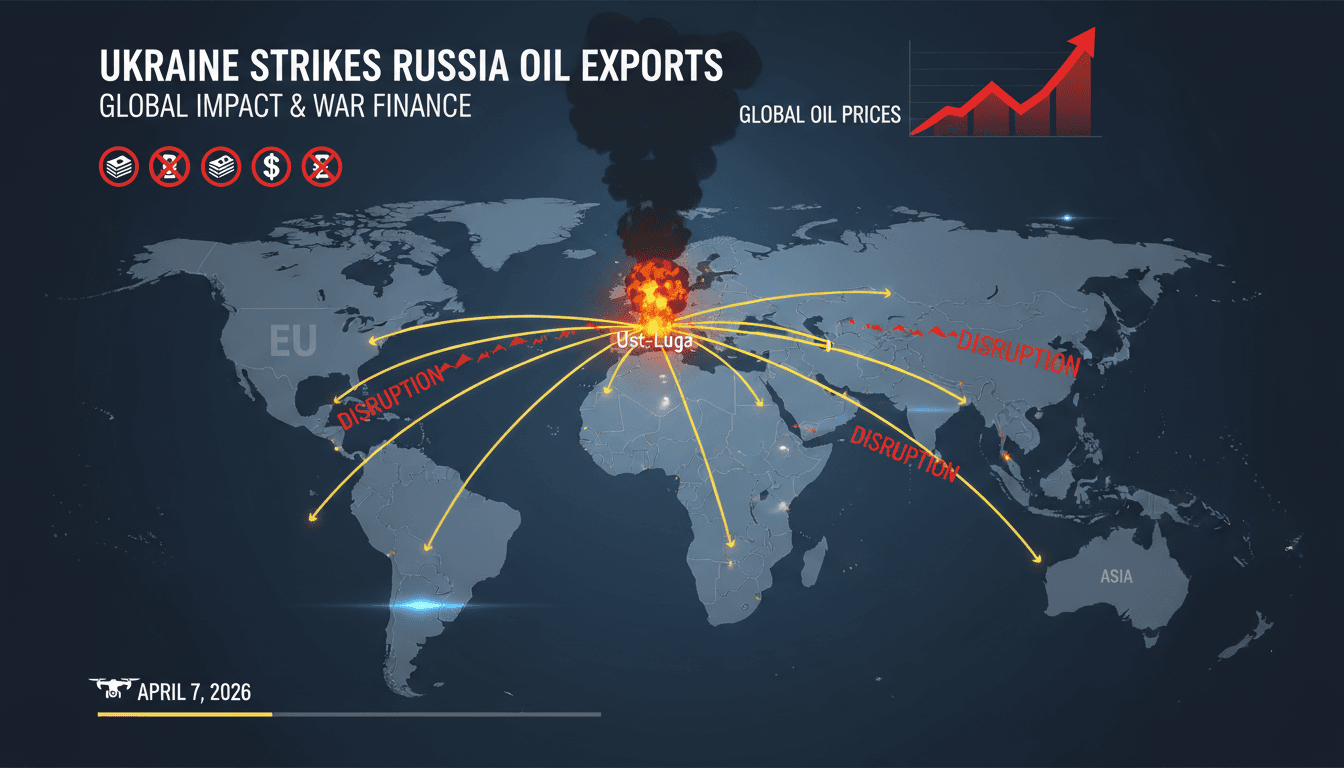
Here's what it means for you.
The ongoing conflict in Ukraine continues to disrupt global oil supply, impacting prices and availability that could affect your energy costs.
Why it matters
This escalation in drone strikes against Russian oil infrastructure threatens to tighten global oil supplies, potentially pushing prices higher.
What happened (in 30 seconds)
- On April 7, 2026, Ukraine executed a drone strike on Russia's Ust-Luga oil terminal shortly after it resumed operations.
- This port handles approximately 40% of Russia's seaborne crude exports, making it a critical target for Ukraine's military strategy.
- Russian authorities reported intercepting 22 drones, but damage assessments are ongoing, raising concerns about future oil shipment disruptions.
The context you actually need
- Ust-Luga is vital for Russia's energy exports, alongside Primorsk, with a combined capacity of about 2 million barrels per day.
- Ukraine's drone campaign intensified in late March 2026, aiming to diminish Russia's war funding by targeting its energy infrastructure.
- Global oil prices are already strained above $100 per barrel due to various geopolitical tensions, including those related to Iran.
What's really happening
Ukraine's drone strike on the Ust-Luga oil terminal is part of a broader strategy to undermine Russia's financial resources for its ongoing military operations. The port, crucial for Russia's energy exports, has been a focal point of Ukrainian attacks since late March 2026. The recent strike follows a brief resumption of operations at Ust-Luga, which had been disrupted for weeks due to prior drone strikes that caused significant damage and operational halts.
The strategic importance of Ust-Luga cannot be overstated; it handles a substantial portion of Russia's seaborne crude exports, making it a key asset in the Kremlin's energy portfolio. By targeting this facility, Ukraine aims to create a ripple effect that not only impacts Russia's immediate oil revenues but also sends shockwaves through global oil markets. The ongoing conflict has already led to increased volatility in oil prices, and further disruptions at Ust-Luga could exacerbate this trend.
The recent drone strike is indicative of a calculated approach by Ukraine to leverage its military capabilities to influence economic outcomes. As global oil prices remain elevated due to various geopolitical tensions, including those related to Iran, the situation at Ust-Luga is likely to draw increased scrutiny from international markets. Analysts are closely monitoring the potential for renewed shipment halts, which could lead to further price increases.
Moreover, the response from Russian authorities has been swift, with reports of air defenses neutralizing the drone threat. However, the lack of immediate damage details raises questions about the effectiveness of these defenses and the potential for future attacks. As Russian refineries explore alternative shipping routes to mitigate the impact of these strikes, the overall stability of Russia's oil export capabilities remains in jeopardy.
The implications of these developments extend beyond the immediate conflict, affecting global oil supply chains and pricing structures. For consumers and businesses alike, the potential for rising energy costs looms large, as any significant disruption in Russian oil exports could lead to increased prices at the pump and for heating fuel.
Who feels it first (and how)
- Oil producers: Companies reliant on stable oil prices may face increased costs and volatility.
- Consumers: Households could see rising energy bills as oil prices fluctuate.
- Transport and logistics sectors: Increased fuel costs may lead to higher shipping rates, impacting goods prices.
- Global markets: Investors in energy stocks may experience heightened volatility and risk.
What to watch next
- Future drone strikes: Increased frequency could lead to more significant disruptions in Russian oil exports, affecting global prices.
- Russian response: Any escalation in military retaliation could further destabilize the region and impact energy markets.
- Global oil price trends: Monitor how prices react to news of supply disruptions, as sustained increases could affect consumer costs.
Ust-Luga is a critical hub for Russian oil exports, and Ukraine's drone strikes are aimed at disrupting this flow.
Continued drone attacks will lead to increased scrutiny of Russian oil supply chains and may drive prices higher.
The full extent of damage from the latest strike and its long-term implications for Russian oil exports remain to be seen.
Frequently Asked Questions
- Why it matters?
- This escalation in drone strikes against Russian oil infrastructure threatens to tighten global oil supplies, potentially pushing prices higher.
- What happened (in 30 seconds)?
- On April 7, 2026, Ukraine executed a drone strike on Russia's Ust-Luga oil terminal shortly after it resumed operations. This port handles approximately 40% of Russia's seaborne crude exports, making it a critical target for Ukraine's military strategy. Russian authorities reported intercepting 22 drones, but damage assessments are ongoing, raising concerns about future oil shipment disruptions.
- What's really happening?
- Ukraine's drone strike on the Ust-Luga oil terminal is part of a broader strategy to undermine Russia's financial resources for its ongoing military operations. The port, crucial for Russia's energy exports, has been a focal point of Ukrainian attacks since late March 2026. The recent strike follows a brief resumption of operations at Ust-Luga, which had been disrupted for weeks due to prior drone strikes that caused significant damage and operational halts. The strategic importance of Ust-Luga
- Who feels it first (and how)?
- Oil producers: Companies reliant on stable oil prices may face increased costs and volatility. Consumers: Households could see rising energy bills as oil prices fluctuate. Transport and logistics sectors: Increased fuel costs may lead to higher shipping rates, impacting goods prices. Global markets: Investors in energy stocks may experience heightened volatility and risk.
- What to watch next?
- Future drone strikes: Increased frequency could lead to more significant disruptions in Russian oil exports, affecting global prices. Russian response: Any escalation in military retaliation could further destabilize the region and impact energy markets. Global oil price trends: Monitor how prices react to news of supply disruptions, as sustained increases could affect consumer costs.
Global markets, investing, and macroeconomics from a premier financial newsroom.
"Bloomberg is respected for in-depth financial reporting and data-driven analysis."
— A47 Editor
Ukraine Says It Hit Russia’s Key Baltic Oil Port of Ust-Luga
Ukraine has reported a successful strike on Russia's Ust-Luga port, a critical facility for oil exports, amidst ongoing military tensions between the two nations. This attack marks a continuation of Ukraine's strategy to target Russian energy infrast...
Arabic-language UAE newspaper coverage focused on domestic affairs, public institutions, business, society, and regional developments.
"Al Khaleej coverage generally reflects a mainstream UAE editorial lens with strong attention to public affairs, institutions, and regional developments."
— A47 Editor
أوكرانيا تعلن قصف محطة نفط روسية
The Ukrainian military announced an attack on the Russian oil terminal at 'Ost-Luga' in the Leningrad region, confirming initial damage to three tanks belonging to 'Transneft-Baltika'. This follows a previous drone strike on a Caspian pipeline consor...