
US Consumer Price Index Surges Amid Ongoing US-Iran Conflict
Here's what it means for you.
If you're in the U.S. or the Middle East, expect rising prices and economic uncertainty to impact your daily life.
Why it matters
This conflict has triggered significant inflationary pressures, affecting consumer behavior and economic stability across multiple regions.
What happened (in 30 seconds)
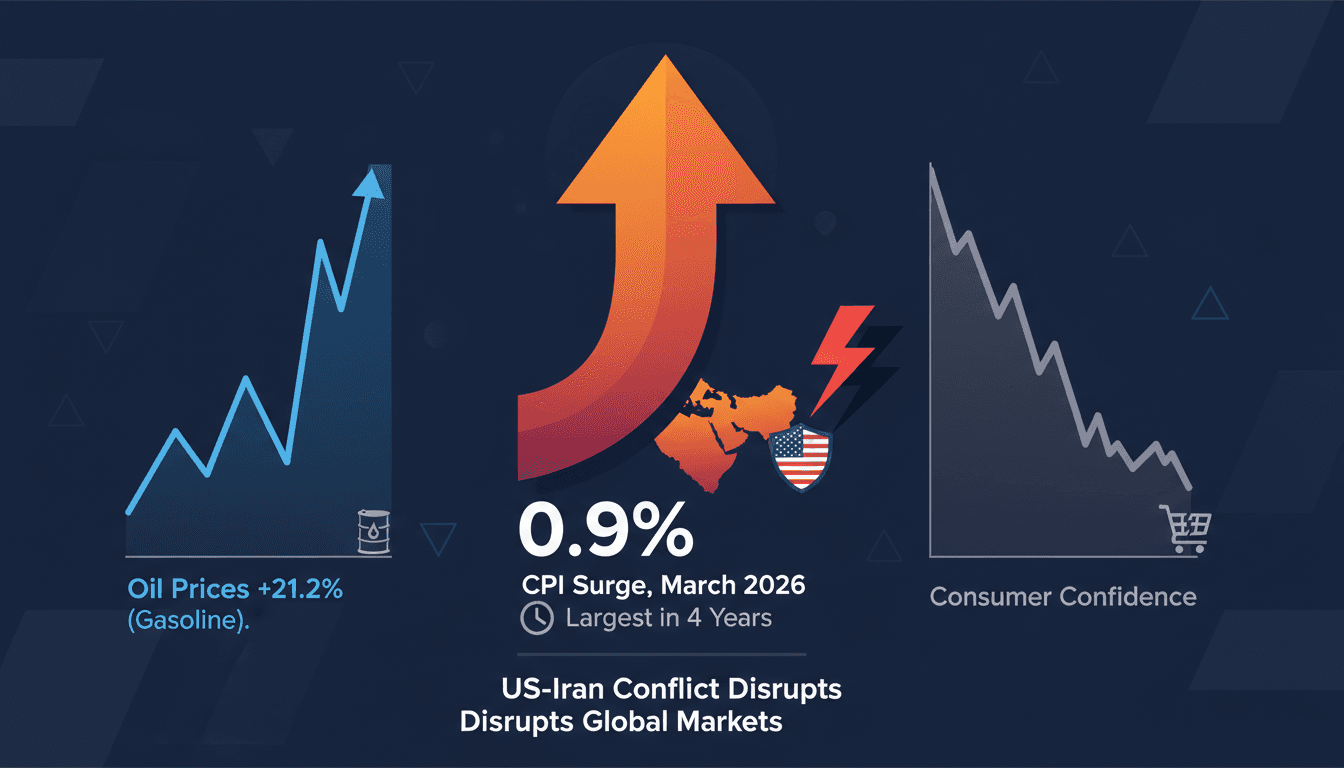
- On April 10, 2026, the U.S. Bureau of Labor Statistics reported a 0.9% month-over-month surge in the Consumer Price Index for March, the largest increase in nearly four years.
- Gasoline prices skyrocketed by 21.2%, driven by disruptions in oil supply due to the ongoing U.S.-Iran conflict.
- Consumer sentiment plummeted to a record low of 47.6, reflecting widespread fears about inflation and economic stability.
The context you actually need
- The US-Iran war began on February 28, 2026, with military strikes that escalated tensions and disrupted oil supplies through the Strait of Hormuz.
- Inflation reached 3.3% annually, significantly impacting consumer confidence and spending habits.
- A fragile two-week ceasefire was announced on April 7, but fears of prolonged conflict continue to loom over the economy.
What's really happening
The U.S.-Iran war has created a perfect storm for inflation in the United States, primarily through its impact on oil prices. The conflict, which escalated rapidly with U.S. and Israeli military actions against Iranian targets, has severely disrupted oil supplies in the Strait of Hormuz, a critical chokepoint for global oil transport. This disruption has led to a dramatic increase in energy prices, with gasoline costs rising by 21.2% in March alone. Such spikes in energy prices are particularly impactful, as they not only affect direct consumer costs but also ripple through the economy, increasing transportation and production costs for a wide range of goods.
The Consumer Price Index (CPI) reflects these pressures, with a month-over-month increase of 0.9% reported for March, marking the largest surge in nearly four years. This inflationary trend has been compounded by existing economic vulnerabilities, including supply chain disruptions and lingering effects from previous global crises. As a result, annual inflation reached 3.3%, further eroding consumer purchasing power and confidence.
Consumer sentiment, measured by the University of Michigan's index, fell to a record low of 47.6 in early April, reflecting the public's anxiety about rising prices and the potential for a prolonged conflict. This decline in sentiment is critical, as it influences consumer spending, which is a major driver of economic growth. When consumers feel uncertain about their financial future, they tend to cut back on spending, which can lead to a slowdown in economic activity.
The fragile ceasefire announced on April 7 has provided a temporary reprieve, but the underlying tensions remain. The Trump administration is pursuing negotiations, yet the Iranian government has expressed defiance, complicating the path to a lasting resolution. As the situation evolves, the potential for renewed conflict or further disruptions in oil supplies looms large, suggesting that inflationary pressures may persist.
Who feels it first (and how)
- Consumers: Increased prices for gasoline and everyday goods directly impact household budgets, leading to reduced discretionary spending.
- Businesses: Companies reliant on oil and transportation face higher operational costs, which may be passed on to consumers.
- Investors: Volatility in energy markets affects stock portfolios, particularly in sectors sensitive to oil prices.
- Tourism sectors: Regions like the Middle East, particularly Dubai and Abu Dhabi, face declines in tourism due to safety concerns and economic instability.
What to watch next
- Oil prices: Continued fluctuations in oil prices will signal the ongoing impact of the conflict on the U.S. economy.
- Consumer sentiment reports: Future readings will indicate whether consumer confidence is recovering or if fears of inflation persist.
- Federal Reserve actions: Watch for any signals from the Fed regarding interest rate adjustments in response to inflationary pressures.
The U.S. CPI surged by 0.9% in March 2026, driven by rising energy prices.
Continued inflationary pressures as long as the conflict disrupts oil supplies.
The durability of the ceasefire and its impact on economic stability.
Frequently Asked Questions
- Why it matters?
- This conflict has triggered significant inflationary pressures, affecting consumer behavior and economic stability across multiple regions.
- What happened (in 30 seconds)?
- On April 10, 2026, the U.S. Bureau of Labor Statistics reported a 0.9% month-over-month surge in the Consumer Price Index for March, the largest increase in nearly four years. Gasoline prices skyrocketed by 21.2%, driven by disruptions in oil supply due to the ongoing U.S.-Iran conflict. Consumer sentiment plummeted to a record low of 47.6, reflecting widespread fears about inflation and economic stability.
- What's really happening?
- The U.S.-Iran war has created a perfect storm for inflation in the United States, primarily through its impact on oil prices. The conflict, which escalated rapidly with U.S. and Israeli military actions against Iranian targets, has severely disrupted oil supplies in the Strait of Hormuz, a critical chokepoint for global oil transport. This disruption has led to a dramatic increase in energy prices, with gasoline costs rising by 21.2% in March alone. Such spikes in energy prices are particularly
- Who feels it first (and how)?
- Consumers: Increased prices for gasoline and everyday goods directly impact household budgets, leading to reduced discretionary spending. Businesses: Companies reliant on oil and transportation face higher operational costs, which may be passed on to consumers. Investors: Volatility in energy markets affects stock portfolios, particularly in sectors sensitive to oil prices. Tourism sectors: Regions like the Middle East, particularly Dubai and Abu Dhabi, face declines in tourism due to safe
- What to watch next?
- Oil prices: Continued fluctuations in oil prices will signal the ongoing impact of the conflict on the U.S. economy. Consumer sentiment reports: Future readings will indicate whether consumer confidence is recovering or if fears of inflation persist. Federal Reserve actions: Watch for any signals from the Fed regarding interest rate adjustments in response to inflationary pressures.
Global markets, investing, and macroeconomics from a premier financial newsroom.
"Bloomberg is respected for in-depth financial reporting and data-driven analysis."
— A47 Editor
Iran War Hits US Economy With More Inflation, Record-Low Sentiment
The ongoing conflict in Iran has triggered a significant rise in U.S. inflation, marking the largest increase in nearly four years, while consumer sentiment has plummeted to a record low. Economists warn that these economic pressures are likely just ...
Key macro releases (CPI, jobs, PMIs), surprise indexes, and market implications.
"Great for data-print awareness and instant read-through to rates and risk assets."
— A47 Editor
US consumer sentiment dives to a record low in April amid Iran war
US consumer sentiment has plummeted to a record low in April 2026, driven by the ongoing conflict in Iran, which has heightened economic uncertainty and inflationary pressures. This decline reflects growing concerns among consumers about the stabilit...
Macro commentary, policy analysis, growth/inflation themes, and global outlooks.
"Contextual macro coverage that complements day-to-day market headlines."
— A47 Editor
US consumer inflation expected to have surged in March amid Iran war
US consumer inflation is projected to have surged in March, driven by the ongoing conflict in Iran, which has disrupted global energy supplies and heightened price pressures. This situation is expected to complicate economic conditions as the Federal...