
Gold Prices Set for Third Weekly Gain Amid U.S. Rate Cut Speculations and U.S.-Iran Ceasefire Concerns
Here's what it means for you.
If you're invested in gold or commodities, the current market dynamics could significantly impact your portfolio's performance.
Why it matters
Gold prices are a critical indicator of economic stability, influenced by interest rates and geopolitical events, which can directly affect your investment strategies.
What happened (in 30 seconds)
- Gold prices fell 0.1% to $4,759.54 per ounce on April 10, 2026, but gained 1.8% for the week.
- Investor sentiment shifted due to expectations of Federal Reserve rate cuts and uncertainties surrounding the U.S.-Iran ceasefire.
- Brent crude oil prices dropped over 11%, easing inflation concerns and influencing gold's safe-haven demand.
The context you actually need
- Gold's recent volatility follows a 10% drop since the onset of the U.S.-Israel-Iran conflict on February 28, 2026, driven by inflation fears.
- Market expectations now price a 31% probability of a Federal Reserve rate cut in December, which supports gold's recovery.
- Geopolitical factors like the U.S.-Iran ceasefire negotiations are crucial, as any breakdown could lead to a surge in gold prices due to increased demand for safe-haven assets.
What's really happening
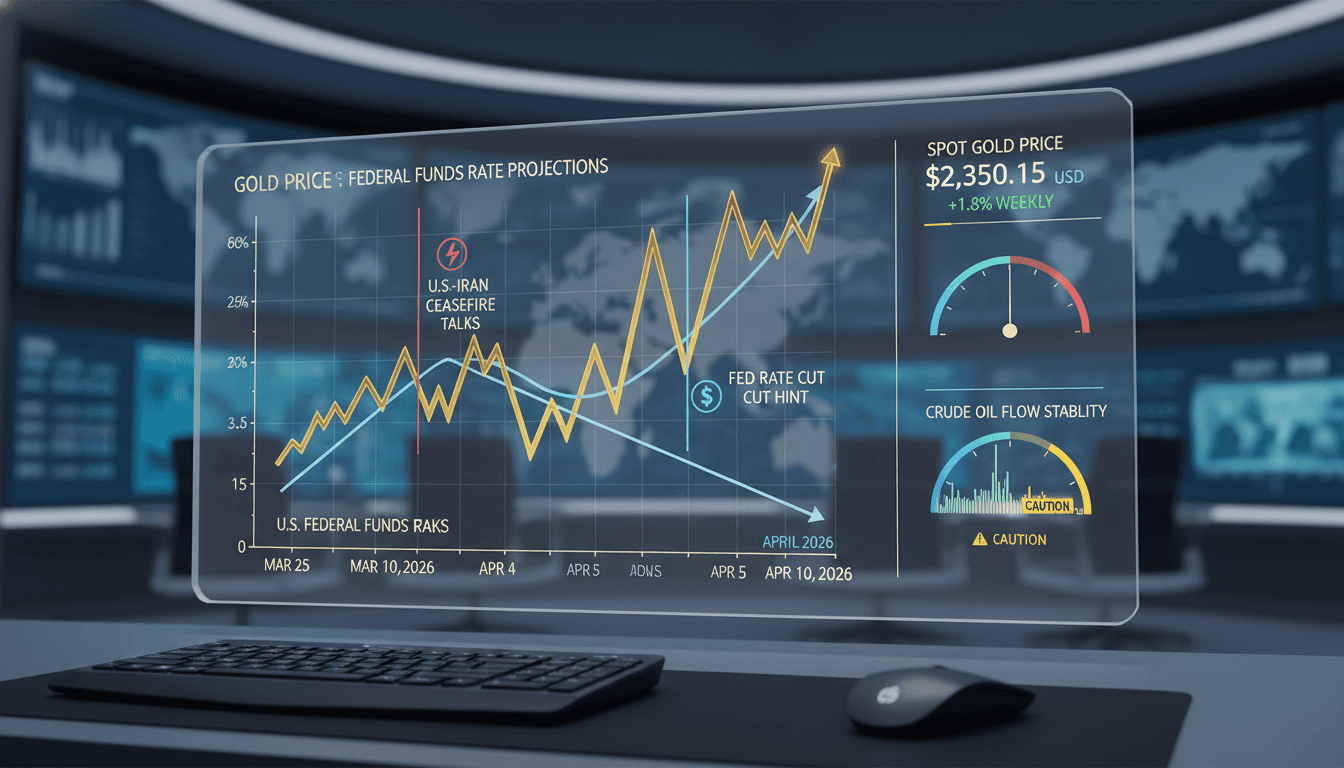
The recent fluctuations in gold prices reflect a complex interplay of economic indicators and geopolitical tensions. As of April 10, 2026, spot gold prices experienced a slight dip of 0.1%, settling at $4,759.54 per ounce. However, this minor decline was overshadowed by a robust weekly gain of 1.8%, marking the third consecutive week of increases. This resilience in gold prices can be attributed to two primary factors: the strength of the U.S. dollar and the evolving landscape of U.S.-Iran relations.
The U.S. dollar's strength typically exerts downward pressure on gold prices, as gold is priced in dollars. However, in this instance, investor expectations surrounding potential Federal Reserve rate cuts have created a counterbalancing effect. The CME FedWatch Tool indicates a 31% probability of a rate cut by December 2026, which has fueled optimism among gold investors. Lower interest rates generally diminish the opportunity cost of holding non-yielding assets like gold, making it more attractive in times of economic uncertainty.
Additionally, the geopolitical backdrop, particularly the fragile U.S.-Iran ceasefire, plays a significant role in shaping market dynamics. The ceasefire, while temporarily easing tensions, remains tenuous, with accusations of Iranian breaches complicating the situation. The Strait of Hormuz, a critical chokepoint for global oil flows, is at the center of these negotiations. Any deterioration in this ceasefire could lead to heightened demand for gold as a safe-haven asset, potentially driving prices higher.
Moreover, the recent decline in Brent crude oil prices, which fell over 11% amid ceasefire optimism, has contributed to easing inflation pressures. This decline in energy prices can further influence the Federal Reserve's monetary policy, as lower inflation may prompt more aggressive rate cuts. The interplay between these factors creates a volatile environment for gold prices, with traders closely monitoring U.S. economic indicators such as the March CPI and PCE inflation data for clues on future Fed actions.
In Dubai, the local gold market mirrors these global trends, with 24K gold prices nearing Dh569 per gram. This increase enhances returns for UAE investors and boosts jewelry exports, but it also raises retail costs for residents due to heightened making charges and import dynamics. As gold prices continue to fluctuate, the implications for both investors and consumers in Dubai are significant.
Who feels it first (and how)
- Commodity traders: They are directly impacted by price fluctuations and will adjust their strategies based on market signals.
- Investors in gold and precious metals: Those holding gold will see changes in portfolio value, influencing their investment decisions.
- UAE residents and jewelry retailers: Increased gold prices affect retail costs and purchasing power, impacting consumer behavior and sales.
What to watch next
- U.S. inflation data: The upcoming March CPI and PCE reports will provide insights into inflation trends and potential Federal Reserve policy shifts, crucial for gold price movements.
- U.S.-Iran negotiations: Any developments or breakdowns in the ceasefire could significantly impact gold demand as a safe-haven asset.
- Global economic indicators: Broader economic trends, including energy prices and stock market performance, will influence investor sentiment towards gold.
Gold prices are currently experiencing a weekly gain of 1.8%.
Continued fluctuations in gold prices as geopolitical tensions and economic indicators evolve.
The long-term trajectory of U.S. monetary policy and its impact on gold demand.
Frequently Asked Questions
- Why it matters?
- Gold prices are a critical indicator of economic stability, influenced by interest rates and geopolitical events, which can directly affect your investment strategies.
- What happened (in 30 seconds)?
- Gold prices fell 0.1% to $4,759.54 per ounce on April 10, 2026, but gained 1.8% for the week. Investor sentiment shifted due to expectations of Federal Reserve rate cuts and uncertainties surrounding the U.S.-Iran ceasefire. Brent crude oil prices dropped over 11%, easing inflation concerns and influencing gold's safe-haven demand.
- What's really happening?
- The recent fluctuations in gold prices reflect a complex interplay of economic indicators and geopolitical tensions. As of April 10, 2026, spot gold prices experienced a slight dip of 0.1%, settling at $4,759.54 per ounce. However, this minor decline was overshadowed by a robust weekly gain of 1.8%, marking the third consecutive week of increases. This resilience in gold prices can be attributed to two primary factors: the strength of the U.S. dollar and the evolving landscape of U.S.-Iran relat
- Who feels it first (and how)?
- Commodity traders: They are directly impacted by price fluctuations and will adjust their strategies based on market signals. Investors in gold and precious metals: Those holding gold will see changes in portfolio value, influencing their investment decisions. UAE residents and jewelry retailers: Increased gold prices affect retail costs and purchasing power, impacting consumer behavior and sales.
- What to watch next?
- U.S. inflation data: The upcoming March CPI and PCE reports will provide insights into inflation trends and potential Federal Reserve policy shifts, crucial for gold price movements. U.S.-Iran negotiations: Any developments or breakdowns in the ceasefire could significantly impact gold demand as a safe-haven asset. Global economic indicators: Broader economic trends, including energy prices and stock market performance, will influence investor sentiment towards gold.
Sports reporting with a focus on Saudi and regional competitions.
"Okaz sports coverage is broad and audience-friendly, with strong attention to Saudi teams and leagues."
— A47 Editor
الذهب يتجه إلى جني مكاسب للأسبوع الثالث
Gold prices declined today due to a rise in the dollar, although the metal is on track to record gains for the third consecutive week. Spot gold fell by 0.1% to $4,759.54 per ounce, but has gained 1.8% since the beginning of the week. Meanwhile, U.S....
Arabic-language economic and business reporting with strong UAE market relevance.
"Emarat Al Youm business coverage often centers UAE property, banking, consumer issues, and economic policy."
— A47 Editor
الذهب يتجه لجني مكاسب للأسبوع الثالث وسط توقعات خفض الفائدة الأميركية الذهب يتجه لجني مكاسب للأسبوع الثالث وسط توقعات خفض الفائدة الأميركية
Gold prices have decreased today due to a rise in the dollar and uncertainties surrounding a ceasefire between the United States and Iran. Despite this decline, the precious metal is on track to secure gains for the third consecutive week amid expect...
Arabic-language UAE newspaper coverage focused on domestic affairs, public institutions, business, society, and regional developments.
"Al Khaleej coverage generally reflects a mainstream UAE editorial lens with strong attention to public affairs, institutions, and regional developments."
— A47 Editor
الذهب يتجه نحو مكاسب للأسبوع الثالث على التوالي
Gold prices declined on Friday due to a rise in the dollar and uncertainties surrounding a ceasefire between the United States and Iran. However, the precious metal is still on track to achieve gains for the third consecutive week, as investors antic...