
Australia Faces Economic Disruptions Amid Ongoing Iran War Fuel Crisis
Here's what it means for you.
As global energy markets face turmoil, your daily costs and business operations in Australia are about to feel the strain.
Why it matters
The ongoing Iran war has triggered significant disruptions in global oil supply, directly impacting fuel prices and economic stability in Australia.
What happened (in 30 seconds)
- April 1, 2026: Prime Minister Anthony Albanese delivered a rare national address warning Australians of prolonged economic disruptions due to the Iran war.
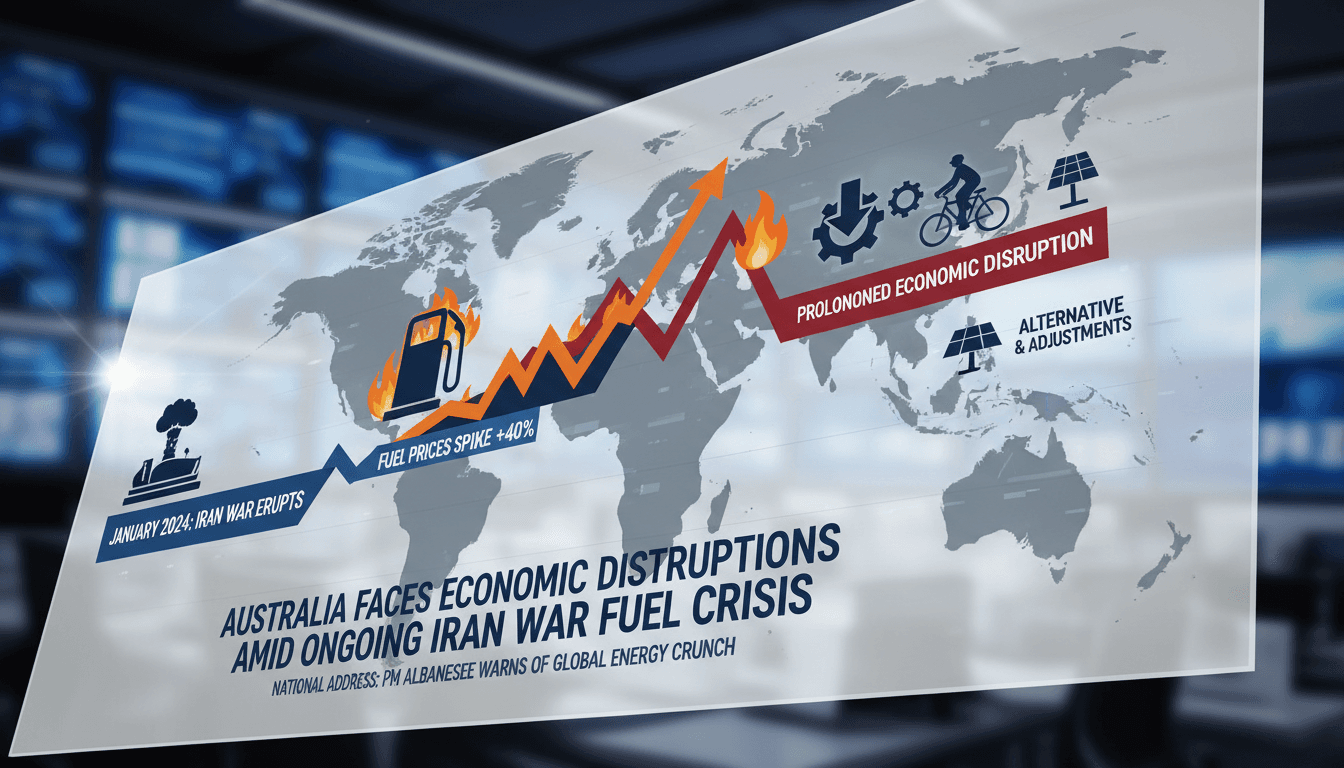
- Fuel prices surged: Petrol and diesel prices in Australia rose by 40% since the war began, prompting government intervention.
- Government measures announced: Albanese outlined a four-stage fuel security plan, including halving fuel excise and urging conservation.
The context you actually need
- Iran war escalation: The conflict began on February 28, 2026, with US and Israeli strikes on Iran, leading to retaliatory actions that disrupted oil supply routes.
- Fuel dependency: Australia imports over 90% of its fuel, making it highly vulnerable to global supply shocks and price fluctuations.
- Economic implications: The National Cabinet's fuel security plan aims to mitigate risks of shortages and recession as fuel prices reach record highs.
What's really happening
The Iran war has created a ripple effect in global energy markets, with Australia feeling the brunt of the disruptions. The conflict, ignited by military actions from the US and Israel, has led to significant retaliatory measures from Iran, including attacks on key infrastructure in the Strait of Hormuz. This vital shipping lane is responsible for a substantial portion of the world's oil supply, and any disruption there sends shockwaves through global markets.
As a result, Australian fuel prices have skyrocketed by 40% since the onset of the conflict. This surge is not merely a reflection of increased costs but a symptom of a deeper vulnerability in Australia’s energy security. With over 90% of its fuel imported, Australia is at the mercy of international events, making it crucial for the government to act decisively.
In response to the crisis, Albanese's government has implemented a four-stage fuel security plan aimed at stabilizing prices and ensuring availability. Key measures include halving the fuel excise to 26 cents per litre and suspending heavy vehicle charges for three months. Additionally, the government is pushing for increased domestic refining capacity and urging citizens to conserve fuel through public transport.
However, despite these measures, the economic landscape remains precarious. The Australian stock market has seen volatility, particularly in energy stocks, as investors react to the uncertain future of fuel prices. The Treasurer, Jim Chalmers, has also announced a $1 billion business loan program to support companies affected by the crisis, but the effectiveness of these measures remains to be seen.
The broader implications of the Iran war extend beyond immediate fuel prices. The potential for prolonged conflict raises concerns about recession risks and economic stability in Australia. As the situation unfolds, the government's ability to manage these challenges will be critical in determining the impact on everyday Australians.
Who feels it first (and how)
- Commuters: Increased fuel prices directly affect transportation costs, leading to higher expenses for daily travel.
- Businesses: Companies reliant on transportation and logistics face rising operational costs, impacting profitability.
- Low-income households: Families already struggling with financial pressures will feel the pinch of elevated fuel prices more acutely.
- Expatriates in Dubai: Those affected by the conflict may reconsider their living arrangements, impacting local economies.
What to watch next
- Fuel price trends: Monitor fluctuations in global oil prices and their direct impact on Australian fuel costs, as this will affect consumer spending and inflation.
- Government policy responses: Keep an eye on further measures from the Australian government aimed at stabilizing the economy and supporting affected sectors.
- International developments: Watch for any escalation or resolution in the Iran war, as this will significantly influence global energy markets and Australia's economic outlook.
Fuel prices in Australia have increased by 40% since the Iran war began.
The Australian government will continue to implement measures to mitigate the economic impact of the fuel crisis.
The duration and outcome of the Iran war remain uncertain, complicating long-term economic forecasts.
Frequently Asked Questions
- Why it matters?
- The ongoing Iran war has triggered significant disruptions in global oil supply, directly impacting fuel prices and economic stability in Australia.
- What happened (in 30 seconds)?
- April 1, 2026: Prime Minister Anthony Albanese delivered a rare national address warning Australians of prolonged economic disruptions due to the Iran war. Fuel prices surged: Petrol and diesel prices in Australia rose by 40% since the war began, prompting government intervention. Government measures announced: Albanese outlined a four-stage fuel security plan, including halving fuel excise and urging conservation.
- What's really happening?
- The Iran war has created a ripple effect in global energy markets, with Australia feeling the brunt of the disruptions. The conflict, ignited by military actions from the US and Israel, has led to significant retaliatory measures from Iran, including attacks on key infrastructure in the Strait of Hormuz. This vital shipping lane is responsible for a substantial portion of the world's oil supply, and any disruption there sends shockwaves through global markets. As a result, Australian fuel price
- Who feels it first (and how)?
- Commuters: Increased fuel prices directly affect transportation costs, leading to higher expenses for daily travel. Businesses: Companies reliant on transportation and logistics face rising operational costs, impacting profitability. Low-income households: Families already struggling with financial pressures will feel the pinch of elevated fuel prices more acutely. Expatriates in Dubai: Those affected by the conflict may reconsider their living arrangements, impacting local economies.
- What to watch next?
- Fuel price trends: Monitor fluctuations in global oil prices and their direct impact on Australian fuel costs, as this will affect consumer spending and inflation. Government policy responses: Keep an eye on further measures from the Australian government aimed at stabilizing the economy and supporting affected sectors. International developments: Watch for any escalation or resolution in the Iran war, as this will significantly influence global energy markets and Australia's economic outlook.
International coverage from The Guardian's global desks.
"The Guardian is known for its progressive editorial stance and in-depth analysis."
— A47 Editor
‘Uncertain times’: Albanese warns months ahead ‘may not be easy’ in rare address to nation about Middle East crisis
Australian Prime Minister Anthony Albanese delivered a rare address to the nation, warning that the months ahead may be challenging due to the ongoing Middle East crisis, which is impacting fuel supplies and prices. He urged Australians to consider u...
English-language reporting on Saudi politics, policy, and society.
"Saudi Gazette reflects mainstream Saudi institutional perspectives."
— A47 Editor
Australia PM warns fuel crisis may last months, urges using public transport
Australian Prime Minister Anthony Albanese warned that the ongoing fuel crisis, exacerbated by the Middle East conflict, may persist for several months, leading to unprecedented spikes in petrol and diesel prices. In a nationwide address, he urged ci...
International coverage of politics, culture, and current affairs.
"BBC News is widely regarded as a reputable international news organization, known for its impartial tone and public service mandate."
— A47 Editor
Iran war economic shocks will last 'months', says Australia's PM
Australian Prime Minister Anthony Albanese addressed the nation, warning that the economic shocks stemming from the ongoing war in Iran will persist for several months, affecting daily life and the economy.