
US-Iran Negotiations Intensify Amid Strait of Hormuz Blockade
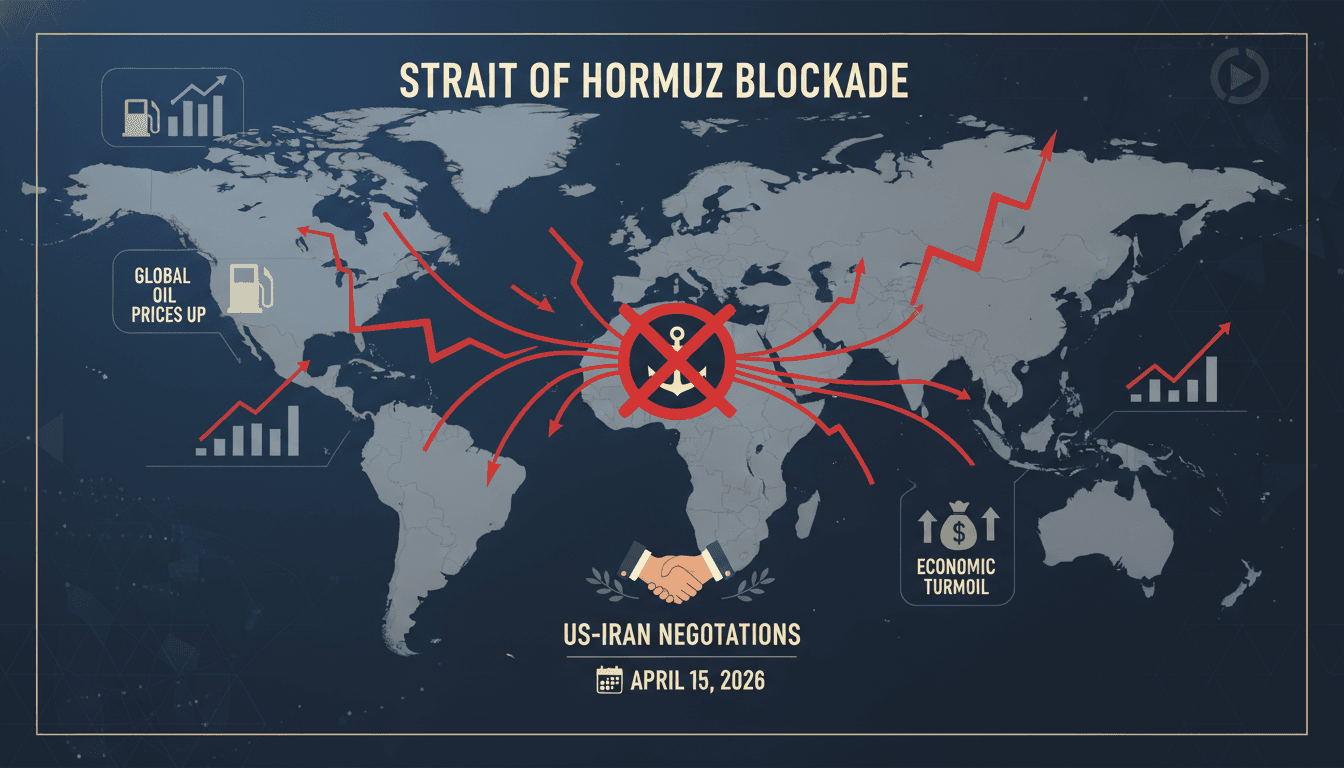
Here's what it means for you.
If you rely on global oil markets, the outcome of these negotiations could directly impact fuel prices and supply chains.
Why it matters
The ongoing conflict and negotiations are critical for global energy stability, affecting oil prices and economic conditions worldwide.
What happened (in 30 seconds)
- U.S. Vice President JD Vance is leading negotiations with Iran, mediated by Pakistan, amid a naval blockade of the Strait of Hormuz.
- Ten ships were prevented from transiting the Strait on April 15, escalating tensions and disrupting oil shipments.
- A fragile ceasefire remains in place, with a second round of talks scheduled for April 16 in Islamabad.
The context you actually need
- Military escalations began in early 2026, with U.S. airstrikes on Iranian targets prompting Iran to partially close the Strait of Hormuz.
- Global oil supply disruptions have intensified economic pressures, leading to increased oil prices and market volatility.
- Mediators like Pakistan are leveraging their ties to both the U.S. and Iran to facilitate de-escalation and promote dialogue.
What's really happening
The U.S.-led military campaign against Iran, initiated in early 2026, has created a precarious situation in the Strait of Hormuz, a vital chokepoint for global oil shipments. The U.S. Central Command imposed a blockade on April 14, preventing ten ships from passing through and intercepting an Iranian vessel. This blockade is a direct response to Iran's actions following U.S. and Israeli airstrikes on Iranian nuclear sites and military assets, which have heightened tensions in the region.
The negotiations taking place in Islamabad are crucial for both parties. The U.S. seeks to stabilize the region and ensure the free flow of oil, while Iran aims to lift the blockade and secure its interests. The involvement of mediators like Pakistan, Qatar, Russia, and China highlights the complexity of the situation, as these nations have vested interests in maintaining regional stability and energy security.
The fragile ceasefire, which has held since the initial military escalations, is a critical factor in these negotiations. Iranian Foreign Minister Abbas Araghchi has warned of U.S. provocations while affirming Iran's commitment to peace, indicating a willingness to engage in dialogue. Meanwhile, Qatar's Amir has urged U.S. President Donald Trump to pursue diplomatic solutions to ensure energy stability, reflecting the broader regional concern over the potential for conflict.
As the negotiations unfold, the economic implications are significant. Oil prices have already shown volatility, declining by up to 9% to $96 per barrel on signals of a truce. However, the potential for renewed conflict remains, and markets are pricing in the risks associated with prolonged instability in the region. The outcome of these talks will not only affect the U.S. and Iran but will also have ripple effects on global oil markets and economies reliant on stable energy supplies.
Who feels it first (and how)
- Oil traders: Fluctuations in oil prices will directly impact their trading strategies and profit margins.
- Consumers: Increased fuel costs will affect transportation and goods prices, impacting everyday expenses.
- Businesses in Dubai: As a major Gulf trade hub, disruptions in oil supply will lead to elevated costs and potential supply chain issues.
What to watch next
- Second round of talks: The outcome of the April 16 negotiations in Islamabad will be pivotal in determining the future of U.S.-Iran relations and regional stability.
- Oil price movements: Watch for fluctuations in oil prices as negotiations progress, which will signal market confidence or concerns regarding the situation.
- Responses from regional players: Monitor how countries like Qatar and Russia react to the negotiations, as their involvement could influence the dynamics of the talks.
The U.S. has imposed a blockade on the Strait of Hormuz, affecting shipping and oil supply.
Continued diplomatic efforts will be made to resolve the conflict, but tensions may persist.
The long-term impact of these negotiations on regional stability and global oil markets remains uncertain.
Frequently Asked Questions
- Why it matters?
- The ongoing conflict and negotiations are critical for global energy stability, affecting oil prices and economic conditions worldwide.
- What happened (in 30 seconds)?
- U.S. Vice President JD Vance is leading negotiations with Iran, mediated by Pakistan, amid a naval blockade of the Strait of Hormuz. Ten ships were prevented from transiting the Strait on April 15, escalating tensions and disrupting oil shipments. A fragile ceasefire remains in place, with a second round of talks scheduled for April 16 in Islamabad.
- What's really happening?
- The U.S.-led military campaign against Iran, initiated in early 2026, has created a precarious situation in the Strait of Hormuz, a vital chokepoint for global oil shipments. The U.S. Central Command imposed a blockade on April 14, preventing ten ships from passing through and intercepting an Iranian vessel. This blockade is a direct response to Iran's actions following U.S. and Israeli airstrikes on Iranian nuclear sites and military assets, which have heightened tensions in the region. The ne
- Who feels it first (and how)?
- Oil traders: Fluctuations in oil prices will directly impact their trading strategies and profit margins. Consumers: Increased fuel costs will affect transportation and goods prices, impacting everyday expenses. Businesses in Dubai: As a major Gulf trade hub, disruptions in oil supply will lead to elevated costs and potential supply chain issues.
- What to watch next?
- Second round of talks: The outcome of the April 16 negotiations in Islamabad will be pivotal in determining the future of U.S.-Iran relations and regional stability. Oil price movements: Watch for fluctuations in oil prices as negotiations progress, which will signal market confidence or concerns regarding the situation. Responses from regional players: Monitor how countries like Qatar and Russia react to the negotiations, as their involvement could influence the dynamics of the talks.
Arabic-language coverage of international news and geopolitics.
"RT Arabic is a Russian state-funded outlet often criticized for promoting Kremlin-aligned narratives."
— A47 Editor
لحظة بلحظة.. مساع لصفقة كبرى بين واشنطن وطهران تزامنا مع حراك دبلوماسي مكثف وضغوط اقتصادية عالمية
Ongoing diplomatic efforts are being led by Washington, particularly by envoy Vance, to negotiate a significant deal with Tehran amid a stable ceasefire and the passage of ships through the Strait of Hormuz, while global oil supplies have reached the...
Arabic-language UAE newspaper coverage focused on domestic affairs, public institutions, business, society, and regional developments.
"Al Khaleej coverage generally reflects a mainstream UAE editorial lens with strong attention to public affairs, institutions, and regional developments."
— A47 Editor
واشنطن تأمل «صفقـة كبرى» تُنهي الحرب مع طهران
Recent signals from Washington and Tehran indicate that negotiators from both countries have made progress towards reaching a framework agreement aimed at ending the ongoing conflict. This development was highlighted on Wednesday, suggesting a potent...
Arabic-language digital news outlet covering UAE, regional, and international developments with broad general-news coverage.
"Al Ain News coverage typically blends UAE-focused reporting with wider Arab regional and international news."
— A47 Editor
الإفلاس والحصار يخنقان إيران.. «اتفاق إطاري» في الأفق لإنهاء الحرب
Axios reports that Washington and Tehran are nearing a framework agreement aimed at ending the ongoing conflict between the two nations. This development comes amidst significant economic challenges faced by Iran, including bankruptcy and sanctions.
Arabic-language political and world news coverage for UAE readers.
"Emarat Al Youm world coverage usually presents international developments through a UAE and Arab audience lens."
— A47 Editor
أكسيوس: واشنطن وطهران تقتربان من إبرام اتفاق ينهي الحرب أكسيوس: واشنطن وطهران تقتربان من إبرام اتفاق ينهي الحرب
Axios reports that Washington and Tehran are nearing a framework agreement that could potentially end the ongoing conflict between the two nations, according to U.S. officials. This development marks a significant step in diplomatic relations and eff...
Arabic-language coverage of international news and geopolitics.
"RT Arabic is a Russian state-funded outlet often criticized for promoting Kremlin-aligned narratives."
— A47 Editor
مفاوضات طهران وواشنطن.. فجوة الثقة
Recent negotiations between Tehran and Washington took place in Pakistan's capital over the weekend, highlighting trust issues as a significant challenge in this new round of discussions.
Pan-Arab news coverage spanning politics, business, sports, and regional affairs.
"Asharq Al-Awsat reflects a broad Arab editorial perspective with strong attention to regional geopolitics."
— A47 Editor
خياران لحصار «هرمز»... تنازل وصفقة أو حرب جديدة
The primary question is no longer whether Washington and Tehran will return to negotiations, but rather what form these negotiations might take under the constraints of a maritime blockade and military threats. The situation reflects escalating tensi...
Arabic-language coverage of political affairs and current events.
"Okaz political coverage typically follows mainstream Saudi framing on national and regional affairs."
— A47 Editor
هل تكسر واشنطن وطهران «جدار الحصار» بجولة مفاوضات جديدة خلال أيام ؟
The United States and Iran are poised for a new round of negotiations in Islamabad, as Pakistan has proposed to host the talks aimed at achieving a long-term ceasefire. This follows the conclusion of the previous round of discussions without a breakt...