
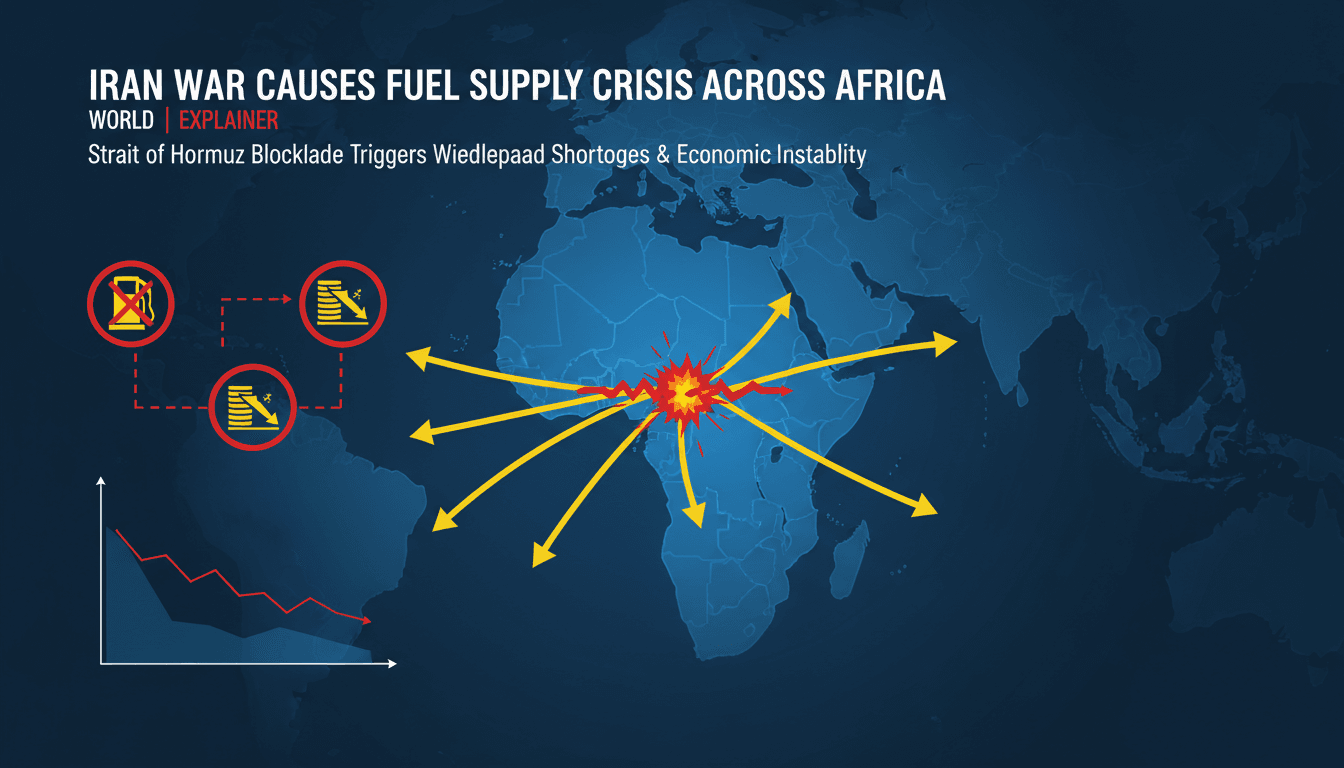
Iran War Causes Fuel Supply Crisis Across Africa
Here's what it means for you.
Rising fuel prices and supply shortages are likely to impact your daily costs and economic stability.
Why it matters
The disruption of fuel supplies from the Middle East is creating a ripple effect across African economies, threatening transport, agriculture, and energy sectors.
What happened (in 30 seconds)
- March 2026: The 2026 Iran War escalated, leading to Iran's closure of the Strait of Hormuz, blocking 20% of global oil shipments.
- Fuel shortages: African nations, heavily reliant on Middle Eastern imports, began experiencing severe fuel shortages and price surges.
- Rationing measures: Governments implemented rationing and energy-saving measures to cope with dwindling fuel stocks.
The context you actually need
- U.S.-Israeli strikes: The conflict began with U.S. and Israeli military strikes on Iran on February 28, 2026, escalating tensions in the region.
- Strategic vulnerability: African countries import most of their refined fuel from the Middle East, leaving them exposed to supply chain disruptions.
- Economic impact: The fuel crisis is likely to lead to increased transportation costs, food price inflation, and potential civil unrest in affected regions.
What's really happening
The 2026 Iran War, ignited by military strikes from the U.S. and Israel, has triggered a significant disruption in global oil supplies. The immediate consequence was Iran's closure of the Strait of Hormuz, a critical chokepoint for oil shipments, which halted approximately 20% of the world's oil supply. This closure has sent shockwaves through the global market, causing Brent crude prices to surge by 13% shortly after the conflict began.
For Africa, the implications are dire. The continent relies heavily on imports of refined fuels from the Middle East, particularly through the Strait of Hormuz. With the strait blocked, African nations like Kenya, South Africa, Uganda, Mauritius, and Nigeria are facing acute fuel shortages. Reports indicate that many countries have fuel stocks that could last only weeks, leading to panic buying and hoarding behaviors among consumers. For instance, Kenya reported that 20% of its fuel outlets were short on supplies by mid-March, while Mauritius faced heavy fuel oil reserves dwindling to just 15-20 days.
In response to the crisis, African governments have begun implementing rationing measures. South Sudan has experienced power cuts, while Ethiopia has prioritized essential services. Countries like Zimbabwe and Namibia have reduced fuel taxes to mitigate the impact on consumers, but these measures may not be sufficient to counteract the price hikes that have already occurred. South Africa, for example, has seen retail fuel prices increase by 15% despite tax cuts.
The situation is further complicated by the fact that the conflict has also led to attacks on key Gulf facilities, exacerbating the shortages of diesel, petrol, and liquefied natural gas (LNG). As African nations scramble to find alternative sources of fuel, the economic ripple effects are becoming increasingly pronounced. The agricultural sector, heavily reliant on fuel for transportation and machinery, is particularly vulnerable, with experts warning of potential food price inflation due to fertilizer shortages.
As the war continues and the Strait of Hormuz remains closed, the structural implications for Africa's energy security and economic stability are profound. The crisis serves as a stark reminder of the continent's reliance on external sources for critical resources, highlighting the need for diversification and strategic planning in energy procurement.
Who feels it first (and how)
- Consumers: Individuals in urban areas face rising transportation and living costs due to fuel price hikes.
- Transport sector: Logistics companies and public transport services struggle with fuel shortages, impacting service delivery.
- Agricultural producers: Farmers experience increased costs for machinery and transport, risking food supply chains.
- Governments: National administrations grapple with public discontent and potential unrest due to rising prices and shortages.
What to watch next
- Fuel price trends: Monitor fluctuations in global oil prices and their direct impact on local fuel costs.
- Government responses: Watch for new policies or measures aimed at stabilizing fuel supplies and prices in affected countries.
- Economic indicators: Keep an eye on inflation rates and food prices, which may signal broader economic instability.
The closure of the Strait of Hormuz has disrupted fuel supplies to Africa.
Continued fuel shortages and price increases will lead to economic strain across multiple sectors.
The duration of the conflict and its long-term implications for Africa's energy security remain uncertain.
Frequently Asked Questions
- Why it matters?
- The disruption of fuel supplies from the Middle East is creating a ripple effect across African economies, threatening transport, agriculture, and energy sectors.
- What happened (in 30 seconds)?
- March 2026: The 2026 Iran War escalated, leading to Iran's closure of the Strait of Hormuz, blocking 20% of global oil shipments. Fuel shortages: African nations, heavily reliant on Middle Eastern imports, began experiencing severe fuel shortages and price surges. Rationing measures: Governments implemented rationing and energy-saving measures to cope with dwindling fuel stocks.
- What's really happening?
- The 2026 Iran War, ignited by military strikes from the U.S. and Israel, has triggered a significant disruption in global oil supplies. The immediate consequence was Iran's closure of the Strait of Hormuz, a critical chokepoint for oil shipments, which halted approximately 20% of the world's oil supply. This closure has sent shockwaves through the global market, causing Brent crude prices to surge by 13% shortly after the conflict began. For Africa, the implications are dire. The continent reli
- Who feels it first (and how)?
- Consumers: Individuals in urban areas face rising transportation and living costs due to fuel price hikes. Transport sector: Logistics companies and public transport services struggle with fuel shortages, impacting service delivery. Agricultural producers: Farmers experience increased costs for machinery and transport, risking food supply chains. Governments: National administrations grapple with public discontent and potential unrest due to rising prices and shortages.
- What to watch next?
- Fuel price trends: Monitor fluctuations in global oil prices and their direct impact on local fuel costs. Government responses: Watch for new policies or measures aimed at stabilizing fuel supplies and prices in affected countries. Economic indicators: Keep an eye on inflation rates and food prices, which may signal broader economic instability.
Global markets, investing, and macroeconomics from a premier financial newsroom.
"Bloomberg is respected for in-depth financial reporting and data-driven analysis."
— A47 Editor
Iran War DisruptsFuel SuppliesAcross Africa
The ongoing conflict in Iran has led to significant disruptions in fuel supplies across Africa, causing soaring prices that are straining transportation systems and household budgets. This situation is exacerbated by geopolitical tensions that have r...
Global news coverage with extensive reporting on Middle Eastern conflicts and geopolitics.
"Al Jazeera is a Qatar-based broadcaster known for wide regional coverage and alternative perspectives."
— A47 Editor
Can Africa tackle the oil shock from the Iran war?
African nations are facing significant challenges in securing oil and gas supplies as the ongoing conflict in Iran disrupts shipments from the Middle East, leading to increased prices and potential shortages.
Comprehensive coverage of Middle Eastern and global issues.
"Al Jazeera is a prominent voice from the Global South, especially the Middle East, with an emphasis on underreported stories."
— A47 Editor
Can Africa tackle the oil shock from the Iran war?
African nations are facing significant challenges in securing oil and gas supplies as the ongoing conflict in Iran disrupts shipments from the Middle East, leading to increased prices and potential shortages.