
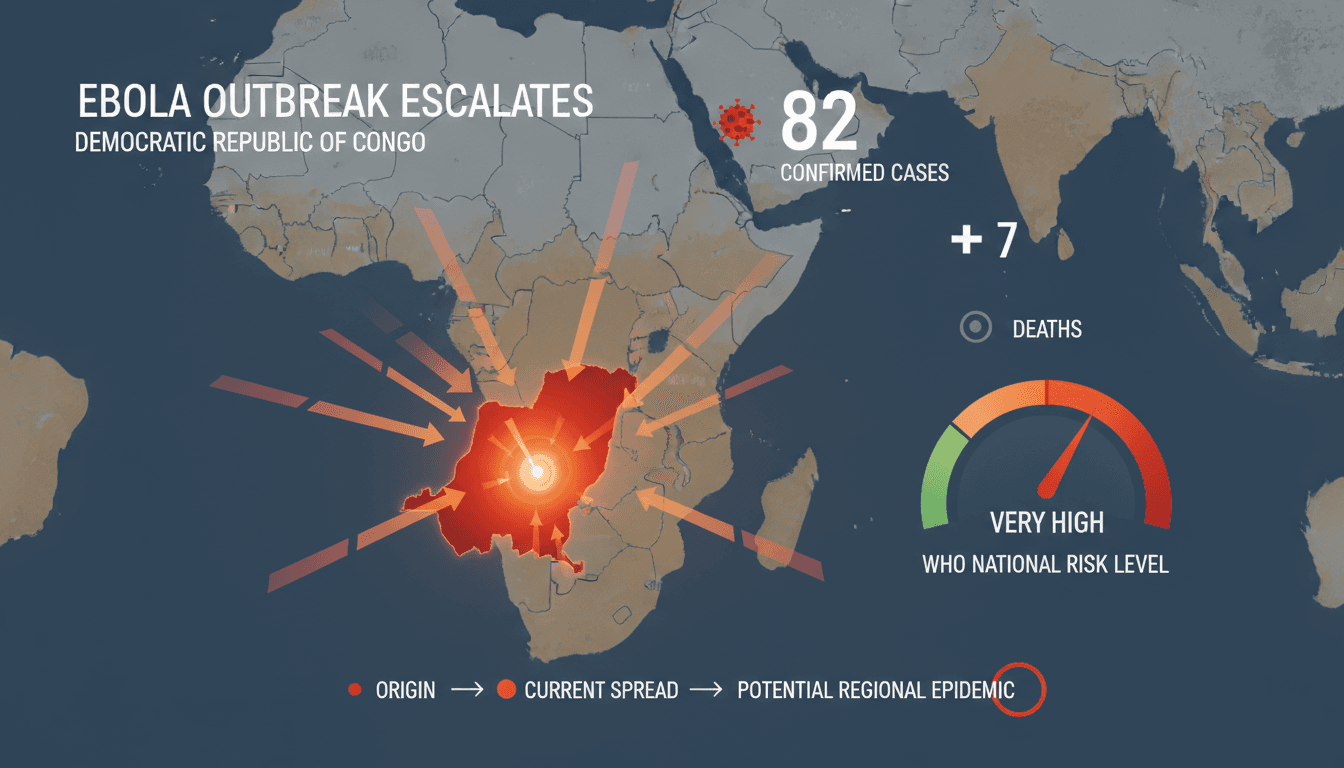
Ebola outbreak in Democratic Republic of Congo escalates with 82 confirmed cases and 7 deaths
Here's what it means for you.
The escalating Ebola outbreak in the Democratic Republic of Congo poses significant public health risks, not only locally but also regionally. With the World Health Organization classifying the situation as a 'very high' national risk, immediate action is required to prevent further spread. This outbreak could strain healthcare systems and necessitate international cooperation to manage the crisis effectively. As the number of confirmed cases rises, stakeholders must remain vigilant and responsive to the evolving situation. The potential for the virus to cross borders highlights the need for coordinated efforts in surveillance and containment.
What happened
The Ebola outbreak in the Democratic Republic of Congo has intensified, with health officials reporting 82 confirmed cases and 7 deaths. This alarming increase has raised concerns about the virus's potential to spread beyond the country's borders. The World Health Organization has responded by classifying the outbreak as a 'very high' national risk, emphasizing the urgency of the situation.
Health authorities are mobilizing resources to implement tighter control measures and seek international support. The outbreak's concentration in Congo has prompted warnings from health officials about the likelihood of the virus affecting neighboring countries.
The Context
The current Ebola outbreak is situated within a broader context of previous health crises in the region, which have often led to significant public health challenges. International organizations are stepping up efforts to provide necessary support and control measures, recognizing the potential for the virus to spread to at least ten African countries.
The former CDC chief has expressed serious concerns regarding the outbreak's potential scale, indicating that the situation could escalate into a larger pandemic if not addressed promptly. The timing of this outbreak is critical, as it coincides with heightened global awareness of infectious diseases and the need for robust health infrastructure.
Takeaway
Immediate international attention is crucial to prevent the further spread of the Ebola virus. Monitoring updates from the World Health Organization will be essential as the situation develops, particularly regarding international responses and aid efforts.
As health officials work to contain the outbreak, the focus will be on implementing effective control measures and ensuring that neighboring countries are prepared for any spillover effects. The ongoing situation underscores the importance of global cooperation in managing health crises.
News, politics, and cultural topics across the African continent.
"France 24 is viewed as a globally focused outlet with balanced coverage and a European perspective."
— A47 Editor
Ten African countries at risk from Ebola virus Africa CDC warns
Emmet Livingstone is live from Kinshasa, DR Congo.
Global business headlines with AI angles.
"General business outlet that frequently covers AI."
— A47 Editor
WHO Warns Ebola Outbreak in Congo Now Poses 'Very High' Risk With 82 Cases and 7 Deaths
The World Health Organization (WHO) has raised the alert level regarding the Ebola outbreak in Congo, now classified as posing a 'very high' national risk, with 82 confirmed cases and 7 deaths reported. This escalation follows a series of alarming de...
Coverage of national news and events from across the United States.
"HuffPost is known for its progressive editorial stance, offering opinionated yet comprehensive coverage on social, political, and cultural topics."
— A47 Editor
Ex-CDC Chief Warns Ebola Outbreak Could Become ‘Very Significant Pandemic’
Former CDC Chief Robert Redfield has warned that the ongoing Ebola outbreak in Africa could escalate into a significant pandemic, potentially affecting countries such as Tanzania, Southern Sudan, and Rwanda. This warning comes amid rising cases and f...