
U.S. Senate Reaches Agreement on Stablecoin Yield Restrictions
Here's what it means for you.
If you’re involved in cryptocurrency or banking, this legislative shift could reshape how you manage stablecoin investments.
Why it matters
This agreement could stabilize the U.S. digital asset market, impacting global cryptocurrency dynamics.
What happened (in 30 seconds)
- Senators Thom Tillis and Angela Alsobrooks announced a bipartisan agreement on stablecoin yield restrictions on March 20, 2026.
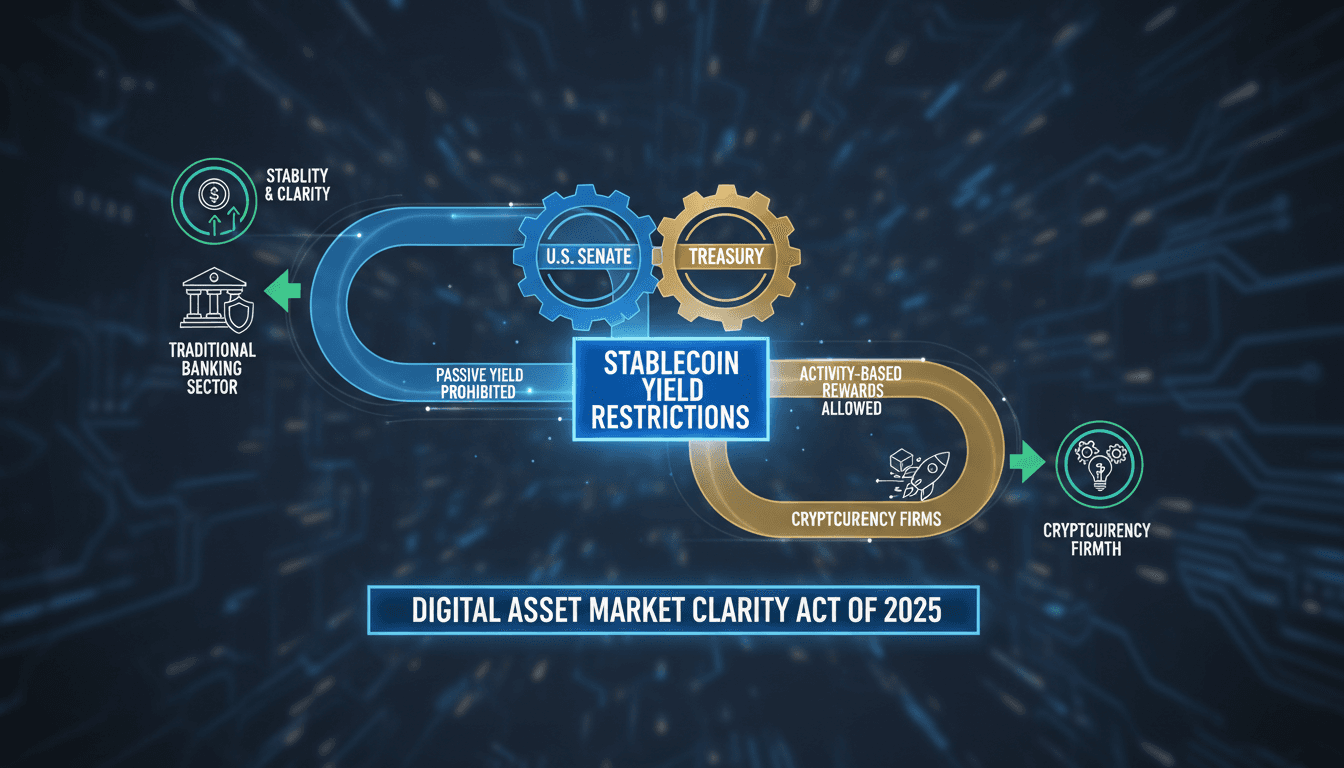
- The deal prohibits yield on passive stablecoin balances while allowing activity-based rewards, addressing banking sector concerns.
- The Digital Asset Market Clarity Act of 2025 is now closer to passage, pending industry review and Senate Banking Committee markup.
The context you actually need
- The Digital Asset Market Clarity Act of 2025 aims to clarify regulatory oversight for digital assets, having passed the House with bipartisan support.
- Yield-bearing stablecoins became a contentious issue, with banks fearing deposit outflows to crypto, stalling legislative progress since January 2026.
- The stablecoin market is valued at approximately $316 billion, highlighting the significance of regulatory clarity for market participants.
What's really happening
The recent agreement between Senators Tillis and Alsobrooks marks a pivotal moment in U.S. cryptocurrency regulation. By prohibiting yield on passive stablecoin balances, the deal seeks to alleviate concerns from traditional banks about potential deposit flight to cryptocurrency platforms. This compromise is crucial as it balances the interests of both the banking sector and cryptocurrency firms, which have been at odds over the implications of yield-bearing stablecoins.
The Digital Asset Market Clarity Act of 2025, which aims to delineate the jurisdiction of the Commodity Futures Trading Commission (CFTC) and the Securities and Exchange Commission (SEC), has been a focal point of legislative discussions since its introduction in May 2025. The House passed the bill with a significant majority, indicating strong bipartisan support for clearer regulations in the digital asset space. However, progress stalled in January 2026 due to disagreements over stablecoin yields, which banks argued could lead to significant deposit outflows.
The new agreement allows for activity-based rewards, which could incentivize innovation within the cryptocurrency sector while maintaining a level of stability in the banking system. This is particularly important as the stablecoin market continues to grow, with a total market capitalization of $316 billion as of March 21, 2026. The compromise reflects a growing recognition among lawmakers that digital assets are not going away and that a regulatory framework is necessary to foster innovation while protecting the financial system.
The involvement of White House officials in the negotiations underscores the administration's commitment to addressing the complexities of digital asset regulation. As the industry begins to review the terms of the agreement, the focus will shift to the Senate Banking Committee's markup scheduled for late April 2026. The outcome of this markup will be critical in determining whether the legislation can advance to a full Senate vote, which requires a 60-vote threshold.
As the legislative process unfolds, unresolved issues remain, including provisions related to decentralized finance (DeFi) and ethics rules. The timeline for final passage is tight, with midterm elections looming, which could impact the urgency and focus of lawmakers. The agreement represents a significant step toward regulatory clarity, but the path forward will require careful navigation of competing interests and priorities.
Who feels it first (and how)
- Banks: Concerned about deposit outflows, they will benefit from the yield restrictions.
- Cryptocurrency firms: They may find new opportunities for innovation through activity-based rewards.
- Investors: Those holding stablecoins will need to adjust their strategies based on new regulatory frameworks.
- Regulators: They will have clearer guidelines to enforce, impacting their oversight roles.
What to watch next
- Senate Banking Committee markup: This will determine the bill's final shape and its chances for a Senate vote.
- Industry reactions: How cryptocurrency firms adapt to the new yield restrictions will signal market sentiment.
- Legislative timeline: Watch for developments leading up to the midterm elections, which could influence the urgency of passage.
The agreement prohibits passive yield on stablecoins.
The Senate Banking Committee will review the agreement in late April 2026.
The final impact on the cryptocurrency market and investor behavior remains to be seen.
Frequently Asked Questions
- Why it matters?
- This agreement could stabilize the U.S. digital asset market, impacting global cryptocurrency dynamics.
- What happened (in 30 seconds)?
- Senators Thom Tillis and Angela Alsobrooks announced a bipartisan agreement on stablecoin yield restrictions on March 20, 2026. The deal prohibits yield on passive stablecoin balances while allowing activity-based rewards, addressing banking sector concerns. The Digital Asset Market Clarity Act of 2025 is now closer to passage, pending industry review and Senate Banking Committee markup.
- What's really happening?
- The recent agreement between Senators Tillis and Alsobrooks marks a pivotal moment in U.S. cryptocurrency regulation. By prohibiting yield on passive stablecoin balances, the deal seeks to alleviate concerns from traditional banks about potential deposit flight to cryptocurrency platforms. This compromise is crucial as it balances the interests of both the banking sector and cryptocurrency firms, which have been at odds over the implications of yield-bearing stablecoins. The Digital Asset Marke
- Who feels it first (and how)?
- Banks: Concerned about deposit outflows, they will benefit from the yield restrictions. Cryptocurrency firms: They may find new opportunities for innovation through activity-based rewards. Investors: Those holding stablecoins will need to adjust their strategies based on new regulatory frameworks. Regulators: They will have clearer guidelines to enforce, impacting their oversight roles.
- What to watch next?
- Senate Banking Committee markup: This will determine the bill's final shape and its chances for a Senate vote. Industry reactions: How cryptocurrency firms adapt to the new yield restrictions will signal market sentiment. Legislative timeline: Watch for developments leading up to the midterm elections, which could influence the urgency of passage.
Real-time updates, analysis, and reports on the blockchain and cryptocurrency sectors.
"Crypto News delivers real-time updates, analysis, and reports on the blockchain and cryptocurrency sectors."
— A47 Editor
CLARITY Act may move as stablecoin yield deal emerges
A tentative agreement on stablecoin yields has emerged, potentially reviving progress on the CLARITY Act in Washington. This development follows previous stalled negotiations between the White House and major banks, which had hindered the advancement...
Covers blockchain, cryptocurrency news, project analysis, and market insights.
"Cointelegraph is a leading crypto-focused media outlet known for timely news, analysis, and educational content related to blockchain and digital assets."
— A47 Editor
Rumors emerge of a CLARITY Act deal between White House and lawmakers
Rumors have surfaced regarding a potential deal between the White House and lawmakers concerning the CLARITY Act, which focuses on stablecoin yield and interest-bearing stable tokens, a significant issue for the banking sector.
Bitcoin news, technical analysis, and forecasts across crypto markets.
"NewsBTC covers Bitcoin news, technical analysis, and forecasts across crypto markets and major blockchain projects."
— A47 Editor
CLARITY Act Heading To Senate Vote April 14–20 As Lawmakers Strike Stablecoin Deal
Lawmakers have made significant progress toward passing the CLARITY Act, a bill designed to establish a clearer regulatory framework for cryptocurrencies in the U.S., with a tentative agreement reached on stablecoin yields between key senators and th...