
NATO Allies Reject U.S. Naval Blockade of Strait of Hormuz Amid Alliance Tensions
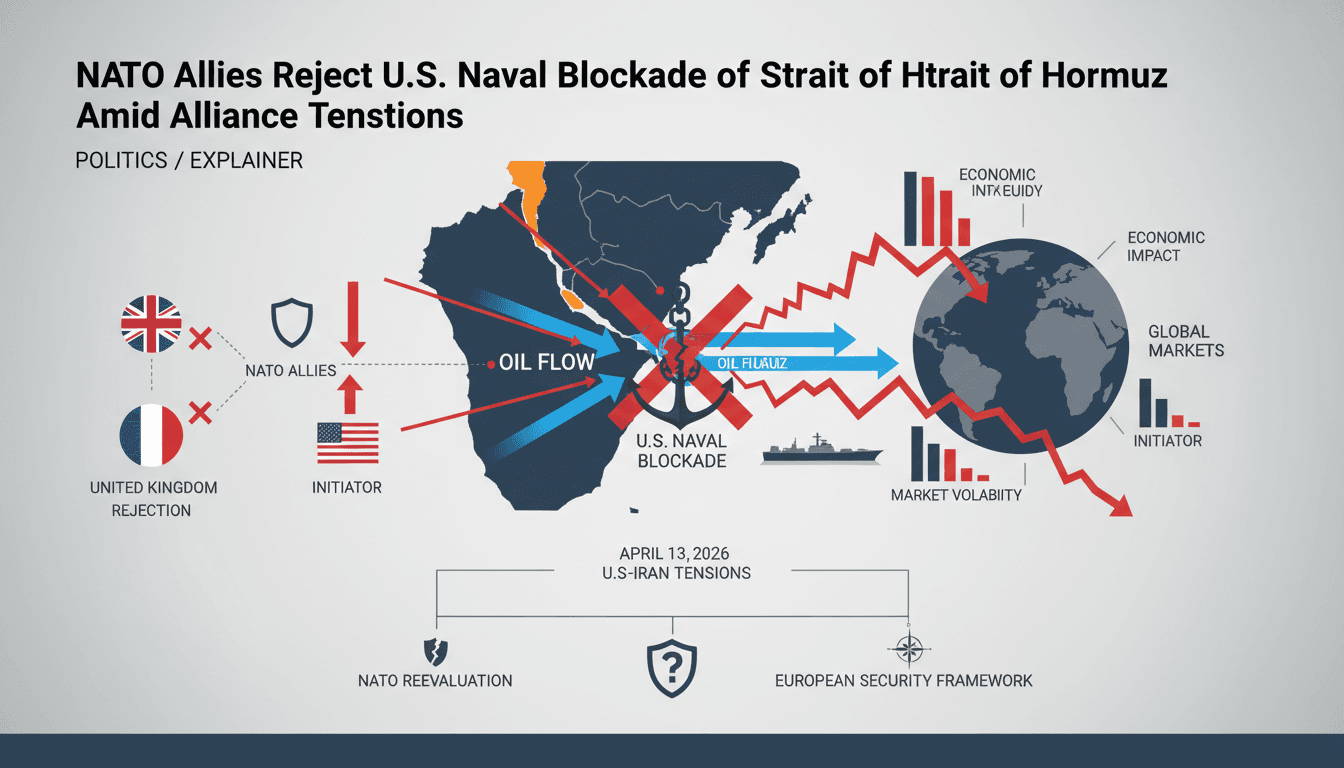
Here's what it means for you.
If you rely on global oil markets or have investments in the Middle East, the ongoing tensions could impact prices and supply chains.
Why it matters
The refusal of key NATO allies to support the U.S. blockade signals a fracture in transatlantic relations, potentially reshaping global energy security.
What happened (in 30 seconds)
- On April 12, 2026, President Trump announced a naval blockade of the Strait of Hormuz, targeting Iranian shipping amid escalating U.S.-Iran tensions.
- On April 13, 2026, NATO allies, including the UK and France, declined to participate, prioritizing de-escalation over military involvement.
- Oil prices surged over 7% to above $100 per barrel following the blockade announcement, reflecting market anxiety over supply disruptions.
The context you actually need
- The U.S.-Iran conflict began on February 28, 2026, leading to Iranian restrictions on maritime traffic in the Strait of Hormuz, a critical global shipping route.
- Failed ceasefire talks in Pakistan over the weekend of April 11-12 exacerbated tensions, with NATO Secretary General Mark Rutte urging allies to secure navigation post-conflict.
- European leaders opted for a cautious approach, emphasizing the need for multinational efforts to ensure safe navigation only after hostilities cease.
What's really happening
The refusal of NATO allies to join the U.S. blockade of the Strait of Hormuz highlights a significant shift in international military cooperation and strategic priorities. The U.S.-Iran conflict, which erupted in late February 2026, has created a precarious situation in one of the world's most vital maritime corridors, through which approximately 20 million barrels of oil flow daily—accounting for about 20% of global petroleum consumption.
President Trump’s unilateral decision to enforce a blockade was met with skepticism from key European allies, who are increasingly wary of escalating military involvement in the region. The NATO allies' reluctance stems from a desire to avoid being drawn into a protracted conflict that could have far-reaching consequences for their own national security and economic interests. Instead, they advocate for a coordinated multinational approach that prioritizes diplomatic solutions and ensures navigation safety only after hostilities have ceased.
The backdrop of failed ceasefire negotiations in Pakistan further complicates the situation. These talks aimed to address U.S. demands for Iran to halt uranium enrichment and proxy funding, but their collapse over the weekend of April 11-12 left little room for optimism. NATO Secretary General Mark Rutte's push for commitments from allies to secure the strait post-conflict was met with resistance, as European leaders prioritized de-escalation and the avoidance of direct military confrontation.
As the U.S. Navy began enforcing the blockade with over 15 warships, the immediate market reaction was a surge in oil prices, reflecting fears of supply disruptions. This spike in prices not only affects consumers and businesses globally but also places additional strain on economies heavily reliant on oil imports. The situation is further exacerbated by the economic fallout in regions like Dubai, where tourism and migrant worker stability are already under threat due to the ongoing conflict.
The implications of this standoff extend beyond immediate military concerns; they signal a potential reconfiguration of alliances and a reevaluation of how NATO operates in response to U.S. foreign policy initiatives. The reluctance of European allies to support the blockade may lead to a more fragmented approach to security in the region, with each nation weighing its own interests against collective NATO commitments.
Who feels it first (and how)
- Oil and gas companies: Increased prices and potential supply chain disruptions could impact profitability and operational costs.
- Consumers: Rising oil prices will likely lead to higher costs for fuel and goods, affecting household budgets.
- Tourism and hospitality sectors: Regions like Dubai, heavily reliant on tourism, may see further declines in visitor numbers and economic activity.
- Migrant workers: Economic instability could lead to job losses and reduced remittances, impacting their livelihoods and families back home.
What to watch next
- Oil price fluctuations: Monitor how prices respond to ongoing developments in the U.S.-Iran conflict and NATO's involvement, as this will directly affect global markets.
- NATO's strategic shifts: Watch for any changes in NATO's operational strategies or new alliances forming in response to the blockade and European nations' reluctance to engage militarily.
- Diplomatic negotiations: Keep an eye on any renewed efforts for ceasefire talks or diplomatic resolutions, particularly involving key players like the U.S., Iran, and European nations.
The U.S. has initiated a blockade of the Strait of Hormuz, and oil prices have surged as a result.
NATO allies will continue to prioritize de-escalation and diplomatic solutions over military involvement in the region.
The long-term implications for NATO's unity and operational effectiveness in response to U.S. foreign policy initiatives remain uncertain.
Frequently Asked Questions
- Why it matters?
- The refusal of key NATO allies to support the U.S. blockade signals a fracture in transatlantic relations, potentially reshaping global energy security.
- What happened (in 30 seconds)?
- On April 12, 2026, President Trump announced a naval blockade of the Strait of Hormuz, targeting Iranian shipping amid escalating U.S.-Iran tensions. On April 13, 2026, NATO allies, including the UK and France, declined to participate, prioritizing de-escalation over military involvement. Oil prices surged over 7% to above $100 per barrel following the blockade announcement, reflecting market anxiety over supply disruptions.
- What's really happening?
- The refusal of NATO allies to join the U.S. blockade of the Strait of Hormuz highlights a significant shift in international military cooperation and strategic priorities. The U.S.-Iran conflict, which erupted in late February 2026, has created a precarious situation in one of the world's most vital maritime corridors, through which approximately 20 million barrels of oil flow daily—accounting for about 20% of global petroleum consumption. President Trump’s unilateral decision to enforce a bloc
- Who feels it first (and how)?
- Oil and gas companies: Increased prices and potential supply chain disruptions could impact profitability and operational costs. Consumers: Rising oil prices will likely lead to higher costs for fuel and goods, affecting household budgets. Tourism and hospitality sectors: Regions like Dubai, heavily reliant on tourism, may see further declines in visitor numbers and economic activity. Migrant workers: Economic instability could lead to job losses and reduced remittances, impacting their li
- What to watch next?
- Oil price fluctuations: Monitor how prices respond to ongoing developments in the U.S.-Iran conflict and NATO's involvement, as this will directly affect global markets. NATO's strategic shifts: Watch for any changes in NATO's operational strategies or new alliances forming in response to the blockade and European nations' reluctance to engage militarily. Diplomatic negotiations: Keep an eye on any renewed efforts for ceasefire talks or diplomatic resolutions, particularly involving key play
Global business headlines with AI angles.
"General business outlet that frequently covers AI."
— A47 Editor
U.S. NATO Allies Won't Join Blockade Of Strait Of Hormuz As Alliance Tensions Continue
Two key NATO members have declined to participate in the U.S. blockade of the Strait of Hormuz, highlighting ongoing tensions between Washington and several alliance members. This decision follows President Trump's announcement of the blockade after ...
Regional and international reporting focused on Middle Eastern politics, diplomacy, and economics.
"Asharq Al-Awsat is a Saudi-owned international newspaper reflecting mainstream Gulf political perspectives."
— A47 Editor
NATO Allies Refuse to Join Trump's Strait of Hormuz Blockade
NATO allies have declined to support President Donald Trump's proposed blockade of the Strait of Hormuz, a vital maritime route for global oil shipments, following the collapse of U.S.-Iran ceasefire negotiations. This decision reflects significant d...
Regional coverage and analysis focused on politics, diplomacy, and business across the Middle East.
"Al-Monitor is known for analytical reporting on Middle East politics and policy developments."
— A47 Editor
NATO allies refuse to join Trump's Strait of Hormuz blockade
NATO allies have declined to participate in President Donald Trump's plan to blockade the Strait of Hormuz, a strategic maritime route, following the collapse of U.S.-Iran peace talks. This decision has heightened tensions within NATO and raised conc...
Oil, metals, and agriculture: supply/demand headlines, OPEC chatter, inventories, and price action.
"Solid tape for energy and metals traders tracking macro and micro catalysts."
— A47 Editor
NATO allies refuse to join Trump’s Strait of Hormuz blockade
NATO allies have declined to participate in President Trump's announced blockade of the Strait of Hormuz, a vital maritime route for global oil shipments, following the breakdown of peace negotiations with Iran. This blockade is characterized by Trum...