
US Naval Blockade of Iranian Ports Enforced to Pressure Iran Amid Ongoing Conflict
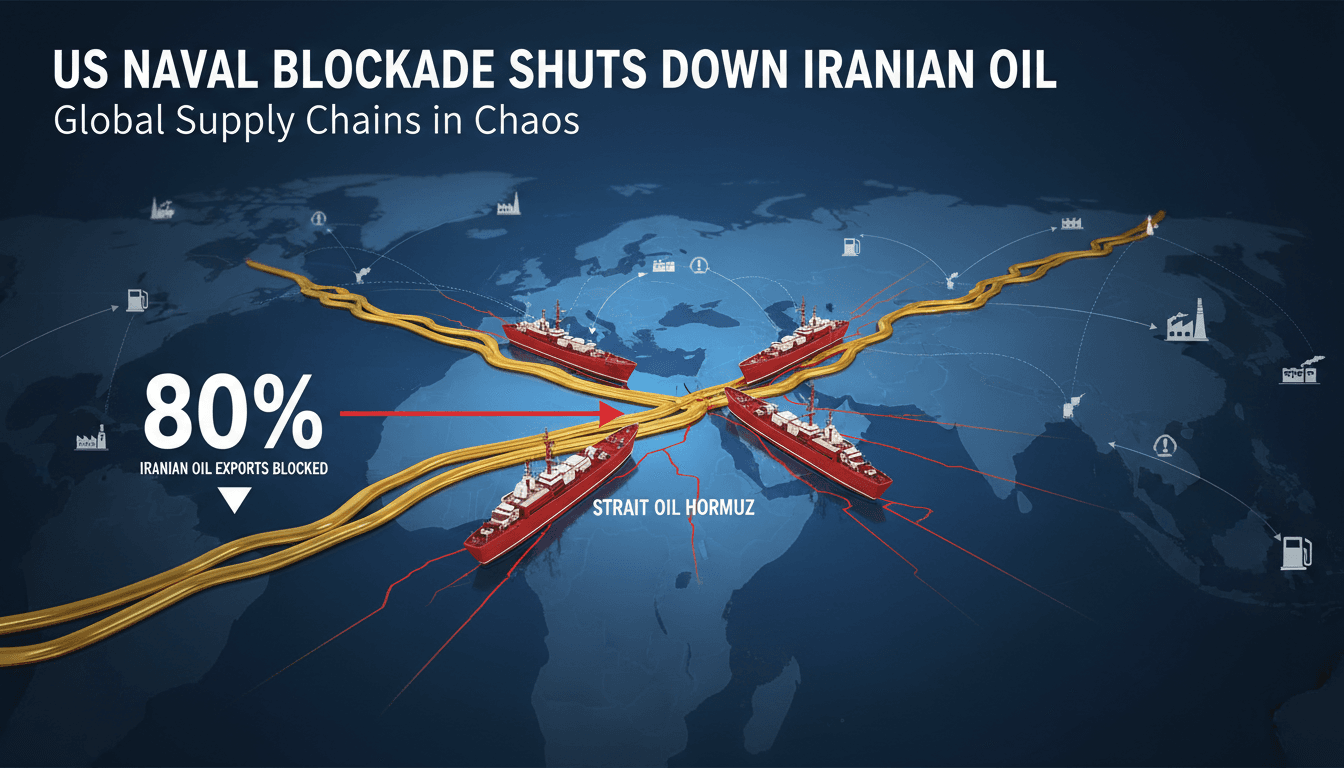
Here's what it means for you.
If you rely on global oil markets or import goods from the Gulf region, expect rising costs and potential supply chain disruptions.
Why it matters
The blockade threatens to significantly disrupt global oil supply and increase prices, impacting economies worldwide.
What happened (in 30 seconds)
- On April 14, 2026, the United States initiated a naval blockade of Iranian ports in the Strait of Hormuz to pressure Iran amid ongoing conflict.
- The blockade disrupts approximately 80% of Iran's exports, primarily oil shipments to China, risking Iran's revenue of around $5 billion from oil exports.
- Diplomatic tensions are escalating, with Iran condemning the blockade and threatening retaliatory actions, while ceasefire negotiations remain fragile.
The context you actually need
- The US-Israel-Iran war began on February 28, 2026, following escalating tensions over nuclear disputes and proxy conflicts.
- Iran had previously restricted access to the Strait of Hormuz for foreign vessels while maintaining its own oil exports, generating record revenues amid high global prices.
- The blockade was announced after failed ceasefire talks, with the US aiming to compel Iran to negotiate by targeting its trade without fully closing the strait to global traffic.
What's really happening
The US naval blockade of Iranian ports in the Strait of Hormuz is a strategic maneuver aimed at crippling Iran's oil export capabilities, which are vital for its economy. Prior to the blockade, Iran was exporting approximately 1.7 to 1.84 million barrels of oil per day, primarily to China, generating significant revenue—around $5 billion from March 15 to April 14, 2026. This revenue stream has been crucial for Iran, especially during a time of heightened military conflict and economic sanctions.
The blockade, enforced by a substantial US naval presence, including 12 warships and 100 aircraft, is designed to turn back vessels linked to Iran, thereby restricting its ability to trade. While the US aims to pressure Iran into negotiations, the blockade also risks escalating tensions further, as Iran has condemned the action as piracy and threatened to disrupt shipping routes in the Red Sea.
The implications of this blockade extend beyond Iran. The Strait of Hormuz is a critical chokepoint for global oil shipments, with approximately 20% of the world's oil passing through it. Disruptions here can lead to increased oil prices globally, affecting economies that rely on stable energy prices. As a result, markets are already reacting with volatility, and the International Monetary Fund (IMF) has adjusted global growth forecasts downward in response to the uncertainty created by the blockade.
Moreover, the blockade has broader geopolitical ramifications. China, a key importer of Iranian oil, is likely to respond strategically to protect its energy interests, potentially testing the limits of the blockade without escalating into direct conflict. The situation is further complicated by Saudi Arabia's call for an end to the blockade to mitigate regional strain, indicating that the conflict has implications for neighboring countries and their economic stability.
As the blockade continues, the potential for diplomatic negotiations remains, but the path forward is fraught with challenges. The fragile ceasefire discussions, which are set to expire on April 22, 2026, without an agreement, highlight the precarious nature of the situation. The outcome of these negotiations will be critical in determining the future of the blockade and its impact on global oil markets.
Who feels it first (and how)
- Oil traders: Expect increased volatility in oil prices, impacting profit margins.
- Importers in the UAE: Face higher costs for goods, particularly electronics and food, due to rerouted shipping and increased insurance rates.
- Consumers globally: Will likely see rising prices at the pump and for goods reliant on oil transport.
What to watch next
- Ceasefire negotiations: Monitor the outcomes of talks in Islamabad, as a successful agreement could ease tensions and stabilize oil markets.
- Oil price fluctuations: Watch for significant changes in oil prices, which could indicate market reactions to the blockade's effectiveness and geopolitical developments.
- China's response: Observe how China navigates its energy needs amid the blockade, as its actions could influence the blockade's enforcement and regional stability.
The US has initiated a blockade affecting Iranian oil exports.
Oil prices will rise due to supply disruptions and geopolitical tensions.
The long-term effectiveness of the blockade in achieving US objectives remains uncertain.
Frequently Asked Questions
- Why it matters?
- The blockade threatens to significantly disrupt global oil supply and increase prices, impacting economies worldwide.
- What happened (in 30 seconds)?
- On April 14, 2026, the United States initiated a naval blockade of Iranian ports in the Strait of Hormuz to pressure Iran amid ongoing conflict. The blockade disrupts approximately 80% of Iran's exports, primarily oil shipments to China, risking Iran's revenue of around $5 billion from oil exports. Diplomatic tensions are escalating, with Iran condemning the blockade and threatening retaliatory actions, while ceasefire negotiations remain fragile.
- What's really happening?
- The US naval blockade of Iranian ports in the Strait of Hormuz is a strategic maneuver aimed at crippling Iran's oil export capabilities, which are vital for its economy. Prior to the blockade, Iran was exporting approximately 1.7 to 1.84 million barrels of oil per day, primarily to China, generating significant revenue—around $5 billion from March 15 to April 14, 2026. This revenue stream has been crucial for Iran, especially during a time of heightened military conflict and economic sanctions.
- Who feels it first (and how)?
- Oil traders: Expect increased volatility in oil prices, impacting profit margins. Importers in the UAE: Face higher costs for goods, particularly electronics and food, due to rerouted shipping and increased insurance rates. Consumers globally: Will likely see rising prices at the pump and for goods reliant on oil transport.
- What to watch next?
- Ceasefire negotiations: Monitor the outcomes of talks in Islamabad, as a successful agreement could ease tensions and stabilize oil markets. Oil price fluctuations: Watch for significant changes in oil prices, which could indicate market reactions to the blockade's effectiveness and geopolitical developments. China's response: Observe how China navigates its energy needs amid the blockade, as its actions could influence the blockade's enforcement and regional stability.
Global news coverage with extensive reporting on Middle Eastern conflicts and geopolitics.
"Al Jazeera is a Qatar-based broadcaster known for wide regional coverage and alternative perspectives."
— A47 Editor
How much will US Hormuz blockade hurt Iran, and does Tehran have an escape?
The U.S. has initiated a blockade of the Strait of Hormuz, a vital maritime route, following the collapse of peace negotiations with Iran. This blockade is expected to significantly impact Iranian oil exports, which had recently generated $5 billion ...
Comprehensive coverage of Middle Eastern and global issues.
"Al Jazeera is a prominent voice from the Global South, especially the Middle East, with an emphasis on underreported stories."
— A47 Editor
How much will US Hormuz blockade hurt Iran, and does Tehran have an escape?
The U.S. has initiated a blockade of the Strait of Hormuz, a vital maritime route, following the collapse of peace negotiations with Iran. This blockade is expected to significantly impact Iranian oil exports, which had recently generated $5 billion ...
Sports reporting with a focus on Saudi and regional competitions.
"Okaz sports coverage is broad and audience-friendly, with strong attention to Saudi teams and leagues."
— A47 Editor
حصار «هرمز».. خسائر تهز الاقتصاد الإيراني
The British newspaper The Times reported devastating losses to the Iranian economy due to the U.S. maritime blockade of the Strait of Hormuz, estimating direct economic costs to Iran at approximately $435 million daily. The Iranian economy faces a cr...
Sports reporting with a focus on Saudi and regional competitions.
"Okaz sports coverage is broad and audience-friendly, with strong attention to Saudi teams and leagues."
— A47 Editor
بسبب حصار «هرمز».. 13 مليار دولار خسائر شهرية لاقتصاد إيران
A potential U.S. naval blockade of the Strait of Hormuz could result in significant economic losses for Iran, estimated at $435 million daily, translating to approximately $13 billion monthly. This is primarily due to a loss of $276 million in export...