
China approves Neuracle brain-computer interface for commercial use
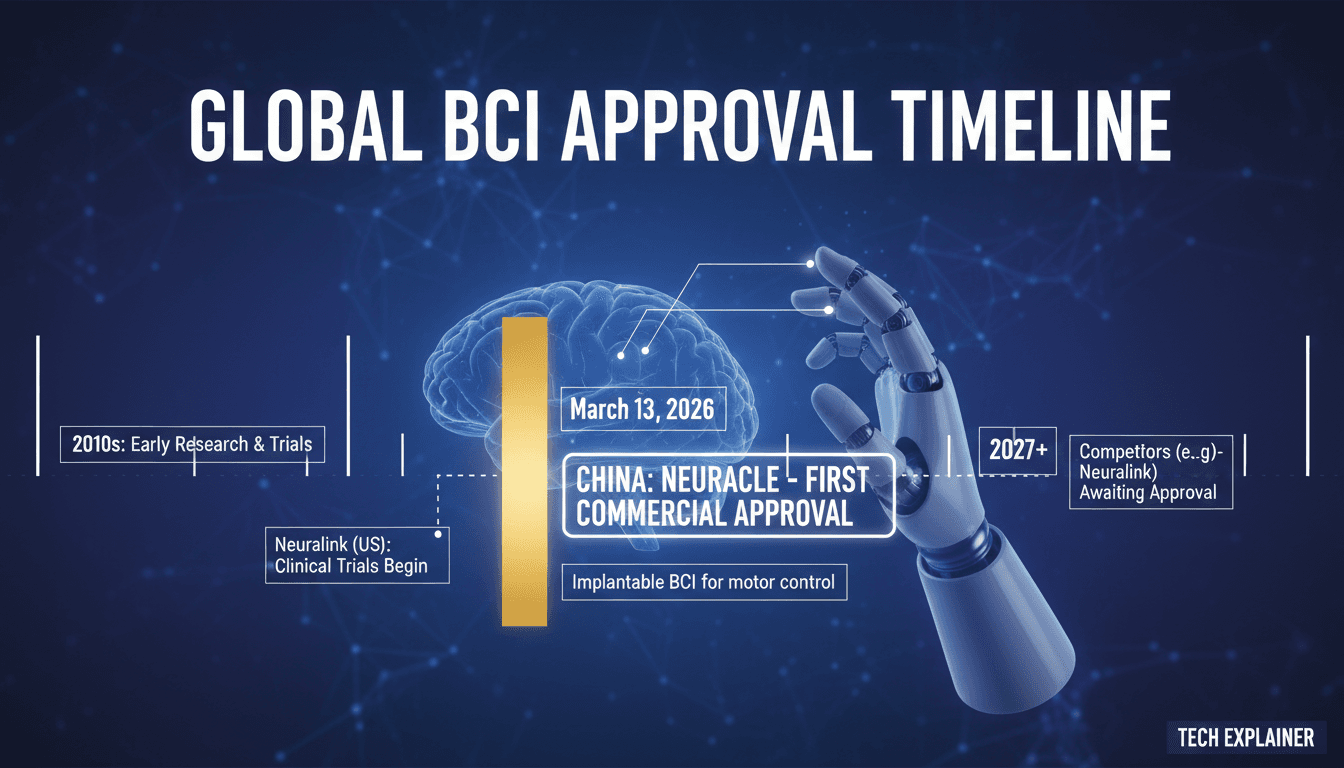
Here's what it means for you.
If you’re in the healthcare or tech sectors, this pioneering approval could redefine the future of medical devices and patient rehabilitation.
Why it matters
This regulatory approval positions China as a leader in the commercialization of neurotechnology, influencing global market dynamics.
What happened (in 30 seconds)
- Neuracle Medical Technology received approval from China’s National Medical Products Administration for its invasive brain-computer interface (BCI).
- This device is the first of its kind to gain commercial clearance globally, targeting paralysis recovery.
- Clinical trials demonstrated improved hand motor function in partially paralyzed patients, paving the way for broader applications.
The context you actually need
- Brain-computer interfaces decode neural signals to control external devices, primarily aiding individuals with paralysis.
- U.S. firms like Neuralink and Synchron are still in human trials and have yet to secure commercial approvals, highlighting Neuracle's unique position.
- Neuracle's device is a wireless, coin-sized implant that enhances motor function through a robotic glove, representing a significant leap in assistive technology.
What's really happening
Neuracle's invasive brain-computer interface (BCI) approval marks a pivotal moment in medical technology, particularly in the realm of neurorehabilitation. The device, which is approximately the size of a coin, is designed to be placed on the brain's dura mater without penetrating the brain itself. This innovative approach allows it to transmit signals that can restore hand motor function, a critical capability for individuals suffering from paralysis due to spinal cord injuries.
The clinical evaluations of Neuracle's BCI have shown promising results, with participants experiencing improved grasping abilities. This outcome not only underscores the device's potential effectiveness but also highlights the growing interest in neurotechnological solutions for rehabilitation. As the first invasive BCI to receive commercial approval globally, Neuracle's device sets a precedent that could influence regulatory frameworks in other countries, particularly in the United States, where similar technologies are still undergoing trials.
The approval is significant for several reasons. First, it positions China at the forefront of neurotechnology commercialization, potentially attracting investment and talent in this burgeoning field. The success of Neuracle could encourage other companies to pursue similar innovations, fostering a competitive environment that accelerates technological advancements. Second, the implications for patient care are profound. With the ability to restore motor functions, this technology could significantly improve the quality of life for individuals with mobility impairments, leading to greater independence and integration into society.
Moreover, Neuracle is reportedly pursuing an initial public offering (IPO) on Shanghai's Star Market, signaling confidence in its market potential and the broader acceptance of neurotechnological solutions. This move could further stimulate investment in the sector, leading to accelerated research and development efforts. As the landscape evolves, the interplay between regulatory approvals, market dynamics, and technological advancements will shape the future of neurotechnology.
In summary, Neuracle's approval is not just a milestone for the company but a landmark event for the entire neurotech industry. It opens doors for new innovations, regulatory discussions, and patient care solutions that could redefine rehabilitation practices worldwide.
Who feels it first (and how)
- Patients with paralysis: Direct beneficiaries of improved motor function and independence.
- Healthcare providers: Increased demand for advanced rehabilitation technologies and training.
- Investors in neurotechnology: Opportunities for investment in a rapidly evolving market.
- Regulatory bodies: Need to adapt frameworks to accommodate emerging technologies.
What to watch next
- Market response: Monitor how Neuracle's stock performs post-IPO and its impact on investor confidence in neurotech.
- Regulatory developments: Watch for potential approvals of similar devices in other markets, particularly the U.S. and Europe.
- Clinical outcomes: Keep an eye on long-term patient outcomes from Neuracle's device to assess its effectiveness and safety.
Neuracle's BCI is the first invasive brain implant approved for commercial use globally.
Other companies will accelerate their development timelines to compete in the neurotech space.
The long-term effects of the device on patients and the regulatory landscape in other countries.
Frequently Asked Questions
- Why it matters?
- This regulatory approval positions China as a leader in the commercialization of neurotechnology, influencing global market dynamics.
- What happened (in 30 seconds)?
- Neuracle Medical Technology received approval from China’s National Medical Products Administration for its invasive brain-computer interface (BCI). This device is the first of its kind to gain commercial clearance globally, targeting paralysis recovery. Clinical trials demonstrated improved hand motor function in partially paralyzed patients, paving the way for broader applications.
- What's really happening?
- Neuracle's invasive brain-computer interface (BCI) approval marks a pivotal moment in medical technology, particularly in the realm of neurorehabilitation. The device, which is approximately the size of a coin, is designed to be placed on the brain's dura mater without penetrating the brain itself. This innovative approach allows it to transmit signals that can restore hand motor function, a critical capability for individuals suffering from paralysis due to spinal cord injuries. The clinical e
- Who feels it first (and how)?
- Patients with paralysis: Direct beneficiaries of improved motor function and independence. Healthcare providers: Increased demand for advanced rehabilitation technologies and training. Investors in neurotechnology: Opportunities for investment in a rapidly evolving market. Regulatory bodies: Need to adapt frameworks to accommodate emerging technologies.
- What to watch next?
- Market response: Monitor how Neuracle's stock performs post-IPO and its impact on investor confidence in neurotech. Regulatory developments: Watch for potential approvals of similar devices in other markets, particularly the U.S. and Europe. Clinical outcomes: Keep an eye on long-term patient outcomes from Neuracle's device to assess its effectiveness and safety.
Science and technology stories including AI.
"Longstanding science magazine with thoughtful AI coverage."
— A47 Editor
China just approved its first brain implant for commercial use, a world first
Neuracle Medical Technology has received approval in China for its invasive brain-computer interface, marking the country's first commercial authorization of a brain implant for individuals with partial spinal cord injuries.
Scientific research, technology, environment, and society.
"Scientific American is one of the oldest and most authoritative science magazines, known for deep dives into science, technology, and society."
— A47 Editor
China just approved its first brain implant for commercial use, a world first
Neuracle Medical Technology has received approval in China for its invasive brain-computer interface, marking the country's first commercial authorization of a brain implant for individuals with partial spinal cord injuries.
Technology business news, market impacts, and innovation trends.
"Bloomberg is a premier financial and tech news provider, respected for its in-depth reporting and analytical rigor."
— A47 Editor
China Approves First Brain Implant for Commercial Use
China has approved its first invasive brain-computer interface for commercial use, marking a significant regulatory milestone as domestic startups seek to compete with US firms like Elon Musk-backed Neuralink Corp.