
U.S. Housing Shortage Estimated at 10 Million Homes by 2026 Economic Report
Here's what it means for you.
If you're in the housing market, expect continued pressure on prices and availability as the U.S. grapples with a significant home shortage.
Why it matters
The estimated shortage of 10 million single-family homes could exacerbate affordability issues and impact economic growth.
What happened (in 30 seconds)
- On April 13, 2026, the White House Council of Economic Advisers released a report estimating a shortage of at least 10 million single-family homes in the U.S.
- Regulatory barriers are adding over $100,000 per home in costs, prompting calls for deregulation to boost supply and stabilize prices.
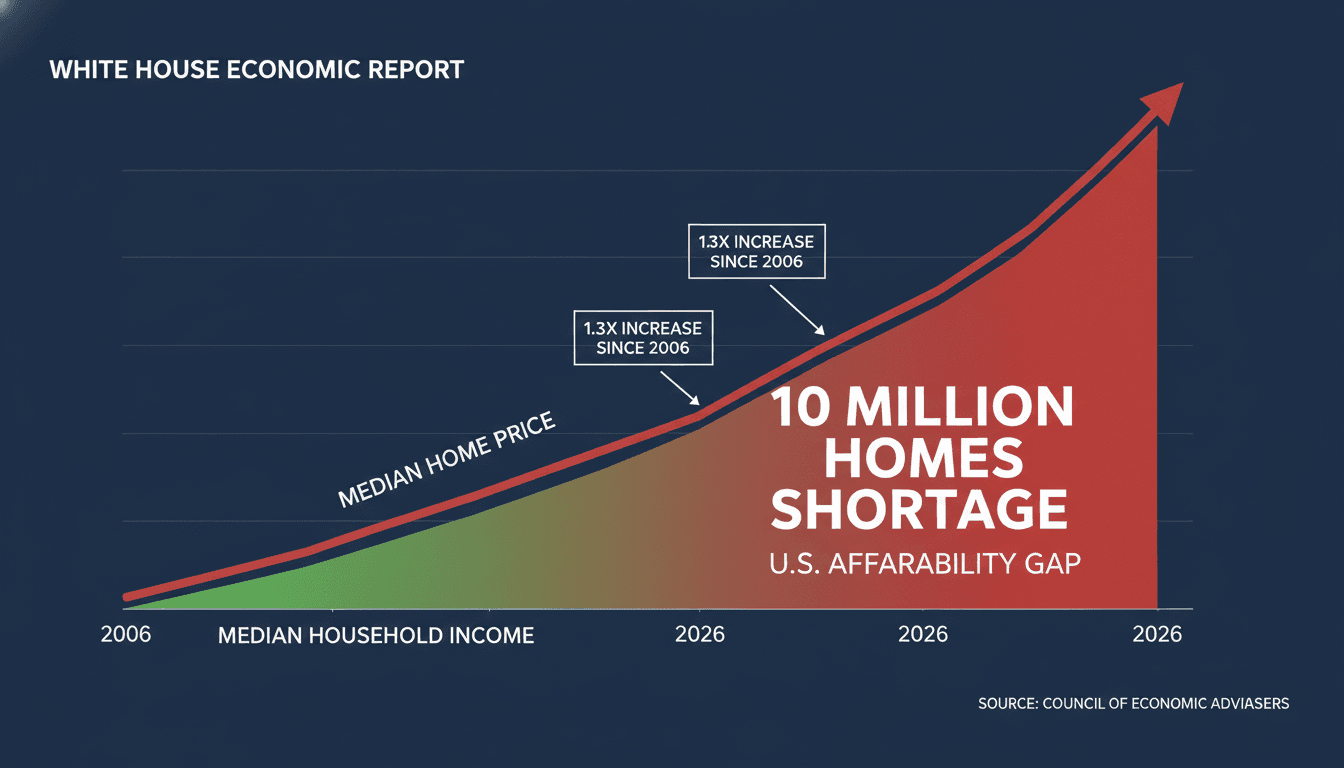
- Home prices have surged 82% since 2000, while median incomes have only increased by 12%, worsening affordability challenges.
The context you actually need
- Post-2008 financial crisis, homebuilding rates halved, leading to a persistent supply deficit of single-family homes.
- Regulatory expansions, including zoning restrictions and permitting delays, have imposed significant costs on home construction, termed a "bureaucrat tax."
- Inflation and elevated mortgage rates, now at 6.37%, have further strained affordability, particularly for first-time homebuyers.
What's really happening
The U.S. housing market is facing a critical juncture, driven by a combination of historical trends and recent policy shifts. The 2008 financial crisis marked a turning point, halving the rate of single-family home construction as builders retreated from a market plagued by subprime lending defaults. This decline has resulted in millions of missing units, with the White House Council of Economic Advisers now estimating a staggering shortage of 10 million homes by 2026.
The report highlights that regulatory barriers are a significant contributor to this crisis, adding over $100,000 to the cost of each home. These barriers include zoning restrictions, permitting delays, and new regulations introduced during the Biden administration, which alone account for an estimated $31,000 per home. This "bureaucrat tax" can inflate construction costs by 24-42%, making it increasingly difficult for builders to meet demand.
As home prices have risen 82% since 2000, median incomes have only increased by 12%, creating a widening gap that exacerbates affordability challenges. The situation has been further complicated by rising mortgage rates, which have climbed from under 6% to 6.37% in the wake of post-pandemic inflation and geopolitical tensions, such as the ongoing Iran war. These factors collectively contribute to a housing market that is increasingly out of reach for many Americans.
In response to these challenges, President Trump signed executive orders aimed at reducing housing regulations and facilitating smaller bank mortgages. The April 2026 report outlines a deregulation blueprint that could enable the construction of an additional 13.2 million housing units and create 2 million jobs over the next decade. This approach seeks to stabilize prices and enhance homeownership opportunities, ultimately contributing 1.3 percentage points to annual economic growth.
However, the path to achieving these goals is fraught with challenges. The National Apartment Association and the National Multifamily Housing Council have praised the report for addressing supply shortages, but economists note that the 10 million home estimate far exceeds previous projections, such as Freddie Mac's 3.7 million and the National Association of Realtors' 5.5 million. As of mid-April 2026, no significant market shifts have been reported, but the administration is advancing proposals to condition federal funds on local regulatory reductions.
Who feels it first (and how)
- First-time homebuyers: Struggling with affordability as prices rise faster than incomes.
- Real estate developers: Facing increased costs due to regulatory barriers, impacting their ability to build.
- Local governments: May experience pressure to adjust zoning laws and permitting processes to facilitate new construction.
What to watch next
- Regulatory changes: Monitor how local governments respond to federal incentives for deregulation, as this could impact housing supply.
- Mortgage rate fluctuations: Keep an eye on the Federal Reserve's policies, as changes could affect borrowing costs and housing demand.
- Economic growth indicators: Watch for signs of economic growth tied to housing market improvements, as this could influence broader market stability.
The U.S. is facing a housing shortage of at least 10 million single-family homes.
Regulatory changes will be implemented to facilitate increased home construction.
The long-term impact of these changes on housing prices and economic growth remains uncertain.
Frequently Asked Questions
- Why it matters?
- The estimated shortage of 10 million single-family homes could exacerbate affordability issues and impact economic growth.
- What happened (in 30 seconds)?
- On April 13, 2026, the White House Council of Economic Advisers released a report estimating a shortage of at least 10 million single-family homes in the U.S. Regulatory barriers are adding over $100,000 per home in costs, prompting calls for deregulation to boost supply and stabilize prices. Home prices have surged 82% since 2000, while median incomes have only increased by 12%, worsening affordability challenges.
- What's really happening?
- The U.S. housing market is facing a critical juncture, driven by a combination of historical trends and recent policy shifts. The 2008 financial crisis marked a turning point, halving the rate of single-family home construction as builders retreated from a market plagued by subprime lending defaults. This decline has resulted in millions of missing units, with the White House Council of Economic Advisers now estimating a staggering shortage of 10 million homes by 2026. The report highlights tha
- Who feels it first (and how)?
- First-time homebuyers: Struggling with affordability as prices rise faster than incomes. Real estate developers: Facing increased costs due to regulatory barriers, impacting their ability to build. Local governments: May experience pressure to adjust zoning laws and permitting processes to facilitate new construction.
- What to watch next?
- Regulatory changes: Monitor how local governments respond to federal incentives for deregulation, as this could impact housing supply. Mortgage rate fluctuations: Keep an eye on the Federal Reserve's policies, as changes could affect borrowing costs and housing demand. Economic growth indicators: Watch for signs of economic growth tied to housing market improvements, as this could influence broader market stability.
Corporate leadership, finance, technology, and market trends.
"Fortune covers financial trends, leadership, and innovation with a pragmatic editorial approach."
— A47 Editor
Trump’s White House: America is short 10 million houses
The White House has reported a significant housing shortage in the United States, estimating a deficit of at least 10 million single-family homes. This shortage is attributed to ongoing supply constraints and is seen as a critical issue affecting the...
Global news coverage with extensive reporting on Middle Eastern conflicts and geopolitics.
"Al Jazeera is a Qatar-based broadcaster known for wide regional coverage and alternative perspectives."
— A47 Editor
New White House report has plans to fix US housing shortage of 10 million
A new report from the White House outlines a comprehensive plan to address the significant housing shortage in the United States, estimated at 10 million homes. The report emphasizes the importance of increased home construction to support the middle...
Comprehensive coverage of Middle Eastern and global issues.
"Al Jazeera is a prominent voice from the Global South, especially the Middle East, with an emphasis on underreported stories."
— A47 Editor
New White House report has plans to fix US housing shortage of 10 million
A new report from the White House outlines a comprehensive plan to address the significant housing shortage in the United States, which currently stands at 10 million homes. The report emphasizes the importance of increased home construction as a mea...
Macro commentary, policy analysis, growth/inflation themes, and global outlooks.
"Contextual macro coverage that complements day-to-day market headlines."
— A47 Editor
US housing shortage is at least 10 million single-family homes, White House says
The White House has reported that the United States is facing a housing shortage of at least 10 million single-family homes, highlighting significant challenges in the housing market. This shortage is exacerbated by ongoing supply constraints, which ...