
Trump Proposes U.S.-Iran Joint Venture for Strait of Hormuz Shipping Tolls
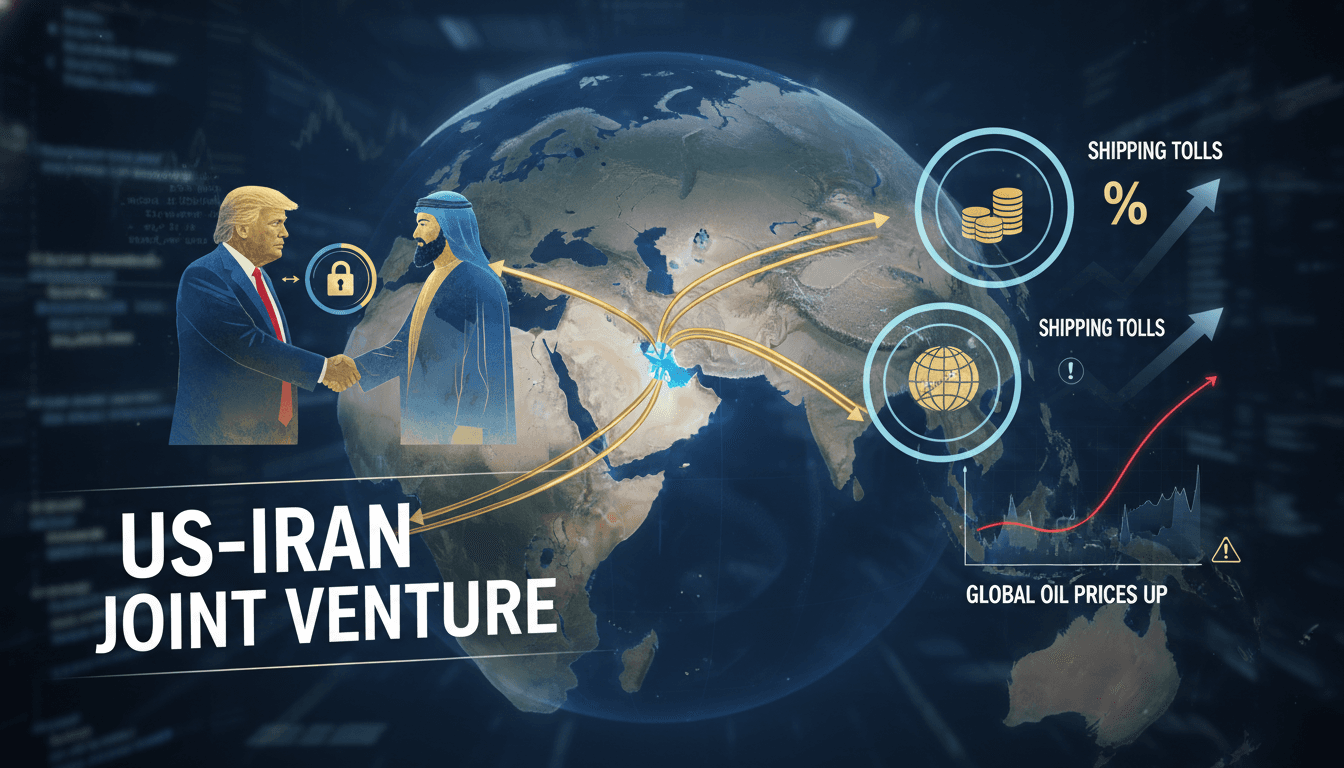
Here's what it means for you.
If you rely on global oil markets, this proposal could impact fuel prices and shipping costs in your region.
Why it matters
The Strait of Hormuz is a critical chokepoint for global oil and gas supplies, making any changes here significant for energy markets worldwide.
What happened (in 30 seconds)
- On April 8, 2026, President Trump proposed a joint U.S.-Iran venture to charge tolls for vessels passing through the Strait of Hormuz.
- This proposal comes amid a fragile ceasefire, following Iran's closure of the strait, which handles 20% of global oil shipments.
- Scheduled talks in Pakistan are set for April 11, 2026, to discuss the broader implications of this initiative.
The context you actually need
- The Strait of Hormuz is vital for global energy, with 20% of the world’s oil and liquefied natural gas transiting daily.
- Tensions escalated in late February 2026, when Iran closed the strait amid U.S.-Israeli military actions, leading to significant global energy disruptions.
- A conditional ceasefire was established on April 7-8, 2026, allowing for limited ship transits and discussions on sanctions and uranium retrieval.
What's really happening
The proposal for a joint U.S.-Iran venture to impose tolls on the Strait of Hormuz reflects a complex interplay of geopolitical maneuvering and economic incentives. The strait is not just a shipping lane; it is a critical artery for global energy supplies, with approximately 20% of the world's oil and liquefied natural gas transiting through it daily. This makes it a focal point for international relations, particularly between the U.S. and Iran, whose relationship has been fraught with tension and conflict.
The recent closure of the strait by Iran, following military actions that included the assassination of Supreme Leader Ali Khamenei, escalated hostilities and prompted a series of ultimatums from the U.S. government. President Trump’s proposal for tolls can be seen as an attempt to regain control over this vital passage while also providing a financial incentive for Iran to cooperate. By sharing the revenue from tolls, both nations could benefit economically, which might help stabilize the region and ensure the safe passage of vessels.
However, this proposal also carries significant risks. It could be perceived as legitimizing Iran's control over the strait, potentially emboldening its regional ambitions. Additionally, the implementation of tolls could lead to increased shipping costs, which would ultimately be passed on to consumers, affecting fuel prices and the cost of goods globally. The volatility of oil prices, which have already seen fluctuations following the ceasefire announcement, underscores the delicate balance of interests at play.
Moreover, the upcoming talks in Pakistan will be crucial in determining the feasibility of this venture. If successful, it could pave the way for further diplomatic engagements between the U.S. and Iran, but failure could reignite tensions and lead to renewed hostilities. The situation remains fluid, with stakeholders closely monitoring developments.
Who feels it first (and how)
- Energy sector professionals: Oil and gas companies will need to adjust their pricing strategies based on potential toll impacts.
- Consumers: Increased shipping costs could lead to higher fuel prices and inflation in goods.
- Investors: Market volatility may affect stock prices, particularly in energy-related sectors.
- Shipping companies: New tolls could alter shipping routes and operational costs.
- Geopolitical analysts: They will be scrutinizing the implications of U.S.-Iran relations on global stability.
What to watch next
- April 11 talks in Pakistan: The outcomes of these discussions will indicate whether the toll proposal gains traction or faces significant pushback.
- Oil price fluctuations: Monitor how global oil prices react to developments in the Strait of Hormuz, as they can signal market confidence or instability.
- Shipping traffic patterns: Changes in shipping routes or delays could provide insights into how the market is adapting to the new toll structure.
The Strait of Hormuz is essential for global oil and gas transit.
The proposal will face scrutiny and potential opposition from various stakeholders, including shipping companies and consumer groups.
The long-term implications of the joint toll venture on U.S.-Iran relations and global energy markets remain uncertain.
Frequently Asked Questions
- Why it matters?
- The Strait of Hormuz is a critical chokepoint for global oil and gas supplies, making any changes here significant for energy markets worldwide.
- What happened (in 30 seconds)?
- On April 8, 2026, President Trump proposed a joint U.S.-Iran venture to charge tolls for vessels passing through the Strait of Hormuz. This proposal comes amid a fragile ceasefire, following Iran's closure of the strait, which handles 20% of global oil shipments. Scheduled talks in Pakistan are set for April 11, 2026, to discuss the broader implications of this initiative.
- What's really happening?
- The proposal for a joint U.S.-Iran venture to impose tolls on the Strait of Hormuz reflects a complex interplay of geopolitical maneuvering and economic incentives. The strait is not just a shipping lane; it is a critical artery for global energy supplies, with approximately 20% of the world's oil and liquefied natural gas transiting through it daily. This makes it a focal point for international relations, particularly between the U.S. and Iran, whose relationship has been fraught with tension
- Who feels it first (and how)?
- Energy sector professionals: Oil and gas companies will need to adjust their pricing strategies based on potential toll impacts. Consumers: Increased shipping costs could lead to higher fuel prices and inflation in goods. Investors: Market volatility may affect stock prices, particularly in energy-related sectors. Shipping companies: New tolls could alter shipping routes and operational costs. Geopolitical analysts: They will be scrutinizing the implications of U.S.-Iran relations on glo
- What to watch next?
- April 11 talks in Pakistan: The outcomes of these discussions will indicate whether the toll proposal gains traction or faces significant pushback. Oil price fluctuations: Monitor how global oil prices react to developments in the Strait of Hormuz, as they can signal market confidence or instability. Shipping traffic patterns: Changes in shipping routes or delays could provide insights into how the market is adapting to the new toll structure.
Breaking news, politics, business, and entertainment from the U.S. and around the world.
"The New York Post is a tabloid-format newspaper known for its sensationalist headlines and conservative-leaning editorial tone."
— A47 Editor
Trump eyes ‘joint venture’ with Iran to charge tolls on ships passing through Strait of Hormuz
President Trump has proposed a 'joint venture' with Iran to implement tolls on ships passing through the strategically significant Strait of Hormuz, a move aimed at securing the maritime route amid ongoing tensions. This announcement follows a two-we...
Global business headlines with AI angles.
"General business outlet that frequently covers AI."
— A47 Editor
Trump Reportedly Considering Joint U.S.-Iran Venture To Charge Fees For Passage Through Strait Of Hormuz
President Donald Trump is reportedly considering a joint venture with Iran to charge vessels for safe passage through the Strait of Hormuz, following a recent ceasefire announcement between the two nations. This development comes amid ongoing tension...
Regional and international reporting focused on Middle Eastern politics, diplomacy, and economics.
"Asharq Al-Awsat is a Saudi-owned international newspaper reflecting mainstream Gulf political perspectives."
— A47 Editor
Iran Could Open Strait of Hormuz in a Controlled Way ahead of Meeting with US, Senior Iranian Official Says
A senior Iranian official stated that Iran could open the Strait of Hormuz in a controlled manner ahead of upcoming negotiations with the United States. This statement comes as both nations prepare for historic talks in Islamabad, marking the first d...
Capitol Hill news, legislation, and policy insight.
"The Hill specializes in U.S. politics and policy, with a focus on Capitol Hill developments and a reputation for insider reporting."
— A47 Editor
Trump says US will be 'hangin' around' Strait of Hormuz: 'Big money' to be made
President Trump announced a two-week ceasefire agreement with Iran, emphasizing that the U.S. will maintain a presence in the Strait of Hormuz, where he believes significant economic opportunities exist. This agreement, which includes Iran's commitme...