
U.S. Faces Fuel Price Surge Following Attack on Iran Disrupting Strait of Hormuz
Here's what it means for you.
If you rely on gasoline or diesel, expect higher prices and potential shortages in the coming months.
Why it matters
This disruption in the Strait of Hormuz threatens global oil supply, impacting fuel prices and availability worldwide.
What happened (in 30 seconds)
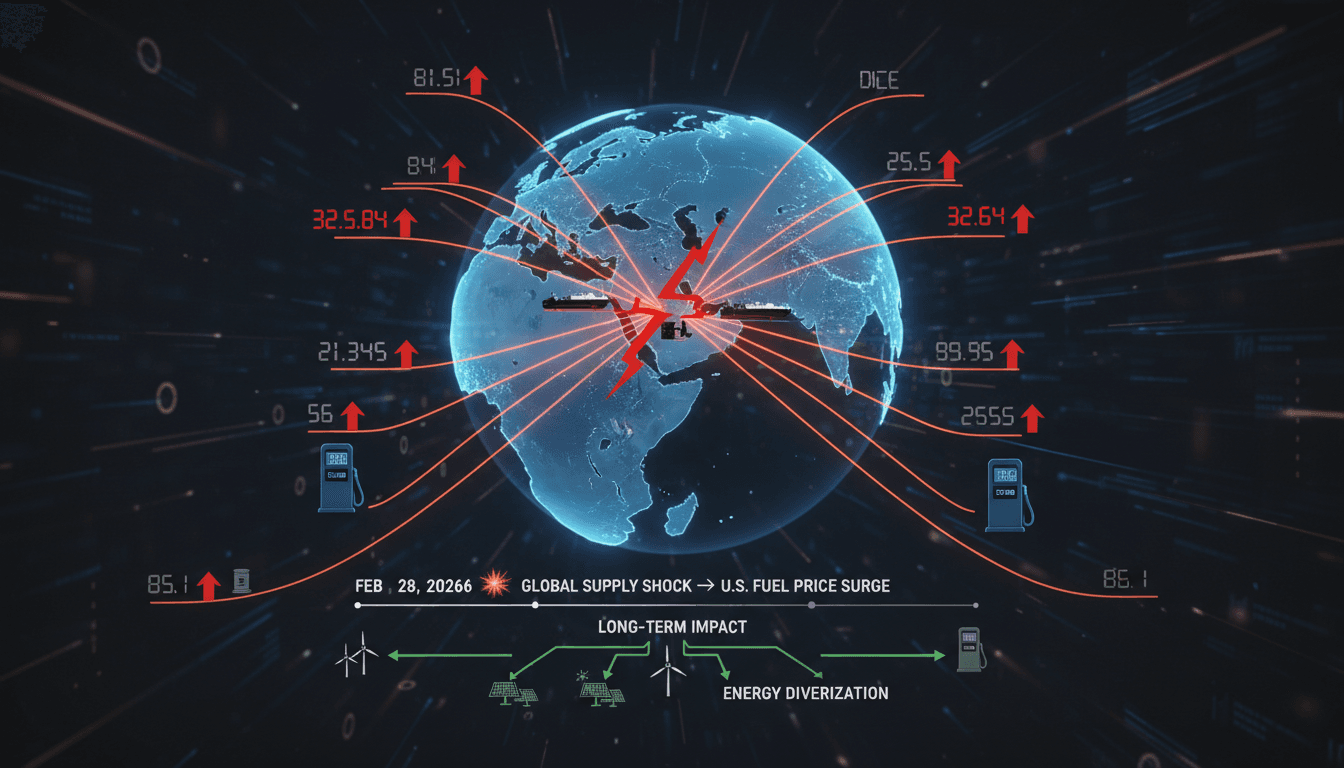
- On February 28, 2026, an attack on Iran halted tanker traffic through the Strait of Hormuz, a critical oil transit route.
- U.S. gasoline prices surged, exceeding $4 per gallon by late March, marking a 25% increase and contributing to rising inflation.
- Global shortages emerged, with countries like India and those in Europe facing severe fuel supply issues.
The context you actually need
- The Strait of Hormuz is vital, handling 20 million barrels of oil per day, which is one-fifth of global consumption.
- Preceding geopolitical tensions involved U.S. and Israeli actions against Iran, heightening energy risk and tightening supplies for import-reliant economies.
- Domestic U.S. production remains strong, but the global supply shock is felt acutely in regions dependent on imports, such as Europe and Asia.
What's really happening
The February 28 attack on Iran has triggered a significant disruption in tanker traffic through the Strait of Hormuz, a crucial chokepoint for global oil transport. This strait is responsible for the transit of approximately 20 million barrels of oil daily, which equates to about 20% of the world's oil consumption. The immediate consequence of this disruption was a sharp increase in oil prices, with U.S. gasoline prices rising above $4 per gallon for the first time since 2022. This spike represents a 25% increase in just one month, contributing to the hottest inflation rates seen since 2024.
The U.S. economy, while relatively insulated due to record domestic oil production, is still feeling the effects of this global supply shock. Diesel prices have escalated even more rapidly than gasoline, driven by structural tightness in the market. Meanwhile, countries heavily reliant on oil imports, such as India and those in Europe, are facing acute shortages. India has begun rationing liquefied petroleum gas (LPG), which is 90% imported via the Strait of Hormuz, and is experiencing delays in fertilizer supplies, 40% of which come from the Middle East. Europe is also on high alert, warning of potential jet fuel depletion within six weeks, as half of its jet fuel imports come from the region.
The aftermath of the disruption has led to significant economic repercussions. In March, U.S. inflation surged over 1% monthly, largely driven by gasoline prices that jumped more than 30%. The European Union is actively seeking to diversify its jet fuel sources, while the Dutch government has introduced tax breaks to alleviate rising fuel costs. In India, panic buying has led to further complications, and global airlines are curtailing routes in response to the crisis.
As the situation evolves, markets are bracing for sustained high prices, with the U.S. Energy Information Administration (EIA) forecasting Brent crude to remain around $96 per barrel. The potential for demand destruction looms, as economic slowdowns could further impact consumption patterns.
Who feels it first (and how)
- Consumers in the U.S.: Higher gasoline and diesel prices directly affect daily commuting and transportation costs.
- Import-dependent countries: Nations like India and those in Europe face immediate fuel shortages, impacting everything from transportation to food supply chains.
- Airlines and travel sectors: Increased fuel costs lead to higher ticket prices and potential route reductions, affecting travel plans and tourism.
What to watch next
- Fuel price trends: Monitor U.S. gasoline and diesel prices for signs of stabilization or further increases, as this will directly impact consumer spending.
- Geopolitical developments: Keep an eye on any diplomatic efforts or military actions involving Iran, as these could either exacerbate or alleviate the current crisis.
- Global supply chain adjustments: Watch for shifts in how countries source their fuel, particularly in Europe and Asia, as they seek alternatives to Middle Eastern imports.
The Strait of Hormuz is a critical chokepoint for global oil supply, and disruptions will lead to price increases.
Continued fuel shortages in import-dependent regions, particularly in Europe and Asia, as the situation unfolds.
The duration of the disruption and its long-term impact on global oil markets and consumer behavior.
Frequently Asked Questions
- Why it matters?
- This disruption in the Strait of Hormuz threatens global oil supply, impacting fuel prices and availability worldwide.
- What happened (in 30 seconds)?
- On February 28, 2026, an attack on Iran halted tanker traffic through the Strait of Hormuz, a critical oil transit route. U.S. gasoline prices surged, exceeding $4 per gallon by late March, marking a 25% increase and contributing to rising inflation. Global shortages emerged, with countries like India and those in Europe facing severe fuel supply issues.
- What's really happening?
- The February 28 attack on Iran has triggered a significant disruption in tanker traffic through the Strait of Hormuz, a crucial chokepoint for global oil transport. This strait is responsible for the transit of approximately 20 million barrels of oil daily, which equates to about 20% of the world's oil consumption. The immediate consequence of this disruption was a sharp increase in oil prices, with U.S. gasoline prices rising above $4 per gallon for the first time since 2022. This spike represe
- Who feels it first (and how)?
- Consumers in the U.S.: Higher gasoline and diesel prices directly affect daily commuting and transportation costs. Import-dependent countries: Nations like India and those in Europe face immediate fuel shortages, impacting everything from transportation to food supply chains. Airlines and travel sectors: Increased fuel costs lead to higher ticket prices and potential route reductions, affecting travel plans and tourism.
- What to watch next?
- Fuel price trends: Monitor U.S. gasoline and diesel prices for signs of stabilization or further increases, as this will directly impact consumer spending. Geopolitical developments: Keep an eye on any diplomatic efforts or military actions involving Iran, as these could either exacerbate or alleviate the current crisis. Global supply chain adjustments: Watch for shifts in how countries source their fuel, particularly in Europe and Asia, as they seek alternatives to Middle Eastern imports.
Business, investment, entrepreneurship, leadership, and innovation.
"Forbes is known for its coverage of business leaders, market trends, and entrepreneurial ventures with a pro-business editorial stance."
— A47 Editor
The U.S. Feels Higher Prices While The World Is Facing Fuel Shortages
Rising oil prices due to the ongoing crisis in the Strait of Hormuz are impacting the U.S. economy, with significant fuel shortages and supply disruptions reported globally. This situation reflects a deeper energy shock that is unfolding as tensions ...
Global business headlines with AI angles.
"General business outlet that frequently covers AI."
— A47 Editor
Strait of Hormuz Remains Largely Closed as US-Iran Tensions Escalate Despite Extended Ceasefire
The Strait of Hormuz remains largely closed to commercial traffic as U.S. naval forces search for Iranian mines while Iran continues to seize vessels, despite a fragile ceasefire entering its third week and indirect talks in Pakistan.
Macro commentary, policy analysis, growth/inflation themes, and global outlooks.
"Contextual macro coverage that complements day-to-day market headlines."
— A47 Editor
Strait of Hormuz deadlock deepens as U.S. blockade halts shipping
The deadlock in the Strait of Hormuz has intensified as the U.S. blockade has halted shipping traffic, following Iran's re-closure of the strait to maritime vessels. This escalation comes amid conflicting statements from Iranian officials and a backd...
Business, investment, entrepreneurship, leadership, and innovation.
"Forbes is known for its coverage of business leaders, market trends, and entrepreneurial ventures with a pro-business editorial stance."
— A47 Editor
US Blockade On Iran May Bring Back Prize And Booty
The U.S. Navy has seized an Iranian ship for violating the blockade imposed by the United States, raising concerns about the implications for international maritime law and trade. This incident follows a series of maritime confrontations, including t...
Global business headlines with AI angles.
"General business outlet that frequently covers AI."
— A47 Editor
US Energy Exports Smash Records as Hormuz Blockade Creates Global Supply Crisis
U.S. energy exports reached record levels in April 2026 as the ongoing blockade of the Strait of Hormuz, a vital maritime route for global oil and gas, has redirected supply chains, positioning American producers as key suppliers amid rising tensions...
Global markets, investing, and macroeconomics from a premier financial newsroom.
"Bloomberg is respected for in-depth financial reporting and data-driven analysis."
— A47 Editor
Blockade Standoff Keeps Traffic in Strait of Hormuz Near Zero
The ongoing blockade in the Strait of Hormuz has led to a significant reduction in maritime traffic, as Iran downplays the likelihood of direct negotiations with the United States. U.S. envoys are expected to travel to Islamabad, Pakistan, for discus...
Business, investment, entrepreneurship, leadership, and innovation.
"Forbes is known for its coverage of business leaders, market trends, and entrepreneurial ventures with a pro-business editorial stance."
— A47 Editor
What Hormuz Whiplash Means For Markets
Recent developments in the Strait of Hormuz have led to significant disruptions in shipping, causing increased volatility and uncertainty in global markets. The ongoing conflict in Iran has resulted in a blockade that restricts vessel movements, with...
Regional coverage and analysis focused on politics, diplomacy, and business across the Middle East.
"Al-Monitor is known for analytical reporting on Middle East politics and policy developments."
— A47 Editor
Iran war leaves seafarers stranded in the Gulf
Ankit Yadav, an Indian seafarer, has been stranded for over two weeks at an inland Iranian port, surviving on limited rations alongside three fellow mariners. This situation reflects the broader impact of the ongoing war in Iran, which has disrupted ...
Regional coverage and analysis focused on politics, diplomacy, and business across the Middle East.
"Al-Monitor is known for analytical reporting on Middle East politics and policy developments."
— A47 Editor
Only five ships pass through Strait of Hormuz in 24 hours
In the past 24 hours, only five ships, including one Iranian oil products tanker, have navigated through the Strait of Hormuz, a significant drop from the average of 140 daily passages prior to the onset of the Iran war on February 28. This decline f...
International stories from NPR’s global desk.
"NPR is an American public media organization known for thoughtful reporting and a slightly left-leaning editorial tone."
— A47 Editor
Thousands of seafarers stranded by ongoing U.S. blockade on Strait of Hormuz
The ongoing U.S. blockade on Iranian ports has left thousands of seafarers stranded on ships, exacerbating an already tense situation in the Strait of Hormuz. This blockade, which has been extended indefinitely, has resulted in significant economic r...
24/7 international news from a French perspective in multiple languages.
"France 24 is viewed as a globally focused outlet with balanced coverage and a European perspective."
— A47 Editor
Hormuz standoff chokes 20% of oil supply
The ongoing standoff in the Strait of Hormuz has intensified, with the United States and Iran engaged in a struggle for control over this critical maritime route, which accounts for approximately 20% of global oil supply. Recent incidents include the...
European coverage of Middle East politics and security issues.
"France 24 offers international reporting with a European editorial perspective."
— A47 Editor
Hormuz standoff chokes 20% of oil supply
The ongoing standoff in the Strait of Hormuz has intensified, with the United States and Iran engaged in a struggle for control over this critical maritime route, which accounts for approximately 20% of global oil supply. Recent incidents include the...