
US-Iran Ceasefire Announcement Influences Federal Reserve Rate Cut Expectations
Here's what it means for you.
If you’re involved in global finance or energy markets, the recent ceasefire could reshape your investment strategies.
Why it matters
This ceasefire has significant implications for oil prices and Federal Reserve monetary policy, affecting inflation expectations and market stability.
What happened (in 30 seconds)
- April 7, 2026: President Trump announces a two-week ceasefire with Iran, easing geopolitical tensions.
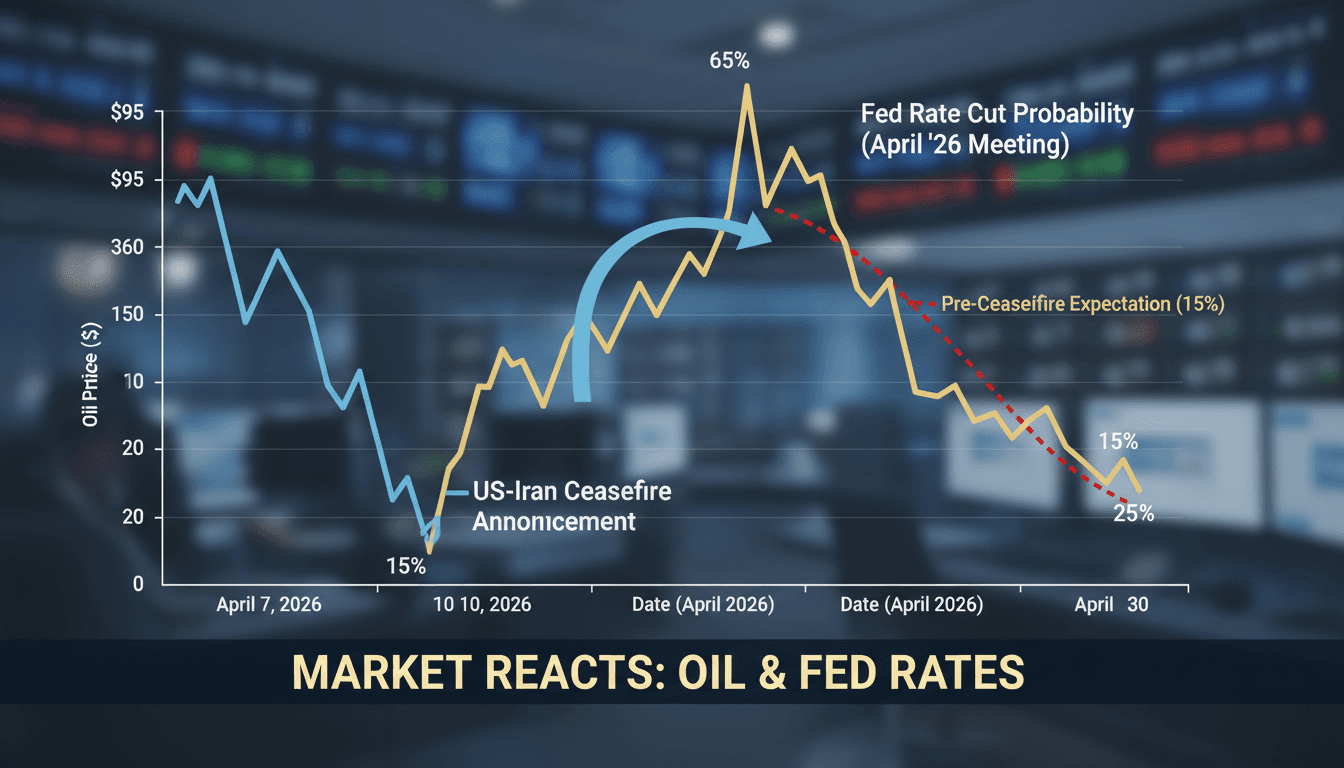
- Market Reaction: Oil prices drop 15%, and traders shift expectations for Federal Reserve interest rate cuts, with probabilities spiking to 65%.
- Current Status: The ceasefire is fragile, with reported violations, including Israeli strikes and Iranian responses.
The context you actually need
- Escalation of Conflict: The Iran war intensified in early March 2026, with U.S. and Israeli military actions leading to a 30% surge in oil prices.
- Inflation Fears: Rising energy costs prompted the Federal Reserve to signal potential interest rate hikes, shifting market expectations away from cuts.
- Market Recovery: Following the ceasefire announcement, global markets rallied, with significant gains in U.S. stocks and a notable drop in Treasury yields.
What's really happening
The ceasefire between the U.S. and Iran is a critical pivot point for both geopolitical stability and economic conditions. The announcement on April 7, 2026, marked a significant de-escalation in a conflict that had seen oil prices soar and inflation fears spike. Prior to the ceasefire, the ongoing war had driven crude oil prices up by 30% due to supply chain disruptions and heightened geopolitical risks, particularly around the Strait of Hormuz, a vital oil shipping route.
The immediate aftermath of the ceasefire saw a dramatic 15% drop in oil prices, bringing West Texas Intermediate (WTI) down to $96.58 per barrel. This decline is crucial as it directly alleviates inflationary pressures that had been mounting due to high energy costs. As oil prices fell, traders recalibrated their expectations for Federal Reserve interest rate cuts, with initial probabilities soaring to 65% before settling around 25%. This reflects a market sentiment that lower energy costs could mitigate inflation risks, reducing the urgency for rate hikes.
However, the ceasefire's fragility is underscored by reported violations, including Israeli strikes in Lebanon and Iranian responses in the Gulf. Such incidents could reignite tensions and impact market stability. The White House has tied the continuation of the ceasefire to the reopening of the Strait of Hormuz, emphasizing its importance for global oil supply and economic health.
In the broader context, the ceasefire has implications beyond immediate market reactions. The Dubai Financial Market index surged over 8%, marking its largest intraday gain in six years. This recovery reverses approximately $120 billion in losses incurred during the conflict, benefiting local economies reliant on tourism and stable markets. Residents in Dubai and surrounding regions may experience a renewed sense of security and economic opportunity as fears of infrastructure attacks and supply disruptions diminish.
Who feels it first (and how)
- Market Traders: Adjust their strategies based on fluctuating interest rate expectations and oil prices.
- Energy Sector: Companies involved in oil production and distribution will see immediate impacts on pricing and profitability.
- Investors: Those holding stocks in affected markets, especially in sectors sensitive to energy costs, will experience volatility.
- Consumers: Individuals may see changes in fuel prices and overall cost of living as inflationary pressures ease.
What to watch next
- Federal Reserve Meetings: Upcoming meetings will be critical to gauge the Fed's response to changing inflation dynamics and interest rate policies.
- Geopolitical Developments: Monitor for any violations of the ceasefire that could reignite tensions and impact oil prices.
- Oil Price Trends: Continued fluctuations in oil prices will be a key indicator of market stability and inflation expectations.
The ceasefire has led to an immediate drop in oil prices and a shift in market expectations for Federal Reserve rate cuts.
Continued geopolitical tensions could lead to further market volatility and affect global economic conditions.
The long-term sustainability of the ceasefire and its impact on broader geopolitical relations remains uncertain.
Frequently Asked Questions
- Why it matters?
- This ceasefire has significant implications for oil prices and Federal Reserve monetary policy, affecting inflation expectations and market stability.
- What happened (in 30 seconds)?
- April 7, 2026: President Trump announces a two-week ceasefire with Iran, easing geopolitical tensions. Market Reaction: Oil prices drop 15%, and traders shift expectations for Federal Reserve interest rate cuts, with probabilities spiking to 65%. Current Status: The ceasefire is fragile, with reported violations, including Israeli strikes and Iranian responses.
- What's really happening?
- The ceasefire between the U.S. and Iran is a critical pivot point for both geopolitical stability and economic conditions. The announcement on April 7, 2026, marked a significant de-escalation in a conflict that had seen oil prices soar and inflation fears spike. Prior to the ceasefire, the ongoing war had driven crude oil prices up by 30% due to supply chain disruptions and heightened geopolitical risks, particularly around the Strait of Hormuz, a vital oil shipping route. The immediate afterm
- Who feels it first (and how)?
- Market Traders: Adjust their strategies based on fluctuating interest rate expectations and oil prices. Energy Sector: Companies involved in oil production and distribution will see immediate impacts on pricing and profitability. Investors: Those holding stocks in affected markets, especially in sectors sensitive to energy costs, will experience volatility. Consumers: Individuals may see changes in fuel prices and overall cost of living as inflationary pressures ease.
- What to watch next?
- Federal Reserve Meetings: Upcoming meetings will be critical to gauge the Fed's response to changing inflation dynamics and interest rate policies. Geopolitical Developments: Monitor for any violations of the ceasefire that could reignite tensions and impact oil prices. Oil Price Trends: Continued fluctuations in oil prices will be a key indicator of market stability and inflation expectations.
Macro commentary, policy analysis, growth/inflation themes, and global outlooks.
"Contextual macro coverage that complements day-to-day market headlines."
— A47 Editor
Fed rate cut bets revived, a bit, by Iran war ceasefire
A two-week ceasefire agreement between the United States and Iran has led to a revival of bets on potential interest rate cuts by the Federal Reserve, as traders respond to a significant drop in oil prices. This development comes amid ongoing geopoli...
Business, investment, entrepreneurship, leadership, and innovation.
"Forbes is known for its coverage of business leaders, market trends, and entrepreneurial ventures with a pro-business editorial stance."
— A47 Editor
More Interest Rate Cuts Could Happen If Iran War Drags On, Fed Says
The Federal Reserve has indicated that further interest rate cuts could occur if the ongoing conflict in Iran continues to escalate, particularly as rising oil prices have increased inflationary pressures. This situation has led to heightened specula...
UAE-based English-language newspaper covering regional politics, economics, and global affairs.
"The National reflects Emirati policy perspectives while maintaining international editorial standards."
— A47 Editor
Fed minutes: US central bank still sees rate cut despite Iran war uncertainty
The US central bank's recent minutes indicate a continued expectation for interest rate cuts, despite uncertainties stemming from the ongoing war in Iran. This situation is compounded by a two-week ceasefire between the US and Iran, which aims to eas...