
Bank of England signals potential tolerance for inflation above target to support economy
Here's what it means for you.
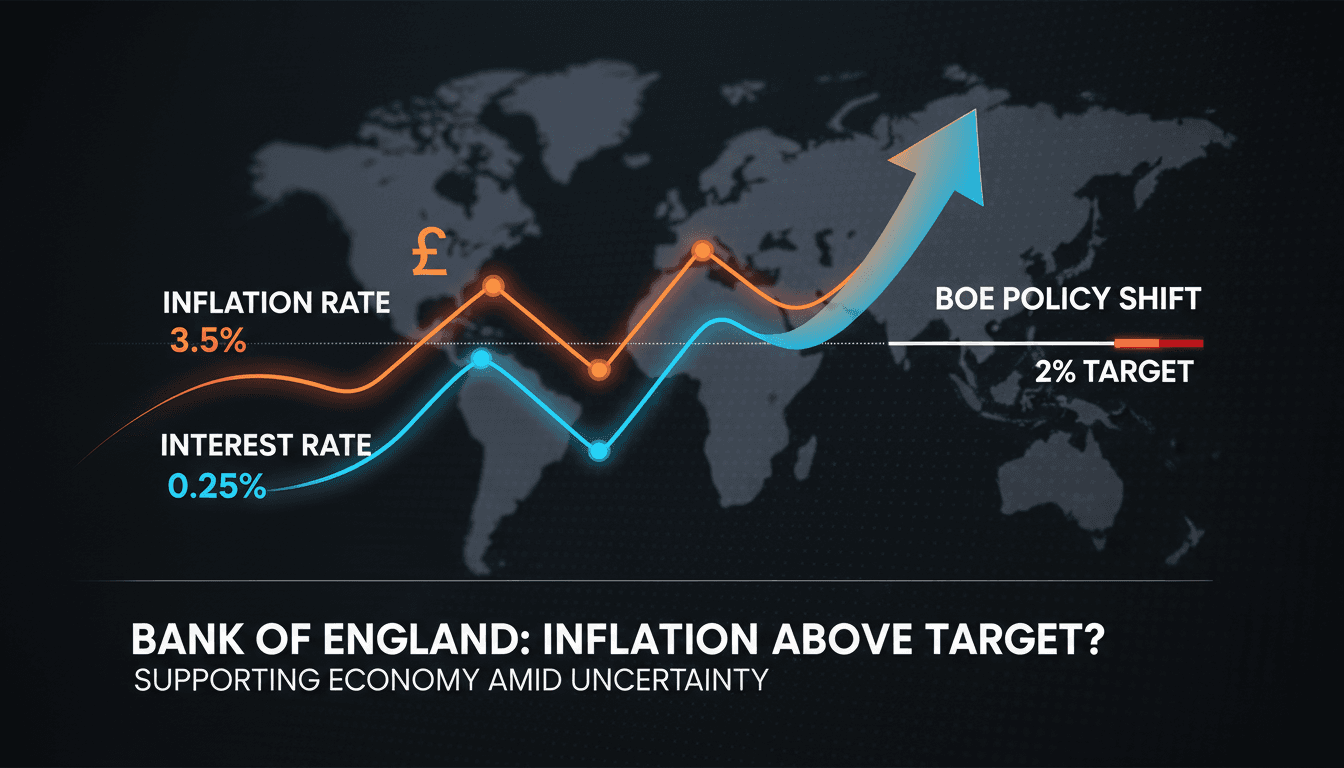
The Bank of England's recent indication of a willingness to tolerate inflation above its 2% target could have significant implications for the UK economy. This approach aims to support economic recovery amid ongoing uncertainties, particularly those stemming from geopolitical tensions. Stakeholders, including consumers and businesses, may need to adjust their expectations regarding interest rates and inflation trends. As the central bank navigates these challenges, its decisions will likely influence market dynamics and consumer confidence. The potential for higher inflation tolerance could reshape monetary policy in the coming months.
What happened
Governor Andrew Bailey of the Bank of England announced that the central bank may temporarily accept inflation exceeding its 2% target to support the UK's struggling economy. This statement was made during an economic conference in Reykjavík, Iceland, where Bailey emphasized the need to avoid second-round price effects. The decision comes as the UK economy faces softness and uncertainty, compounded by rising interest rates on new mortgage loans due to previous policy tightening.
Bailey's remarks signal a shift in the BOE's approach to monetary policy, reflecting the current economic landscape influenced by various factors, including the ongoing conflict in the Middle East. The central bank's willingness to tolerate higher inflation could have far-reaching implications for economic growth and stability.
The Context
The UK economy is currently grappling with significant challenges, including rising inflation and increased interest rates. The Bank of England has already tightened its monetary policy, which has led to higher costs for new mortgage loans. These developments have created a complex environment for consumers and businesses alike, as they navigate the implications of tighter financial conditions.
Bailey's comments come at a critical time when economic uncertainties are heightened, particularly due to geopolitical tensions that could further impact the UK's economic outlook. The BOE's approach to inflation and interest rates will be crucial in determining the trajectory of the economy as it seeks to recover from these challenges.
Takeaway
The Bank of England's willingness to tolerate inflation above its target may influence future monetary policy decisions significantly. As the central bank continues to assess inflation trends, stakeholders should monitor potential changes in interest rate policies. The BOE's actions will be pivotal in shaping the economic landscape and guiding recovery efforts in the UK.
In the coming months, it will be essential to observe how inflation trends evolve and how the BOE responds to these developments. The central bank's strategy will play a critical role in determining the overall health of the UK economy.
Pan-Arab news coverage spanning politics, business, sports, and regional affairs.
"Asharq Al-Awsat reflects a broad Arab editorial perspective with strong attention to regional geopolitics."
— A47 Editor
محافظ «بنك إنجلترا» يربط التسامح مع التضخم المرتفع بصدمة الحرب وتباطؤ النمو
Andrew Bailey, the Governor of the Bank of England, stated on Friday that allowing inflation to remain above the bank's target of 2 percent can be justified in the current phase, linking this tolerance to the impacts of war shocks and a slowdown in g...
Macro commentary, policy analysis, growth/inflation themes, and global outlooks.
"Contextual macro coverage that complements day-to-day market headlines."
— A47 Editor
BOE’s Bailey welcomes drop in rate hike bets, warns on Middle East war
Andrew Bailey, Governor of the Bank of England (BOE), expressed relief over a decline in expectations for interest rate hikes, while cautioning that the ongoing conflict in the Middle East poses significant risks to economic stability.
Global political, business, and cultural coverage from WSJ international desks.
"The Wall Street Journal offers extensive international reporting with a reputation for financial insight and a center-right editorial stance."
— A47 Editor
BOE Can Tolerate Inflation That Is Temporarily Above Target, Gov. Bailey Says
Governor Andrew Bailey of the Bank of England (BOE) stated that the central bank can tolerate inflation levels that temporarily exceed its target, emphasizing that the BOE has already tightened its monetary policy and that interest rates on new mortg...
Global markets, investing, and macroeconomics from a premier financial newsroom.
"Bloomberg is respected for in-depth financial reporting and data-driven analysis."
— A47 Editor
BOE May Bear Temporary Above-Target Inflation to Support UK, Bailey Says
Bank of England Governor Andrew Bailey announced that the central bank may temporarily accept inflation rates exceeding the 2% target to bolster the UK's struggling economy, provided that no secondary price effects arise. This statement was made duri...