
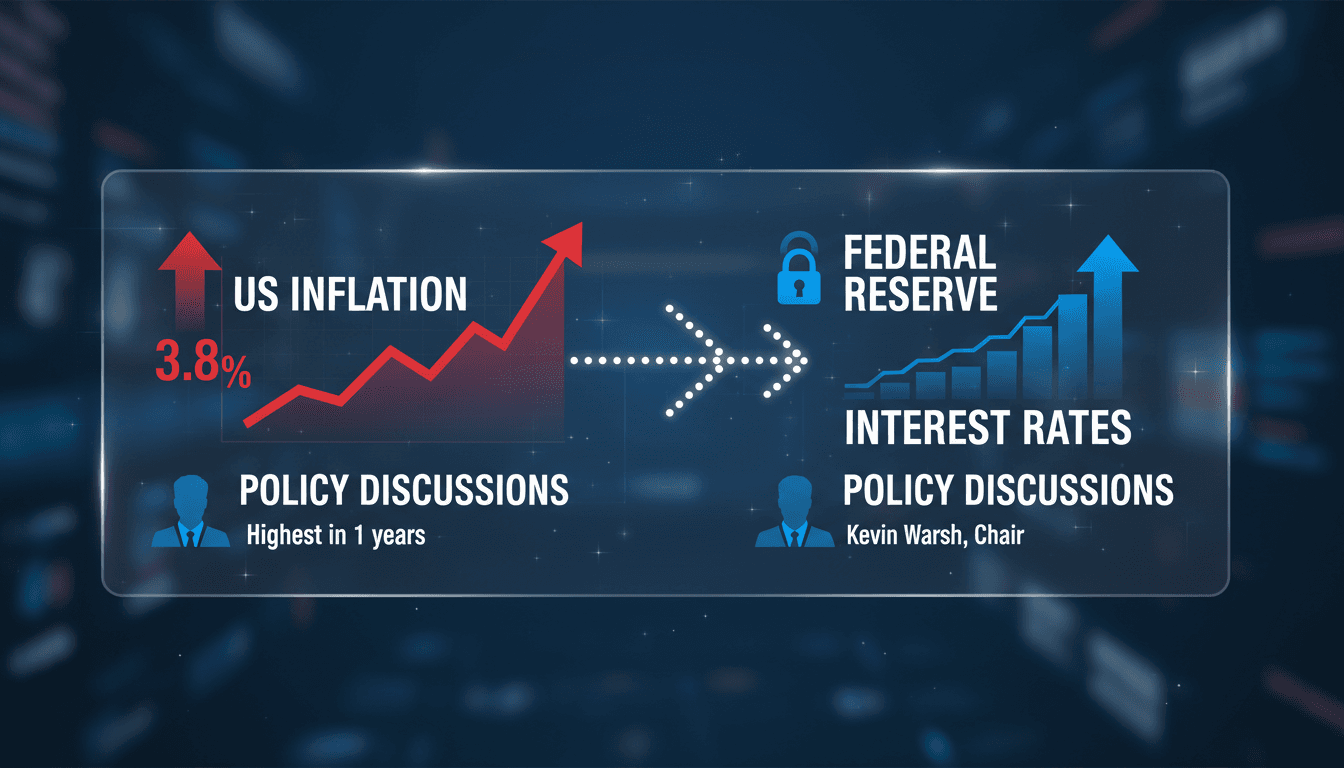
US inflation rises to 3.8% prompting Federal Reserve policy discussions
Here's what it means for you.
The recent rise in U.S. inflation to 3.8% signals potential shifts in monetary policy that could affect interest rates and economic stability. As the Federal Reserve navigates these pressures under new Chair Kevin Warsh, market participants should prepare for possible adjustments in policy that may influence borrowing costs and investment strategies. The implications of these changes could resonate across various sectors, impacting consumer spending and business investment.
What happened
Inflation in the U.S. surged to 3.8% in April, marking the highest level in nearly three years. This significant increase has prompted discussions regarding the Federal Reserve's monetary policy, particularly under the leadership of newly appointed Chair Kevin Warsh. While a key inflation measure showed a slight decrease, the overall inflation rates have raised concerns about potential interest rate hikes.
The Dallas Fed's trimmed mean inflation gauge indicated a year-over-year inflation rate of 2.3% in April, while core inflation reached 3.3%, the highest since November 2023. Analysts are cautioning that geopolitical and economic factors may lead to earlier-than-expected interest rate adjustments, complicating the economic landscape.
The Context
The current inflationary pressures come at a critical time as Kevin Warsh officially begins his tenure as Federal Reserve Chair. His leadership is being closely monitored, especially given the mixed signals from various inflation measures. The rise in inflation rates has raised concerns among policymakers and analysts, who are now tasked with navigating these complexities to ensure economic stability.
The economic backdrop includes various factors contributing to inflation, including supply chain disruptions and rising consumer demand. As the Federal Reserve considers its next steps, the implications of its decisions will be felt across the economy, influencing everything from consumer confidence to investment strategies.
Takeaway
Looking ahead, the Federal Reserve's upcoming meetings will be crucial in determining potential interest rate decisions. Market participants should keep a close eye on inflation reports for further trends that could impact economic stability. The mixed signals from inflation measures suggest that the Fed may need to act decisively to address rising inflation rates.
As the economic landscape remains uncertain, the Federal Reserve's response will play a pivotal role in shaping future market conditions. Stakeholders across various sectors should prepare for potential shifts in policy that could affect their operations and financial strategies.
Corporate finance news, M&A, deals, and executive interviews.
"Finance Monthly serves a professional readership with corporate finance coverage."
— A47 Editor
Federal Reserve Inflation Split Starts Shaking Confidence Across U.S. Economy
The Federal Reserve's inflation measure, favored by new Chair Kevin Warsh, showed signs of cooling in April, but inflation still surged to 3.8%, the highest level in nearly three years. This situation raises concerns about the Fed's ability to implem...
Corporate leadership, finance, technology, and market trends.
"Fortune covers financial trends, leadership, and innovation with a pragmatic editorial approach."
— A47 Editor
Inflation hit the highest level in almost three years as the Fed releases the first inflation report under new chair Kevin Warsh
Inflation surged to 3.8% in April, marking the highest level since May 2023, while core inflation reached 3.3%, the highest since November 2023. This report is the first under the leadership of new Federal Reserve Chair Kevin Warsh, who has recently ...
Stock market news, investing ideas, and trading analysis.
"TheStreet provides market news and retail-investor-focused analysis."
— A47 Editor
Top analyst hurls new warning on Fed rate-hike odds
Kevin Warsh's initial week as Chair of the Federal Reserve is marked by heightened hawkish expectations, suggesting a potential increase in the Federal Funds Rate sooner than anticipated due to ongoing geopolitical and economic pressures.