
NATO Allies Reject U.S. Naval Blockade of Strait of Hormuz Amid Alliance Strain
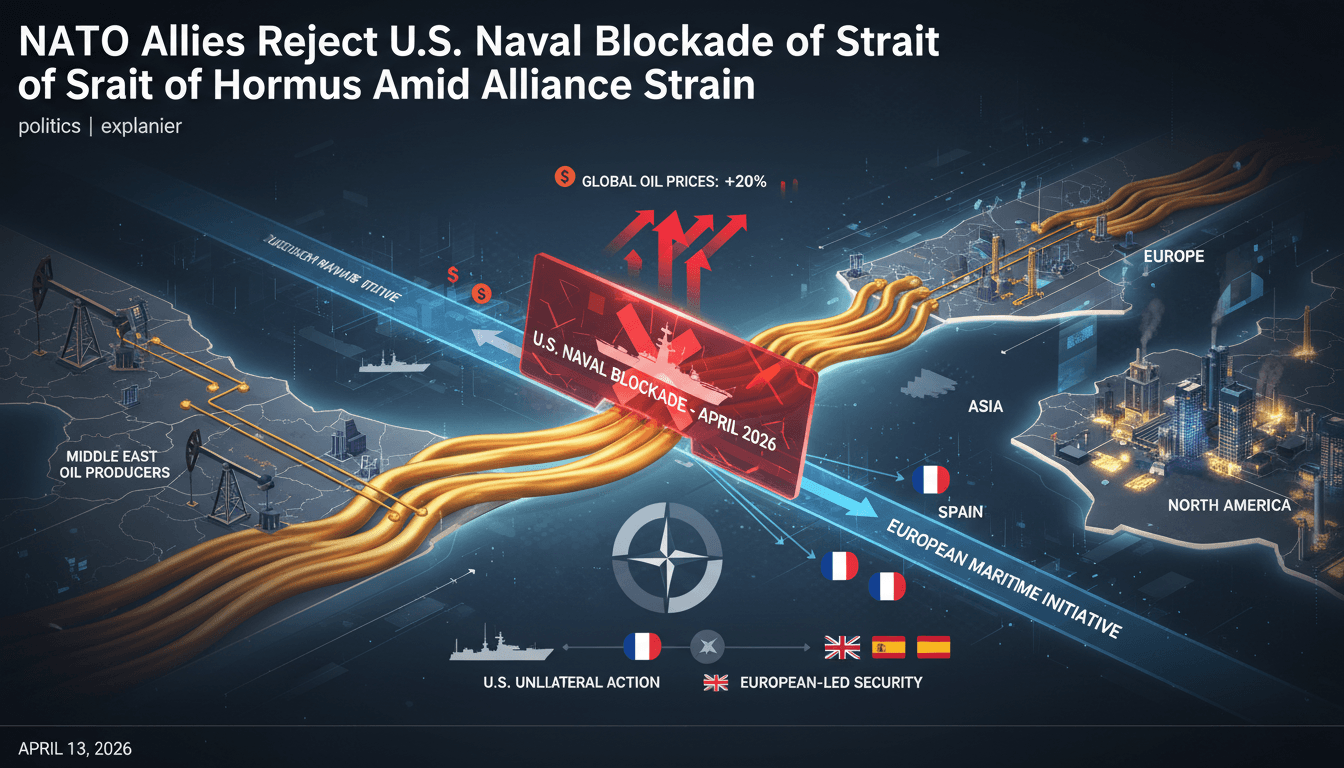
Here's what it means for you.
If you rely on global oil markets, the tensions in the Strait of Hormuz could lead to increased fuel prices and supply chain disruptions.
Why it matters
The refusal of key NATO allies to support the U.S. blockade signals a shift in transatlantic relations and raises concerns about global oil supply stability.
What happened (in 30 seconds)
- On April 13, 2026, NATO allies Britain, France, and Spain declined to participate in a U.S. naval blockade of Iranian ports.
- This decision followed the collapse of ceasefire negotiations in Islamabad and reflects growing tensions within the NATO alliance.
- As a result, crude oil prices surged over 8-10% above $100 per barrel, impacting global markets and regional stability.
The context you actually need
- The blockade was initiated after Iran closed the Strait of Hormuz, disrupting 20-25% of global seaborne oil trade.
- European leaders are advocating for a separate multinational effort to secure navigation only after hostilities cease, prioritizing de-escalation.
- President Trump criticized NATO for insufficient support, highlighting fractures in the alliance's unity and commitment to collective defense.
What's really happening
The decision by NATO allies to abstain from the U.S. blockade of Iranian ports is rooted in a complex interplay of geopolitical strategy, economic interests, and alliance dynamics. The backdrop of the 2026 Iran War, which began with U.S.-Israeli airstrikes and the assassination of Iran's Supreme Leader, has escalated tensions in the region. The closure of the Strait of Hormuz by Iran has significant implications, as it is a critical chokepoint for global oil trade, with approximately 20.3 million barrels per day transiting through it.
The U.S. response, which included airstrikes and a naval blockade, was met with reluctance from NATO allies who are prioritizing diplomatic solutions over military escalation. European leaders, particularly from Britain, France, and Spain, are advocating for a multinational approach that emphasizes securing navigation only after a ceasefire is established. This reflects a broader trend of European nations seeking to distance themselves from unilateral U.S. military actions, which they perceive as exacerbating regional instability.
The implications of this rift are profound. As oil prices surge due to the blockade, countries dependent on oil imports, such as those in Europe and Asia, may face economic pressures. The U.S. blockade could lead to retaliatory actions from Iran, further destabilizing the region and potentially impacting global oil supply chains. The situation is compounded by the proximity of Dubai, where residents are already experiencing elevated fuel costs and supply chain disruptions, as oil prices exceed $100 per barrel.
Moreover, the U.S. administration's criticism of NATO for its lack of support could lead to long-term shifts in alliance dynamics, with European nations reassessing their military commitments and strategies in the face of U.S. unilateralism. The failure of the Islamabad ceasefire talks underscores the challenges of achieving a diplomatic resolution, leaving the region in a precarious state.
Who feels it first (and how)
- Oil consumers: Higher fuel prices will directly impact households and businesses reliant on oil.
- Logistics companies: Supply chain disruptions may lead to delays and increased costs for shipping and transportation.
- Investors: Stock market volatility in response to rising oil prices could affect portfolios, particularly in energy sectors.
- Residents of Dubai: Increased fuel costs and potential shortages threaten aviation, desalination, and commerce in this trade-dependent hub.
What to watch next
- Oil price fluctuations: Monitor how crude oil prices respond to ongoing tensions and potential retaliatory actions from Iran, as this will impact global markets.
- NATO's strategic direction: Watch for shifts in NATO's collective defense strategy and how European nations may redefine their military commitments in light of U.S. actions.
- Diplomatic efforts: Keep an eye on any new initiatives for peace talks or multinational missions aimed at securing navigation in the Strait of Hormuz.
The U.S. blockade of Iranian ports is currently enforced, and NATO allies have declined to participate.
Oil prices will remain volatile as tensions in the region escalate, impacting global markets.
The long-term implications for NATO's unity and collective defense commitments in response to U.S. unilateral actions.
Frequently Asked Questions
- Why it matters?
- The refusal of key NATO allies to support the U.S. blockade signals a shift in transatlantic relations and raises concerns about global oil supply stability.
- What happened (in 30 seconds)?
- On April 13, 2026, NATO allies Britain, France, and Spain declined to participate in a U.S. naval blockade of Iranian ports. This decision followed the collapse of ceasefire negotiations in Islamabad and reflects growing tensions within the NATO alliance. As a result, crude oil prices surged over 8-10% above $100 per barrel, impacting global markets and regional stability.
- What's really happening?
- The decision by NATO allies to abstain from the U.S. blockade of Iranian ports is rooted in a complex interplay of geopolitical strategy, economic interests, and alliance dynamics. The backdrop of the 2026 Iran War, which began with U.S.-Israeli airstrikes and the assassination of Iran's Supreme Leader, has escalated tensions in the region. The closure of the Strait of Hormuz by Iran has significant implications, as it is a critical chokepoint for global oil trade, with approximately 20.3 millio
- Who feels it first (and how)?
- Oil consumers: Higher fuel prices will directly impact households and businesses reliant on oil. Logistics companies: Supply chain disruptions may lead to delays and increased costs for shipping and transportation. Investors: Stock market volatility in response to rising oil prices could affect portfolios, particularly in energy sectors. Residents of Dubai: Increased fuel costs and potential shortages threaten aviation, desalination, and commerce in this trade-dependent hub.
- What to watch next?
- Oil price fluctuations: Monitor how crude oil prices respond to ongoing tensions and potential retaliatory actions from Iran, as this will impact global markets. NATO's strategic direction: Watch for shifts in NATO's collective defense strategy and how European nations may redefine their military commitments in light of U.S. actions. Diplomatic efforts: Keep an eye on any new initiatives for peace talks or multinational missions aimed at securing navigation in the Strait of Hormuz.
Global business headlines with AI angles.
"General business outlet that frequently covers AI."
— A47 Editor
U.S. NATO Allies Won't Join Blockade Of Strait Of Hormuz As Alliance Tensions Continue
Two key NATO members have declined to participate in the U.S. blockade of the Strait of Hormuz, highlighting ongoing tensions between Washington and several alliance members. This decision follows President Trump's announcement of the blockade after ...
Regional coverage and analysis focused on politics, diplomacy, and business across the Middle East.
"Al-Monitor is known for analytical reporting on Middle East politics and policy developments."
— A47 Editor
NATO allies refuse to join Trump's Strait of Hormuz blockade
NATO allies have declined to participate in President Donald Trump's plan to blockade the Strait of Hormuz, a strategic maritime route, following the collapse of U.S.-Iran peace talks. This decision has heightened tensions within NATO and raised conc...
U.S. political news and right-leaning commentary.
"Fox News is a highly influential conservative news outlet known for right-leaning political commentary and coverage."
— A47 Editor
Trump voices frustration with NATO, says Iranian navy ‘destroyed’ as US preps for blockade
President Trump expressed frustration with NATO allies while announcing that Iran's navy has been destroyed and confirming a U.S. Navy blockade of the Strait of Hormuz. This blockade follows failed peace talks with Iran, aimed at cutting off the regi...
International coverage from The Guardian's global desks.
"The Guardian is known for its progressive editorial stance and in-depth analysis."
— A47 Editor
UK will not join any Trump blockade of strait of Hormuz
The UK has confirmed it will not participate in any blockade of the Strait of Hormuz, distancing itself from President Donald Trump's recent proposal for such action, which he claimed would involve NATO allies. This decision comes amid escalating ten...
Arabic-language political and world news coverage for UAE readers.
"Emarat Al Youm world coverage usually presents international developments through a UAE and Arab audience lens."
— A47 Editor
ترامب: مستعدون للقضاء على إيران في اللحظة المناسبة بعد فشل المفاوضات ترامب: مستعدون للقضاء على إيران في اللحظة المناسبة بعد فشل المفاوضات
President Donald Trump announced that the U.S. Navy is prepared to intercept vessels in international waters that have paid tolls to Iran, following the failure of recent peace negotiations aimed at addressing tensions between the U.S. and Iran. This...
Arabic-language UAE newspaper coverage focused on domestic affairs, public institutions, business, society, and regional developments.
"Al Khaleej coverage generally reflects a mainstream UAE editorial lens with strong attention to public affairs, institutions, and regional developments."
— A47 Editor
ترامب: نخوض محادثات معمقة مع إيران.. وسننتصر على كل حال
U.S. President Donald Trump announced that the United States is currently engaged in 'in-depth talks' with Iran, asserting that Washington is in complete control and that the outcome will favor the U.S., regardless of whether a formal agreement is re...