
UK Consumer Confidence Hits Lowest Level Since 2023 Amid US-Iran Tensions
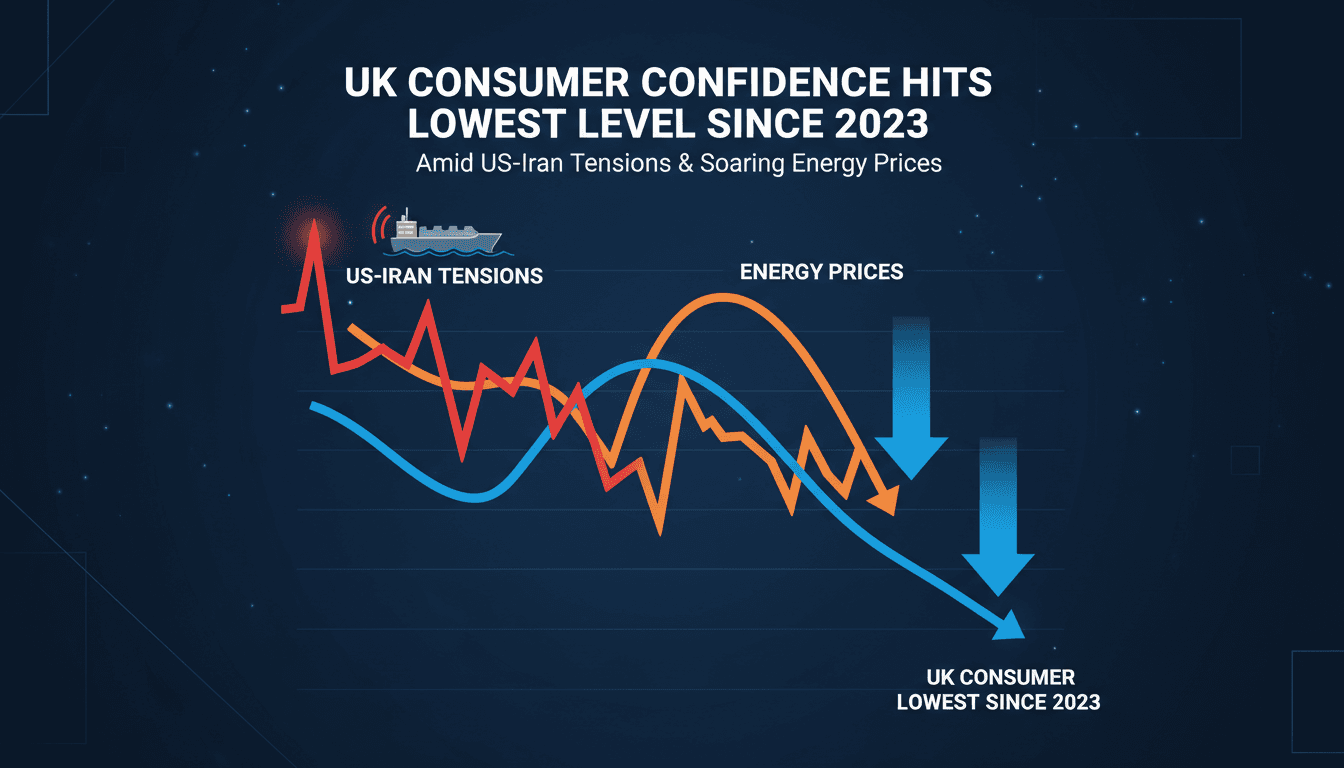
Here's what it means for you.
If you’re in the UK, expect tighter budgets and cautious spending as economic pressures mount.
Why it matters
The ongoing geopolitical tensions are exacerbating inflation and consumer sentiment, directly impacting your purchasing power.
What happened (in 30 seconds)
- UK consumer confidence indices hit their lowest levels since 2023, with S&P Global's index dropping to 42.3.
- Geopolitical instability in the Strait of Hormuz, following US-Iran tensions, is driving energy prices higher.
- Domestic economic pressures include the highest inflation rate in the G7 and rising mortgage costs, compounding consumer anxiety.
The context you actually need
- The US-Iran conflict escalated in February 2026, leading to a temporary closure of the Strait of Hormuz, a critical oil shipping route.
- UK inflation is currently the highest among G7 nations, with rising costs affecting everyday expenses and consumer confidence.
- Recent surveys from S&P Global and Deloitte indicate a significant decline in consumer sentiment, reflecting fears of economic instability.
What's really happening
The recent downturn in UK consumer confidence is a direct consequence of escalating tensions in the Strait of Hormuz, a vital artery for global oil supply. The conflict intensified in late February 2026 when US-Israeli strikes prompted Iran to close the strait, leading to fears of disrupted oil shipments. This geopolitical instability has resulted in a spike in energy prices, which is particularly concerning for UK consumers already grappling with the highest inflation rate in the G7.
As of April 2026, the S&P Global UK Consumer Sentiment Index fell to 42.3, marking the lowest level in 33 months. This decline is not merely a reflection of consumer sentiment but is indicative of broader economic pressures. The Deloitte quarterly tracker also recorded its lowest score since Q3 2023, highlighting a significant erosion of confidence among UK consumers. The combination of rising mortgage costs, stagnant wage growth, and a fragile labor market has created a perfect storm for consumer anxiety.
The UK government, led by Prime Minister Keir Starmer, is under pressure to respond to these economic challenges. Starmer has pledged to explore "every lever" for cost relief, emphasizing the need for de-escalation in the US-Iran conflict to stabilize energy prices. However, the recent US seizure of an Iranian vessel has further strained relations, leading to renewed threats from Iran and fears of a complete closure of the Strait of Hormuz.
This situation is compounded by the fact that UK consumers are already facing budget constraints due to rising living costs. The Rightmove report indicated only a modest 0.8% increase in house prices, reflecting a cautious market. The sterling has also shown signs of weakness, dipping 0.1% against the USD, which could further exacerbate inflationary pressures as imported goods become more expensive.
In summary, the interplay between geopolitical tensions and domestic economic conditions is creating a challenging environment for UK consumers. As energy prices rise and confidence wanes, the implications for spending and investment are significant, potentially leading to a prolonged period of economic uncertainty.
Who feels it first (and how)
- UK Consumers: Facing higher costs of living and reduced purchasing power.
- Retail Sector: Experiencing decreased consumer spending and cautious buying behavior.
- Real Estate Market: Sluggish growth in house prices due to rising mortgage rates and economic uncertainty.
- Investors: Increased caution and volatility in currency markets, particularly affecting the GBP.
What to watch next
- Energy Prices: Monitor fluctuations in oil prices as they will directly impact inflation and consumer spending.
- Government Response: Watch for announcements from the UK government regarding economic relief measures and their effectiveness.
- Consumer Spending Trends: Keep an eye on retail sales data to gauge how consumer confidence is affecting spending habits.
UK consumer confidence is at a 33-month low, driven by geopolitical tensions and domestic inflation.
Continued volatility in energy prices will further strain consumer budgets and confidence.
The long-term impact of the US-Iran conflict on global oil supply and UK economic stability.
Frequently Asked Questions
- Why it matters?
- The ongoing geopolitical tensions are exacerbating inflation and consumer sentiment, directly impacting your purchasing power.
- What happened (in 30 seconds)?
- UK consumer confidence indices hit their lowest levels since 2023, with S&P Global's index dropping to 42.3. Geopolitical instability in the Strait of Hormuz, following US-Iran tensions, is driving energy prices higher. Domestic economic pressures include the highest inflation rate in the G7 and rising mortgage costs, compounding consumer anxiety.
- What's really happening?
- The recent downturn in UK consumer confidence is a direct consequence of escalating tensions in the Strait of Hormuz, a vital artery for global oil supply. The conflict intensified in late February 2026 when US-Israeli strikes prompted Iran to close the strait, leading to fears of disrupted oil shipments. This geopolitical instability has resulted in a spike in energy prices, which is particularly concerning for UK consumers already grappling with the highest inflation rate in the G7. As of Apr
- Who feels it first (and how)?
- UK Consumers: Facing higher costs of living and reduced purchasing power. Retail Sector: Experiencing decreased consumer spending and cautious buying behavior. Real Estate Market: Sluggish growth in house prices due to rising mortgage rates and economic uncertainty. Investors: Increased caution and volatility in currency markets, particularly affecting the GBP.
- What to watch next?
- Energy Prices: Monitor fluctuations in oil prices as they will directly impact inflation and consumer spending. Government Response: Watch for announcements from the UK government regarding economic relief measures and their effectiveness. Consumer Spending Trends: Keep an eye on retail sales data to gauge how consumer confidence is affecting spending habits.
Pan-Arab news coverage spanning politics, business, sports, and regional affairs.
"Asharq Al-Awsat reflects a broad Arab editorial perspective with strong attention to regional geopolitics."
— A47 Editor
الحرب تهبط بمعنويات المستهلكين في بريطانيا لأدنى مستوياتها منذ 2023
Recent surveys published on Monday indicate that consumer confidence in Britain has fallen to its lowest level since mid-2023 during the past month. This decline reflects growing concerns among consumers amid ongoing conflicts affecting the region.
Macro commentary, policy analysis, growth/inflation themes, and global outlooks.
"Contextual macro coverage that complements day-to-day market headlines."
— A47 Editor
UK consumer morale slides to lowest since mid-2023, surveys show
Recent surveys indicate that UK consumer morale has fallen to its lowest level since mid-2023, reflecting growing concerns about economic stability and consumer confidence. This decline is attributed to various factors, including geopolitical tension...