
U.S. Energy Secretary Predicts Gas Prices Above $3 Until 2027 Due to U.S.-Iran Conflict
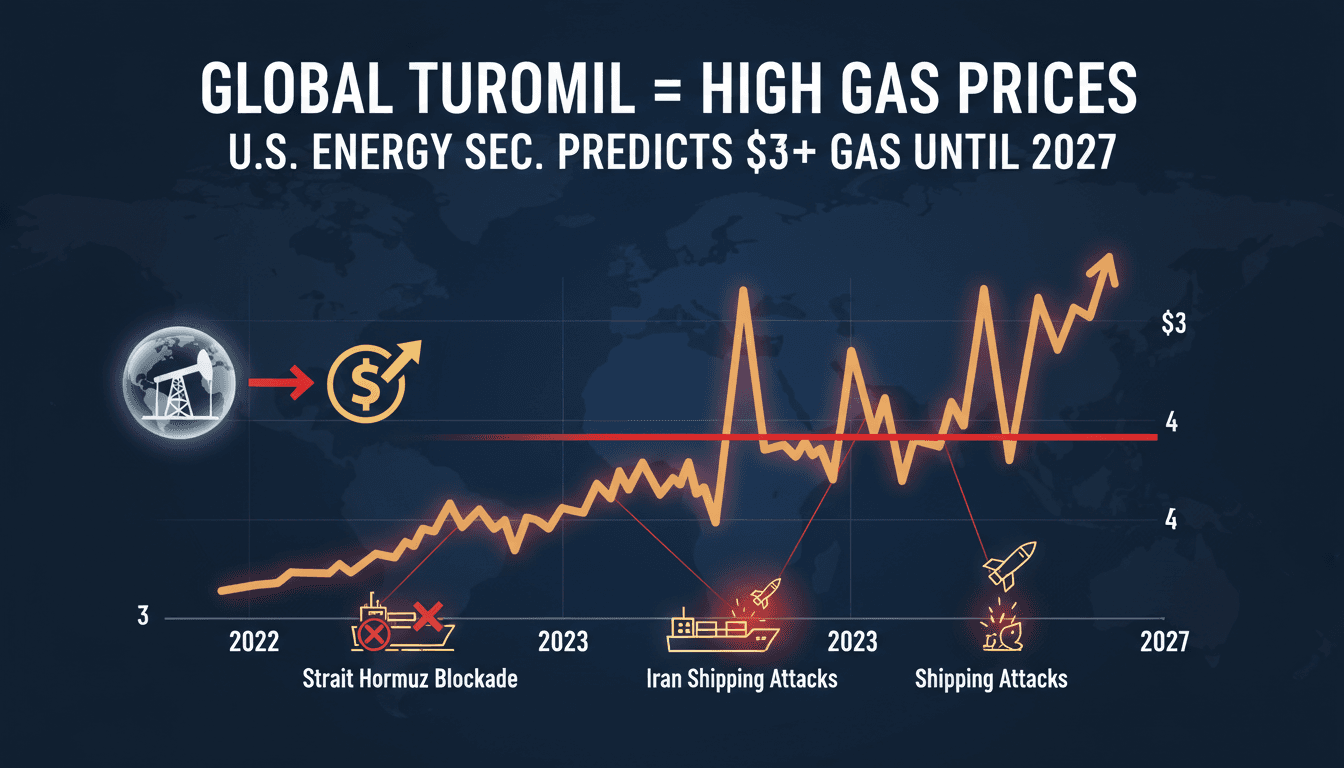
Here's what it means for you.
If you drive or rely on transportation, expect higher fuel costs impacting your budget and potentially inflating prices across various sectors.
Why it matters
Sustained high gasoline prices can strain consumer budgets and influence inflation rates, affecting economic stability.
What happened (in 30 seconds)
- U.S. Energy Secretary Chris Wright forecasted that national average gasoline prices will likely remain above $3 per gallon until 2027 due to ongoing geopolitical tensions.
- Gasoline prices peaked at $4.16 per gallon in early April 2026, driven by disruptions in the Strait of Hormuz amid the U.S.-Iran conflict.
- Negotiations for conflict resolution are ongoing, but a return to sub-$3 prices is not anticipated until geopolitical stability is achieved.
The context you actually need
- The U.S.-Iran conflict escalated in early 2026, leading to significant disruptions in oil supply routes, particularly in the Strait of Hormuz, which is critical for global oil transport.
- Brent crude oil prices surged over 50% to nearly $120 per barrel during this period, directly impacting gasoline prices at the pump.
- Consumer sentiment reflects the strain of high gasoline costs, with 51% of Americans reporting financial hardship due to rising fuel prices.
What's really happening
The forecast of sustained high gasoline prices stems from a complex interplay of geopolitical tensions and market dynamics. The U.S.-Iran conflict has intensified, particularly with Iranian actions disrupting shipping routes in the Strait of Hormuz, a vital artery for global oil transport. This region accounts for approximately 20% of the world's oil supply, making any disruptions particularly impactful.
As tensions escalated in early 2026, Brent crude oil prices skyrocketed, peaking at nearly $120 per barrel. This surge in crude prices directly translated to higher gasoline prices, which climbed from around $3.16 per gallon a year prior to exceeding $4 per gallon by early April 2026. The peak price of $4.16 per gallon marked the highest level since 2022, reflecting the market's reaction to both supply constraints and heightened volatility.
Despite a brief 10-day ceasefire in mid-April, Iranian actions continued to threaten shipping security, leading to Energy Secretary Chris Wright's cautious outlook. He indicated that while prices may have peaked at $4.05, a return to sub-$3 levels is unlikely until 2027, contingent on the resolution of the ongoing conflict. This prediction contrasts sharply with earlier administration expectations, highlighting the significant role that geopolitical stability plays in energy markets.
The implications of these sustained high prices extend beyond just fuel costs. They can contribute to broader inflationary pressures, as transportation costs rise and businesses pass on these expenses to consumers. In the UAE, for instance, fuel prices surged by up to 33.3% in April 2026, with Super 98 gasoline reaching Dh3.39 per liter. This increase not only affects individual budgets but also has the potential to contribute 1.5-2.5% to quarterly inflation, impacting the overall cost of living.
As negotiations continue, U.S. officials are engaged in discussions in Pakistan, seeking pathways to de-escalate tensions. However, the market remains cautious, with Treasury officials projecting that gasoline prices may stabilize in the $3 range by summer, depending on the outcome of these diplomatic efforts.
Who feels it first (and how)
- Commuters and drivers: Higher fuel costs directly impact daily transportation expenses.
- Logistics and transportation sectors: Increased fuel prices lead to higher operational costs, affecting pricing strategies.
- Low- to middle-income households: These groups are more sensitive to fuel price increases, which can strain budgets.
- Businesses reliant on shipping: Companies that depend on oil for transportation will face increased costs, potentially leading to higher prices for consumers.
What to watch next
- Geopolitical developments: Monitor any changes in U.S.-Iran relations and their impact on oil supply routes, as these will directly influence gasoline prices.
- Market reactions to crude oil prices: Watch for fluctuations in Brent crude prices, as they often precede changes in gasoline prices at the pump.
- Consumer sentiment surveys: Keep an eye on how rising fuel costs affect consumer spending and overall economic confidence.
Gasoline prices have recently peaked at $4.16 per gallon due to geopolitical tensions.
Prices will remain above $3 per gallon until at least 2027 unless significant geopolitical changes occur.
The exact timeline for conflict resolution and its impact on oil supply stability remains uncertain.
Frequently Asked Questions
- Why it matters?
- Sustained high gasoline prices can strain consumer budgets and influence inflation rates, affecting economic stability.
- What happened (in 30 seconds)?
- U.S. Energy Secretary Chris Wright forecasted that national average gasoline prices will likely remain above $3 per gallon until 2027 due to ongoing geopolitical tensions. Gasoline prices peaked at $4.16 per gallon in early April 2026, driven by disruptions in the Strait of Hormuz amid the U.S.-Iran conflict. Negotiations for conflict resolution are ongoing, but a return to sub-$3 prices is not anticipated until geopolitical stability is achieved.
- What's really happening?
- The forecast of sustained high gasoline prices stems from a complex interplay of geopolitical tensions and market dynamics. The U.S.-Iran conflict has intensified, particularly with Iranian actions disrupting shipping routes in the Strait of Hormuz, a vital artery for global oil transport. This region accounts for approximately 20% of the world's oil supply, making any disruptions particularly impactful. As tensions escalated in early 2026, Brent crude oil prices skyrocketed, peaking at nearly
- Who feels it first (and how)?
- Commuters and drivers: Higher fuel costs directly impact daily transportation expenses. Logistics and transportation sectors: Increased fuel prices lead to higher operational costs, affecting pricing strategies. Low- to middle-income households: These groups are more sensitive to fuel price increases, which can strain budgets. Businesses reliant on shipping: Companies that depend on oil for transportation will face increased costs, potentially leading to higher prices for consumers.
- What to watch next?
- Geopolitical developments: Monitor any changes in U.S.-Iran relations and their impact on oil supply routes, as these will directly influence gasoline prices. Market reactions to crude oil prices: Watch for fluctuations in Brent crude prices, as they often precede changes in gasoline prices at the pump. Consumer sentiment surveys: Keep an eye on how rising fuel costs affect consumer spending and overall economic confidence.
Global business headlines with AI angles.
"General business outlet that frequently covers AI."
— A47 Editor
U.S. Gas Prices Could Stay Above $3 Into 2027 As Global Energy Shock Persists
U.S. gas prices are projected to remain above $3 per gallon until 2027, driven by ongoing geopolitical tensions that are affecting global oil markets. The situation is exacerbated by recent disruptions in the Strait of Hormuz, which are anticipated t...
Stock market news, investing ideas, and trading analysis.
"TheStreet provides market news and retail-investor-focused analysis."
— A47 Editor
U.S. energy chief drops signal on gas prices for rest of 2026
The U.S. energy chief has indicated that while gas prices may not be surging as they did previously, they are also not decreasing significantly, suggesting a prolonged period of elevated fuel costs for consumers throughout 2026.