
US Department of Energy Releases Additional Oil Loans Amid Middle East Tensions
Here's what it means for you.
If you rely on fuel for commuting or business, the U.S. Strategic Petroleum Reserve loans could influence your fuel prices.
Why it matters
This move aims to stabilize global oil prices amid geopolitical tensions that threaten supply chains.
What happened (in 30 seconds)
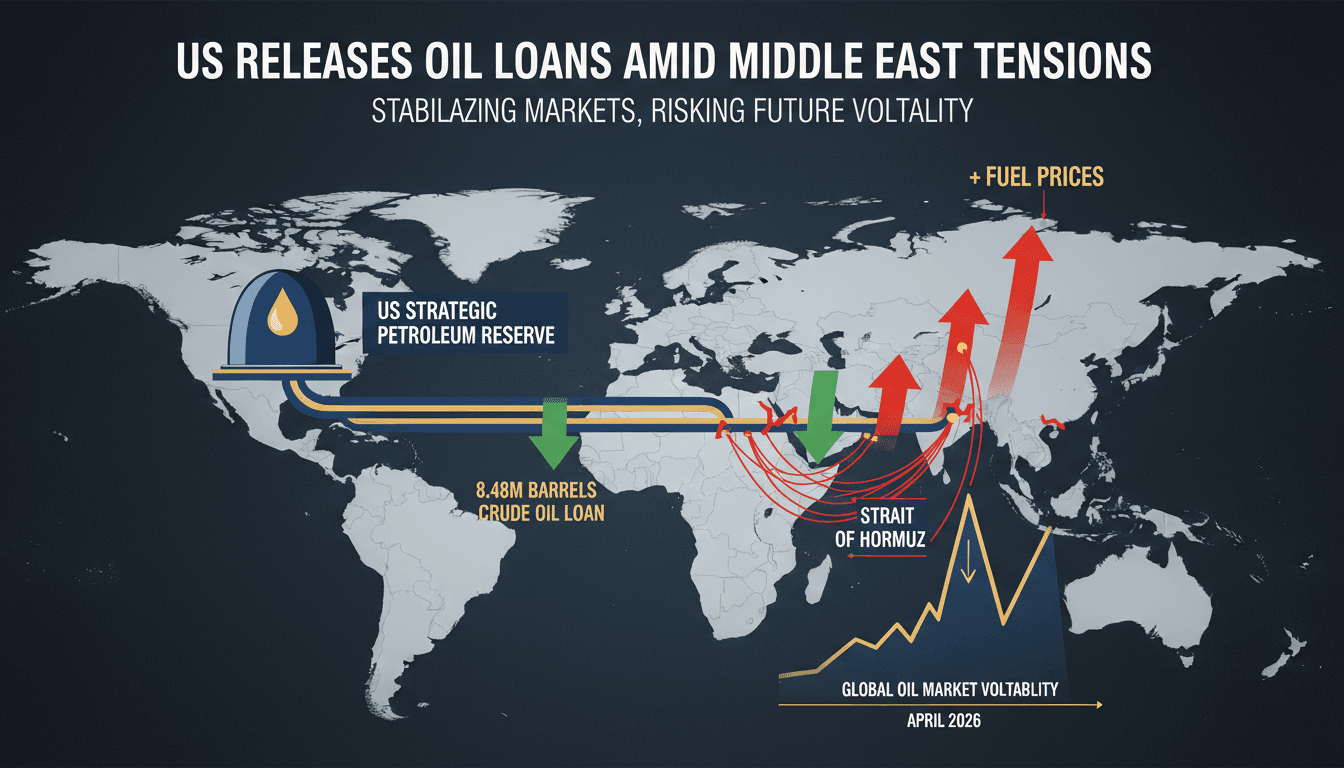
- On April 10, 2026, the U.S. Department of Energy awarded contracts for 8.48 million barrels of crude oil loans from the Strategic Petroleum Reserve.
- This follows a first round where 45.2 million barrels were released in March 2026, part of a broader commitment to release up to 172 million barrels through 2027.
- The loans are designed to mitigate rising fuel prices caused by disruptions in oil supply, particularly around the Strait of Hormuz.
The context you actually need
- The U.S.-Israeli conflict with Iran escalated in March 2026, leading to significant oil supply disruptions described by the IEA as the largest supply shock in history.
- Brent crude oil prices have exceeded $110 per barrel, prompting urgent action to stabilize the market and protect consumers.
- The International Energy Agency (IEA) coordinated a historic 400 million barrel release among its members to address the crisis, with the U.S. committing a significant portion.
What's really happening
The recent escalation in the U.S.-Israeli conflict with Iran has created a precarious situation for global oil markets, particularly affecting the Strait of Hormuz, a critical chokepoint for oil transport. The International Energy Agency (IEA) characterized this disruption as the largest supply shock in history, prompting a coordinated response among its 32 member countries. On March 11, 2026, the IEA approved a collective release of 400 million barrels of oil, with the U.S. committing to release 172 million barrels as part of this effort.
The U.S. Department of Energy's (DOE) recent contracts for 8.48 million barrels are part of a structured loan system designed to stabilize fuel prices while ensuring that the U.S. retains its strategic reserves. These loans are repayable exchanges, meaning that the companies receiving the oil will return it with premiums, effectively incurring no cost to taxpayers. This financial structure is critical as it allows the U.S. to respond quickly to market volatility without depleting its reserves permanently.
The first round of oil exchanges in March saw a partial uptake, with companies taking 45.2 million barrels, which accounted for 52% of the offered amount. As fuel prices surged, the DOE quickly moved to offer additional barrels to further stabilize the market. The second round of loans awarded on April 10, 2026, to companies like Gunvor USA and Phillips 66, reflects a proactive approach to managing supply disruptions.
Despite these efforts, oil markets remain volatile, with Brent crude prices hovering above $110 per barrel. The recent announcement of a fragile ceasefire between the U.S. and Iran may provide temporary relief, but the underlying tensions and supply chain vulnerabilities remain. The DOE has urged U.S. oil producers to ramp up output to help alleviate the pressure on global markets.
In the UAE, the impact of these price surges is already being felt, with petrol prices rising sharply. The government raised fuel prices by 31% for April 2026, reflecting the pass-through of global oil price increases. This situation underscores the interconnectedness of global oil markets and the direct impact of geopolitical events on local economies.
Who feels it first (and how)
- Commuters: Increased fuel prices directly affect daily transportation costs.
- Businesses: Companies relying on transportation and logistics face higher operational costs.
- Consumers: Households experience strain on budgets due to rising fuel prices.
- Energy Sector: Oil producers and traders are impacted by market volatility and supply chain disruptions.
What to watch next
- Global oil prices: Monitor Brent crude prices to gauge market stability and potential impacts on consumer fuel costs.
- U.S. production levels: Watch for any increases in U.S. oil production as urged by Energy Secretary Chris Wright, which could help stabilize prices.
- Geopolitical developments: Keep an eye on the U.S.-Iran conflict and its implications for oil supply through the Strait of Hormuz.
The U.S. has committed to releasing up to 172 million barrels from the Strategic Petroleum Reserve.
Oil prices will remain volatile as geopolitical tensions continue to affect supply chains.
The long-term impact of these loans on U.S. energy policy and global oil market dynamics.
Frequently Asked Questions
- Why it matters?
- This move aims to stabilize global oil prices amid geopolitical tensions that threaten supply chains.
- What happened (in 30 seconds)?
- On April 10, 2026, the U.S. Department of Energy awarded contracts for 8.48 million barrels of crude oil loans from the Strategic Petroleum Reserve. This follows a first round where 45.2 million barrels were released in March 2026, part of a broader commitment to release up to 172 million barrels through 2027. The loans are designed to mitigate rising fuel prices caused by disruptions in oil supply, particularly around the Strait of Hormuz.
- What's really happening?
- The recent escalation in the U.S.-Israeli conflict with Iran has created a precarious situation for global oil markets, particularly affecting the Strait of Hormuz, a critical chokepoint for oil transport. The International Energy Agency (IEA) characterized this disruption as the largest supply shock in history, prompting a coordinated response among its 32 member countries. On March 11, 2026, the IEA approved a collective release of 400 million barrels of oil, with the U.S. committing to releas
- Who feels it first (and how)?
- Commuters: Increased fuel prices directly affect daily transportation costs. Businesses: Companies relying on transportation and logistics face higher operational costs. Consumers: Households experience strain on budgets due to rising fuel prices. Energy Sector: Oil producers and traders are impacted by market volatility and supply chain disruptions.
- What to watch next?
- Global oil prices: Monitor Brent crude prices to gauge market stability and potential impacts on consumer fuel costs. U.S. production levels: Watch for any increases in U.S. oil production as urged by Energy Secretary Chris Wright, which could help stabilize prices. Geopolitical developments: Keep an eye on the U.S.-Iran conflict and its implications for oil supply through the Strait of Hormuz.
English-language news from Qatar covering domestic and regional affairs.
"Gulf Times reflects Qatari perspectives on regional developments."
— A47 Editor
US advances second oil reserve release amid Middle East conflict
The US Department of Energy has announced the loan of 8.48 million barrels of crude oil from the Strategic Petroleum Reserve (SPR) to four companies, marking the second round of releases aimed at alleviating fuel supply pressures amid ongoing conflic...
Sports reporting with a focus on Saudi and regional competitions.
"Okaz sports coverage is broad and audience-friendly, with strong attention to Saudi teams and leagues."
— A47 Editor
للحد من أسعار الوقود.. أمريكا تسحب الدفعة الثانية من احتياطي النفط الإستراتيجي
The U.S. Department of Energy has loaned 8.48 million barrels of crude oil from the Strategic Petroleum Reserve to four oil companies as part of the second tranche of efforts by President Donald Trump’s administration to curb rising fuel prices amid ...
Pan-Arab news coverage spanning politics, business, sports, and regional affairs.
"Asharq Al-Awsat reflects a broad Arab editorial perspective with strong attention to regional geopolitics."
— A47 Editor
أميركا تسحب ثاني دفعة من احتياطي النفط الاستراتيجي منذ الحرب
The U.S. Department of Energy announced on Friday that it has loaned 8.48 million barrels of crude oil from the Strategic Petroleum Reserve to four oil companies. This marks the second withdrawal from the reserve since the onset of the war, reflectin...