
Macron Leads 15-Country Naval Mission to Secure Strait of Hormuz Navigation
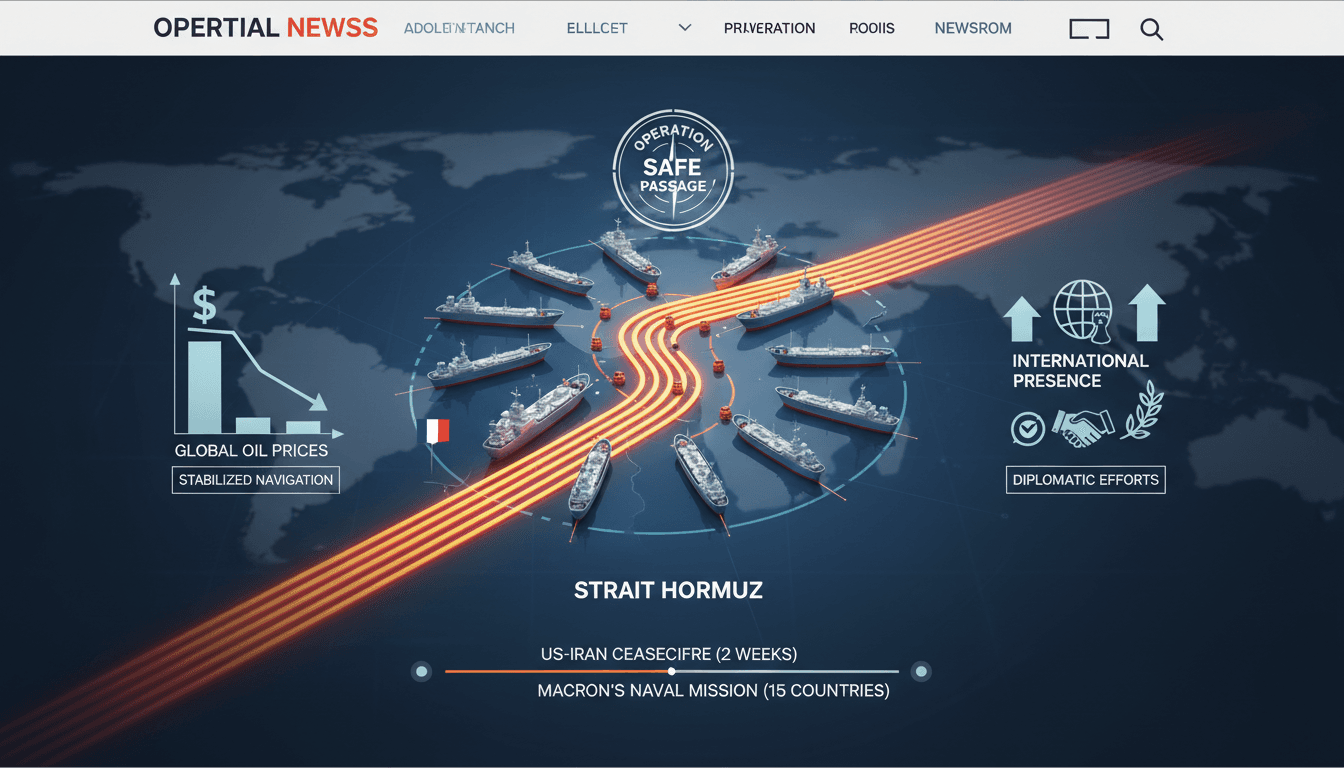
Here's what it means for you.
If you rely on global oil markets, the outcome of this mission could directly affect your fuel prices and economic stability.
Why it matters
The Strait of Hormuz is a critical chokepoint for global oil supplies, and any disruption can have immediate and far-reaching economic consequences.
What happened (in 30 seconds)
- April 8, 2026: French President Emmanuel Macron announced a multinational naval mission involving approximately 15 countries to secure navigation in the Strait of Hormuz.
- Ceasefire: This announcement follows a fragile two-week ceasefire between the US and Iran, aimed at reopening the strait after its closure due to escalating conflict.
- Regional Tensions: Despite the ceasefire, tensions remain high, particularly with ongoing Israeli strikes in Lebanon, complicating the situation further.
The context you actually need
- Strategic Importance: The Strait of Hormuz is responsible for the transit of 20 million barrels of oil daily, accounting for about 20% of global oil supplies.
- Crisis Background: The 2026 Strait of Hormuz crisis began with US-Israeli strikes on Iranian sites, leading to a retaliatory closure of the strait by Iran, causing oil prices to spike.
- Economic Impact: The closure has led to significant inflation in regions dependent on oil, with Dubai experiencing elevated prices in fuel, transport, and groceries.
What's really happening
The announcement of a multinational naval mission led by France to secure navigation in the Strait of Hormuz is a response to a complex crisis that has escalated since late February 2026. The initial conflict began with US-Israeli military operations targeting Iranian military and nuclear sites, which resulted in the death of Iran's Supreme Leader, Ali Khamenei. This triggered a series of retaliatory actions from Iran, including missile and drone strikes on Israel and US bases in the region.
As tensions escalated, Iran closed the Strait of Hormuz, a vital maritime route for global oil transport, effectively halting 70-100% of shipping through this chokepoint. This closure caused Brent crude oil prices to soar above $100 per barrel, leading to significant economic ramifications worldwide. The situation prompted urgent calls for a ceasefire, which was announced on April 7, 2026, but was contingent on the reopening of the strait.
Macron's announcement of a defensive naval mission is not just a military maneuver; it represents a diplomatic effort to stabilize a volatile region and ensure the flow of oil resumes. By coordinating with Iran, Macron aims to navigate the delicate balance of power in the region, acknowledging Iran's influence while attempting to mitigate the risks of further escalation. The mission's success hinges on the cooperation of the involved nations and the ability to maintain peace amid ongoing regional conflicts, particularly in Lebanon, where Israeli strikes have resulted in significant casualties.
The implications of this mission extend beyond immediate military objectives. If successful, it could restore confidence in the stability of oil supplies, leading to a decrease in prices and easing inflationary pressures in economies reliant on oil. Conversely, failure could exacerbate tensions, leading to further disruptions and economic instability.
Who feels it first (and how)
- Oil Producers: Countries like Saudi Arabia and the UAE will be directly impacted by fluctuations in oil prices and supply stability.
- Consumers: Individuals in regions dependent on oil, such as Dubai, will experience immediate effects on fuel and grocery prices.
- Logistics and Trade Sectors: Businesses reliant on shipping routes through the Strait of Hormuz will face operational challenges and potential cost increases.
- Investors: Stock markets globally will react to changes in oil prices, impacting investment portfolios and economic forecasts.
What to watch next
- Ceasefire Viability: Monitor the stability of the US-Iran ceasefire; any breakdown could lead to renewed conflict and disruptions in oil supply.
- Oil Price Movements: Watch for fluctuations in Brent crude prices as the naval mission progresses; significant changes could indicate market reactions to geopolitical developments.
- Regional Military Activity: Keep an eye on military engagements in Lebanon and Iranian responses; escalations could derail diplomatic efforts and impact global markets.
The Strait of Hormuz is crucial for global oil transport, with 20 million barrels transiting daily.
The multinational naval mission will face challenges in maintaining peace amid ongoing regional tensions.
The long-term effectiveness of the ceasefire and its impact on oil prices remains uncertain.
Frequently Asked Questions
- Why it matters?
- The Strait of Hormuz is a critical chokepoint for global oil supplies, and any disruption can have immediate and far-reaching economic consequences.
- What happened (in 30 seconds)?
- April 8, 2026: French President Emmanuel Macron announced a multinational naval mission involving approximately 15 countries to secure navigation in the Strait of Hormuz. Ceasefire: This announcement follows a fragile two-week ceasefire between the US and Iran, aimed at reopening the strait after its closure due to escalating conflict. Regional Tensions: Despite the ceasefire, tensions remain high, particularly with ongoing Israeli strikes in Lebanon, complicating the situation further.
- What's really happening?
- The announcement of a multinational naval mission led by France to secure navigation in the Strait of Hormuz is a response to a complex crisis that has escalated since late February 2026. The initial conflict began with US-Israeli military operations targeting Iranian military and nuclear sites, which resulted in the death of Iran's Supreme Leader, Ali Khamenei. This triggered a series of retaliatory actions from Iran, including missile and drone strikes on Israel and US bases in the region. As
- Who feels it first (and how)?
- Oil Producers: Countries like Saudi Arabia and the UAE will be directly impacted by fluctuations in oil prices and supply stability. Consumers: Individuals in regions dependent on oil, such as Dubai, will experience immediate effects on fuel and grocery prices. Logistics and Trade Sectors: Businesses reliant on shipping routes through the Strait of Hormuz will face operational challenges and potential cost increases. Investors: Stock markets globally will react to changes in oil prices, impactin
- What to watch next?
- Ceasefire Viability: Monitor the stability of the US-Iran ceasefire; any breakdown could lead to renewed conflict and disruptions in oil supply. Oil Price Movements: Watch for fluctuations in Brent crude prices as the naval mission progresses; significant changes could indicate market reactions to geopolitical developments. Regional Military Activity: Keep an eye on military engagements in Lebanon and Iranian responses; escalations could derail diplomatic efforts and impact global markets.
Arabic-language UAE newspaper coverage focused on domestic affairs, public institutions, business, society, and regional developments.
"Al Khaleej coverage generally reflects a mainstream UAE editorial lens with strong attention to public affairs, institutions, and regional developments."
— A47 Editor
ماكرون: 15 دولة تخطط لتسهيل استئناف الملاحة بمضيق هرمز
French President Emmanuel Macron announced that approximately 15 countries are planning to facilitate the resumption of navigation through the Strait of Hormuz following a ceasefire declaration between the United States and Iran.
Regional coverage and analysis focused on politics, diplomacy, and business across the Middle East.
"Al-Monitor is known for analytical reporting on Middle East politics and policy developments."
— A47 Editor
More than 15 countries planning to facilitate Strait of Hormuz access, Macron says
French President Emmanuel Macron announced that over 15 countries are collaborating to facilitate the resumption of maritime traffic through the Strait of Hormuz, a crucial passage for global oil supply, following a ceasefire agreement between the Un...
Oil, metals, and agriculture: supply/demand headlines, OPEC chatter, inventories, and price action.
"Solid tape for energy and metals traders tracking macro and micro catalysts."
— A47 Editor
More than 15 countries planning to facilitate Strait of Hormuz access, Macron says
French President Emmanuel Macron announced that over 15 countries are planning to facilitate access to the Strait of Hormuz, a vital maritime route for global oil shipments. This initiative comes amid rising tensions in the region and aims to ensure ...