
Trump Proposes Joint Venture with Iran for Strait of Hormuz Shipping Tolls
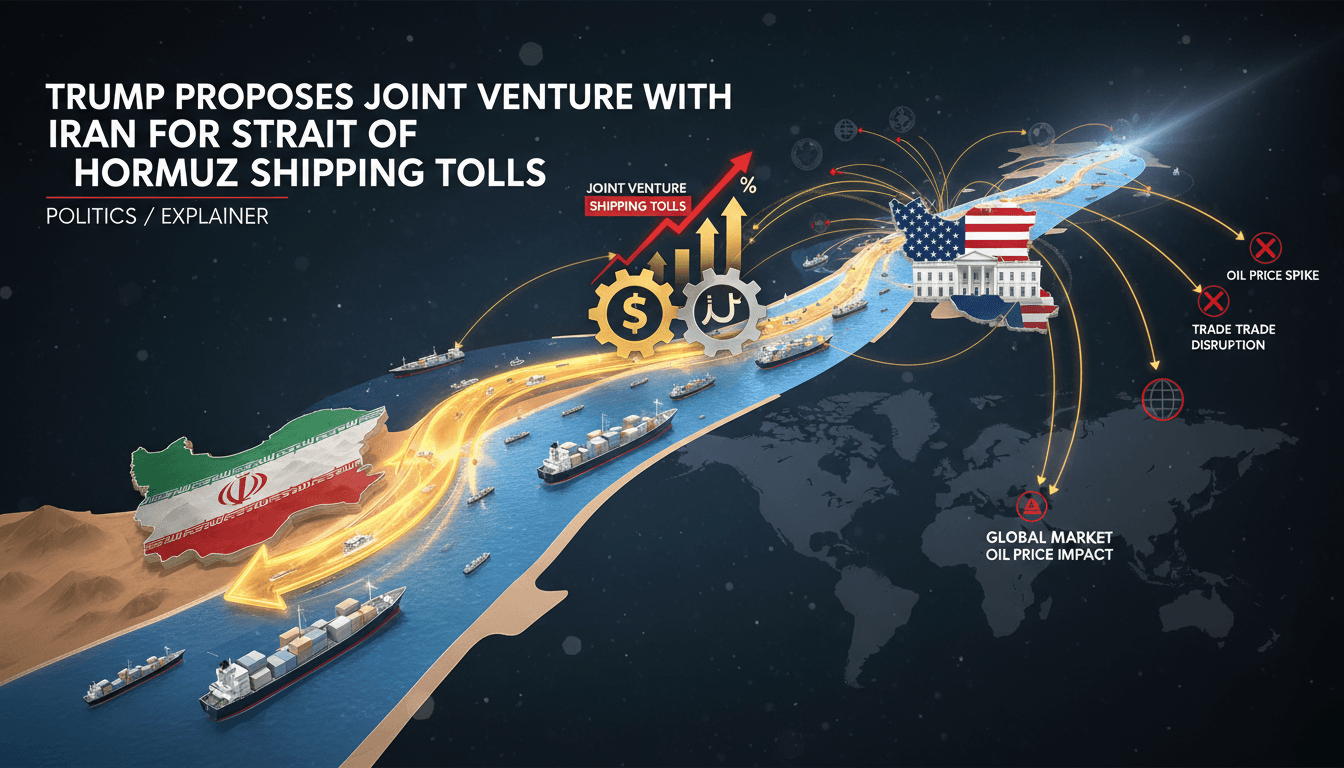
Here's what it means for you.
If you rely on global oil markets, this proposal could lead to increased shipping costs and fuel prices.
Why it matters
This proposal threatens to disrupt a critical maritime route that facilitates 20% of the world's oil supply.
What happened (in 30 seconds)
- Trump proposed a joint venture with Iran to impose tolls on ships in the Strait of Hormuz during a fragile ceasefire.
- Iran is demanding up to $2 million per vessel for passage, despite agreeing to a temporary reopening of the strait.
- Oil prices are fluctuating as the U.S. government and Gulf states oppose these tolls, fearing increased shipping costs.
The context you actually need
- Operation Epic Fury rendered Iran's military forces ineffective, leading to a ceasefire and subsequent negotiations.
- The Strait of Hormuz is a vital waterway for global oil transport, with approximately 20 million barrels passing through daily.
- Iran's recent actions include imposing tolls and restricting shipping traffic, further escalating geopolitical tensions with the U.S. and its allies.
What's really happening
The proposal for a joint venture between the U.S. and Iran to impose tolls on shipping in the Strait of Hormuz arises from a complex backdrop of military operations and geopolitical maneuvering. Following Operation Epic Fury, which significantly weakened Iran's military capabilities, a ceasefire was announced on April 7, 2026. This ceasefire allowed for a temporary reopening of the strait, which is crucial for global oil flow, yet Iran quickly imposed restrictions, limiting traffic to only a dozen vessels daily and demanding tolls payable in cryptocurrency.
Trump's suggestion for a joint venture is a strategic move aimed at securing the strait while also attempting to exert economic pressure on Iran. By proposing tolls, the U.S. seeks to establish a framework that could potentially benefit both nations economically, despite the historical animosity between them. However, this proposal has drawn significant backlash from oil industry executives who argue that the tolls would add approximately $2.5 million in costs per shipment, ultimately leading to increased oil prices and economic instability.
The U.S. administration, including Vice President JD Vance and White House Press Secretary Karoline Leavitt, is currently navigating a delicate balance between maintaining a ceasefire and addressing the economic implications of Iran's demands. While the White House has prioritized an unrestricted reopening of the strait, Secretary Rubio has labeled the tolls illegal. This tension highlights the broader implications of U.S.-Iran relations, where economic incentives are weighed against national security concerns.
As the situation unfolds, the dynamics of international shipping and oil markets will be closely monitored. The potential for increased costs associated with tolls could lead to inflationary pressures, particularly in regions heavily reliant on oil imports. Furthermore, Gulf states, including the UAE, have expressed strong opposition to any tolls, viewing them as violations of international maritime law. This opposition could lead to further geopolitical friction in an already volatile region.
Who feels it first (and how)
- Oil industry executives: Increased shipping costs could impact profit margins and pricing strategies.
- Shipping companies: Potential tolls would raise operational costs, affecting logistics and pricing.
- Consumers: Higher fuel prices could lead to increased costs for goods and services.
- Gulf states: Countries like the UAE may face economic repercussions from reduced oil exports and increased inflation.
What to watch next
- Negotiation outcomes: Watch for developments from the scheduled talks in Islamabad, as they will shape the future of tolls and shipping regulations.
- Oil price fluctuations: Monitor how oil prices respond to news about the tolls and shipping traffic in the Strait of Hormuz.
- Geopolitical responses: Keep an eye on reactions from Gulf states and other international players regarding the legality and implications of the proposed tolls.
The Strait of Hormuz is critical for global oil transport, with 20 million barrels passing through daily.
Increased shipping costs if tolls are implemented, impacting global oil prices and consumer costs.
The long-term effects on U.S.-Iran relations and regional stability following these negotiations.
Frequently Asked Questions
- Why it matters?
- This proposal threatens to disrupt a critical maritime route that facilitates 20% of the world's oil supply.
- What happened (in 30 seconds)?
- Trump proposed a joint venture with Iran to impose tolls on ships in the Strait of Hormuz during a fragile ceasefire. Iran is demanding up to $2 million per vessel for passage, despite agreeing to a temporary reopening of the strait. Oil prices are fluctuating as the U.S. government and Gulf states oppose these tolls, fearing increased shipping costs.
- What's really happening?
- The proposal for a joint venture between the U.S. and Iran to impose tolls on shipping in the Strait of Hormuz arises from a complex backdrop of military operations and geopolitical maneuvering. Following Operation Epic Fury, which significantly weakened Iran's military capabilities, a ceasefire was announced on April 7, 2026. This ceasefire allowed for a temporary reopening of the strait, which is crucial for global oil flow, yet Iran quickly imposed restrictions, limiting traffic to only a doz
- Who feels it first (and how)?
- Oil industry executives: Increased shipping costs could impact profit margins and pricing strategies. Shipping companies: Potential tolls would raise operational costs, affecting logistics and pricing. Consumers: Higher fuel prices could lead to increased costs for goods and services. Gulf states: Countries like the UAE may face economic repercussions from reduced oil exports and increased inflation.
- What to watch next?
- Negotiation outcomes: Watch for developments from the scheduled talks in Islamabad, as they will shape the future of tolls and shipping regulations. Oil price fluctuations: Monitor how oil prices respond to news about the tolls and shipping traffic in the Strait of Hormuz. Geopolitical responses: Keep an eye on reactions from Gulf states and other international players regarding the legality and implications of the proposed tolls.
Breaking news, politics, business, and entertainment from the U.S. and around the world.
"The New York Post is a tabloid-format newspaper known for its sensationalist headlines and conservative-leaning editorial tone."
— A47 Editor
Trump eyes ‘joint venture’ with Iran to charge tolls on ships passing through Strait of Hormuz
President Trump has proposed a 'joint venture' with Iran to implement tolls on ships passing through the strategically significant Strait of Hormuz, a move aimed at securing the maritime route amid ongoing tensions. This announcement follows a two-we...
Right-of-center views on political news.
"The Washington Times is a conservative-leaning newspaper known for its political coverage and advocacy of right-of-center viewpoints."
— A47 Editor
Trump floats a toll-charging venture with Iran in Strait of Hormuz
President Trump has proposed a 'joint venture' with Iran to charge tolls for ships passing through the strategically significant Strait of Hormuz, a vital maritime route for oil tankers. This announcement follows a two-week ceasefire agreement aimed ...
Capitol Hill news, legislation, and policy insight.
"The Hill specializes in U.S. politics and policy, with a focus on Capitol Hill developments and a reputation for insider reporting."
— A47 Editor
Trump says he's considering 'joint venture' with Iran for Strait of Hormuz tolls
President Trump announced he is considering a 'joint venture' with Iran to implement tolls for vessels passing through the strategically significant Strait of Hormuz, following a two-week ceasefire agreement between the U.S. and Iran aimed at reducin...
Global business headlines with AI angles.
"General business outlet that frequently covers AI."
— A47 Editor
Trump Reportedly Considering Joint U.S.-Iran Venture To Charge Fees For Passage Through Strait Of Hormuz
President Donald Trump is reportedly considering a joint venture with Iran to charge vessels for safe passage through the Strait of Hormuz, following a recent ceasefire announcement between the two nations. This development comes amid ongoing tension...